Geneva Again: A Room of Negotiators, Outside the Echo of War
The Palais des Nations looked almost absurdly calm for a city that, for a week, had become a tiny theatre in one of the most brutal dramas of the 21st century.
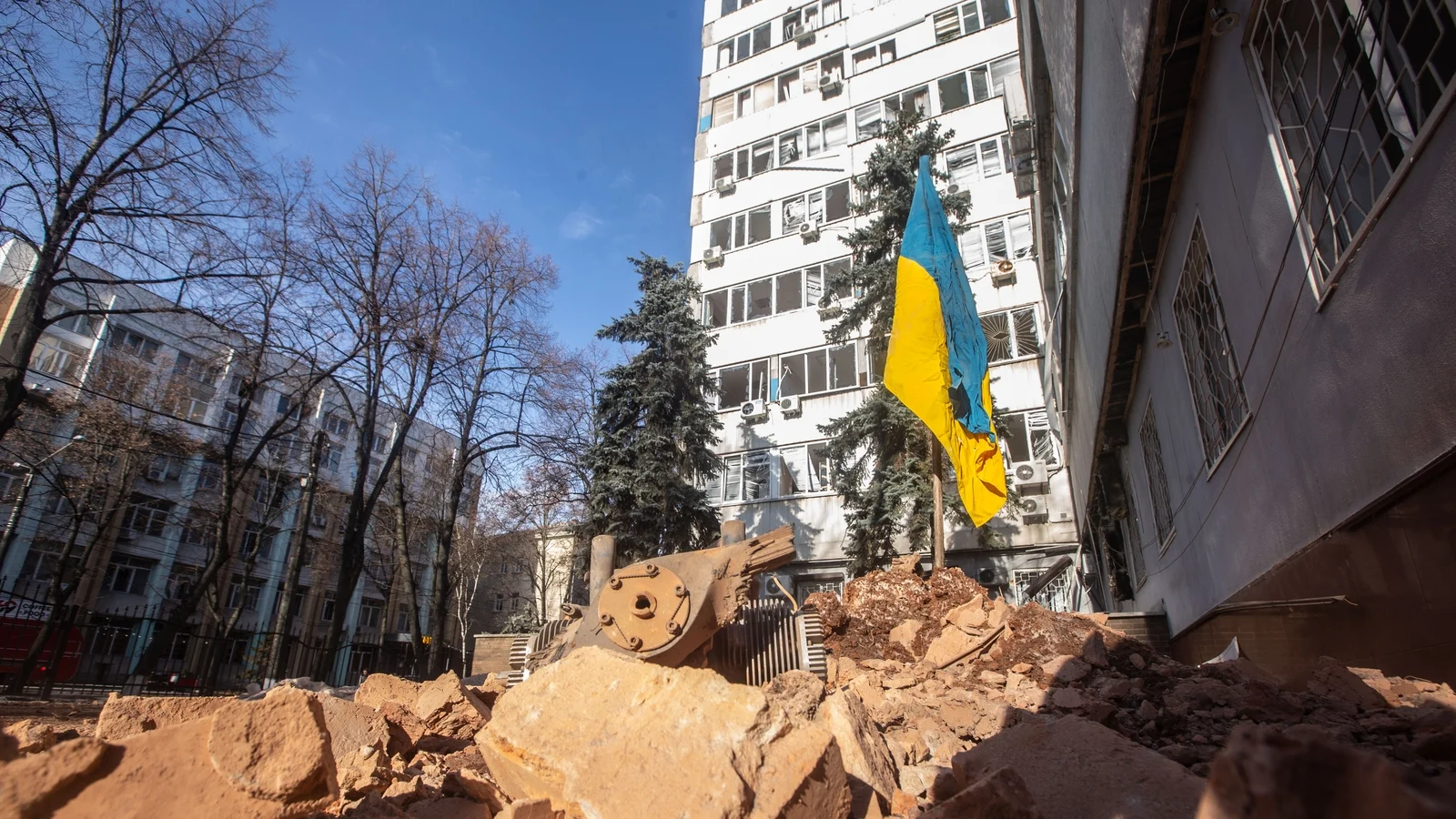
Delegates shuffled in, diplomats exchanged tight smiles, and on the low stone walls outside, protesters wrapped scarves around their mouths against a cold wind and held placards demanding an end to the killing. A woman from Kharkiv, who introduced herself only as Olena, pressed a laminated photograph into my hand — a picture of her brother’s home reduced to a jagged stack of concrete. “They talk in rooms like this,” she said, “and the bombs keep talking louder.”
For the second consecutive round, Ukrainian and Russian negotiators met in Geneva this week, hoping, if not expecting, to find a path away from combat that has already reshaped Europe. The meetings — convened with visible U.S. mediation and under the shadow of a global spotlight — were a reminder that diplomacy can be at once painfully methodical and heartbreakingly urgent.
Why Geneva? Why Now?
Geneva is a city of neutral facades: museums, manicured parks, and a long history as an incubator for compromise. That neutrality drew negotiators here after previous attempts in Abu Dhabi that achieved little beyond clarifying differences.
Standing in the lobby, U.S. envoy Steve Witkoff — the man Washington dispatched to steer talks — spoke with a measured optimism. “Bringing both sides back to the table is the only responsible path,” he told reporters. “We’re building the scaffolding for a settlement, even if the walls aren’t built yet.” On social media, he echoed the same note: progress, he said, even when fragile, was better than silence.
What’s on the table — and what’s not
Every discussion in Geneva revolved around the same, stubborn questions: territory, security guarantees, and how to ensure that a deal would be durable. Moscow has presented demands that would amount to control over large swathes of eastern Ukraine — notably Donetsk — while Kyiv insists it will not cede sovereignty without ironclad guarantees against future aggression.
“You cannot sign away the future of a nation in exchange for a pause in bullets,” President Volodymyr Zelensky told his country in an evening address, his voice threaded with weary resolve. “If we give up what keeps us alive, peace will look like defeat.”
The Fog Between Words and Missiles
The disparity between rhetoric and reality was stark. As negotiators spoke about “mechanics of possible solutions,” the battlefield kept moving. Ukrainian officials said that in the lead-up to the talks their air defenses were pushed to the limit by dozens of missiles and hundreds of drones — night-time strikes that caused civilian casualties and left tens of thousands without power. Moscow, in turn, accused Kyiv of mounting drone attacks, especially over the Crimean peninsula, a flashpoint since 2014.
“Whenever the cameras are on, the shelling can hush for a day,” said Andriy Sybiga, Ukraine’s foreign minister, on social media. “But then the horizon starts moving again.” Kremlin spokesman Dmitry Peskov, absorbed in his predictable guardedness, warned not to expect any big announcements after the first day of talks.
Numbers you should know
- The war, which flared into a full-scale invasion in February 2022, has displaced millions: more than eight million people have registered as refugees across Europe, and several million remain internally displaced inside Ukraine.
- Territory: Russia controls roughly one-fifth of Ukraine’s internationally recognised borders — including Crimea, annexed in 2014, and areas seized during the broader war.
- Economics: Moscow faces mounting wartime fiscal pressure, with oil revenues reported in recent months at lows unseen in several years as sanctions bite and global energy markets shift.
Voices from the Ground
It’s easy to speak of “ceasefires” and “mechanisms” from the safety of a hotel conference room. It’s another thing to picture the person who will have to live through any agreement’s consequences.
In Odesa, a fisherman named Mykola stacked nets on the pier and watched the horizon as if it might answer his questions. “If there is peace, I want to fish without looking for a crater,” he said. “If there is a treaty, let it be anchored in law, not in promises.”
A volunteer at a shelter in Lviv, who asked not to be named, described how talk of concessions ripples through their daily work. “When leaders negotiate borders, we fix roofs and feed children,” she told me. “We can carry a lot, but not the burden of a deal that makes our children feel like second-class citizens.”
Diplomacy in an Age of Fatigue
This round of diplomacy is playing out amid a wider global recalibration. Political pressure from Washington — including repeated public urgings that Kyiv “come to the table” quickly — has stirred controversy. President Trump, in a blunt public line, urged rapid compromise. For Kyiv, which has been asked repeatedly to make what it calls disproportionate concessions, the international chorus of urgency feels fraught.
“You cannot impose a peace that feels like surrender,” Rustem Umerov, who led Ukraine’s delegation, told journalists after a meeting. “Security guarantees, clarity on territory and timelines — these are not negotiable if the goal is lasting peace.”
Why this matters to you
Beyond lives and sovereignty, the war has global echoes: grain supplies, energy prices, military alliances, and the rule of international law. A faltering or rushed settlement could reverberate for years, changing the map and the rules that govern it.
If diplomacy succeeds, what would it look like? Would it bring back displaced families to rebuilt streets, or would it entrench division for a generation? If it fails, where else might the conflict spread, and how will global institutions respond?
These are not hypothetical questions for those living in capitals or portfolios. They are real and immediate for farmers in Senegal watching grain prices climb, for families in Warsaw receiving refugees, for investors measuring energy risks, and for citizens everywhere asking whether the post-war order will be defined by rules or by force.
Waiting and Watching
The Geneva talks will continue. Delegates promised to update their leaders and return to the negotiating table. The tents of diplomacy will remain pitched against a backdrop of damaged cities and quiet cemeteries, where unopened letters and toys are witnesses to a calamity that numbers cannot fully describe.
As you read this, imagine the people who will live with the outcome — the fisherman, the volunteer, the mother from Kharkiv. Imagine what you would accept for peace in your own backyard. What does justice look like when the cost of a mistake is measured in lives? Who should bear that cost?
If diplomacy is the art of compromise, then the question facing Geneva is not whether people are tired of war, but whether they can agree on what will finally be worth the killing to stop.