Ramadan at a Checkpoint: How Quiet Changes on the Ground Are Redrawing the Map
On a mild morning in East Jerusalem, the sounds that usually fill the air before Ramadan—children’s laughter, the clatter of coffee cups, the hurried prayers of men on their way to Al‑Aqsa—have been muffled by checkpoints and paperwork.
“We used to walk from our neighborhood, five minutes and we were inside the Haram,” said Ahmad Mansour, a 48‑year‑old barber from the West Bank town of Al‑Ram. “Now my son has to queue at the crossing, show three IDs, wait for a permit that might not arrive. This is Ramadan, not a war of paperwork.”
His impatience is not just personal frustration; it is a symptom. In recent days, Israeli authorities announced limits on the number of West Bank Palestinians permitted to attend Friday prayers at Al‑Aqsa during Ramadan—capping attendance at 10,000 and imposing strict age cutoffs. Men under 55, women under 50, and teenagers in most cases will be denied access unless they happen to fall into narrow exceptions.
Voices from the Compound
The restrictions, issued by COGAT—the Israeli defense ministry body that administers civilian life in the Palestinian territories—also require advance digital permits and what the agency calls “digital documentation” upon return to the West Bank. The stated reason: security.
“They tell us it’s for security. But security for whom?” asked Fatima Nassar, an imam’s assistant in Jerusalem who helps organize community outreach during Ramadan. “For the people fasting in the mosque, or for the policies that make prayer feel like privilege instead of right?”
The announcement has practical effects. Hundreds of thousands of Palestinians traditionally make the pilgrimage to Al‑Aqsa during the holy month, especially for Friday prayers and the last ten nights. Attendance has already been depressed since last year’s war in Gaza, and travel restrictions have layered new barriers—both physical and psychological—between worshippers and the sanctified courtyard of the compound.
Maps, Accords, and the Slow Unraveling
Beyond the mosque, there is an argument being waged in dry, bureaucratic language that nevertheless rewrites the landscape. Under the Oslo Accords, the West Bank was divided into Areas A, B and C—designations that were supposed to be temporary steps toward Palestinian self‑rule. Area A sits under Palestinian civil and security control; B is shared; C remains under Israeli control. In practice, the map has become porous and contested.
“What we are seeing is not a dramatic, single headline act—it’s an accretion,” said Dr. Lina Haddad, a political geographer who studies land policy in Jerusalem and the West Bank. “Small regulatory changes—permit easing for settlers, streamlined transactions in ambiguous jurisdictions, new rule‑making about who can access religious sites—add up. Over time, they reshape reality. That’s why the UN called it ‘gradual de facto annexation.’ It’s the shape of a border changing, one administrative memo at a time.”
UN Under‑Secretary‑General Rosemary DiCarlo sounded alarm bells at a recent Security Council session, warning that a raft of measures now approved by the Israeli cabinet—many backed by far‑right ministers—risked extending civil authority into areas long administered by the Palestinian Authority. “If implemented, these measures could mean an expansion of Israeli civil authority into sensitive areas like Hebron,” she told diplomats, cautioning that the policies might clear bureaucratic pathways for settlement expansion.
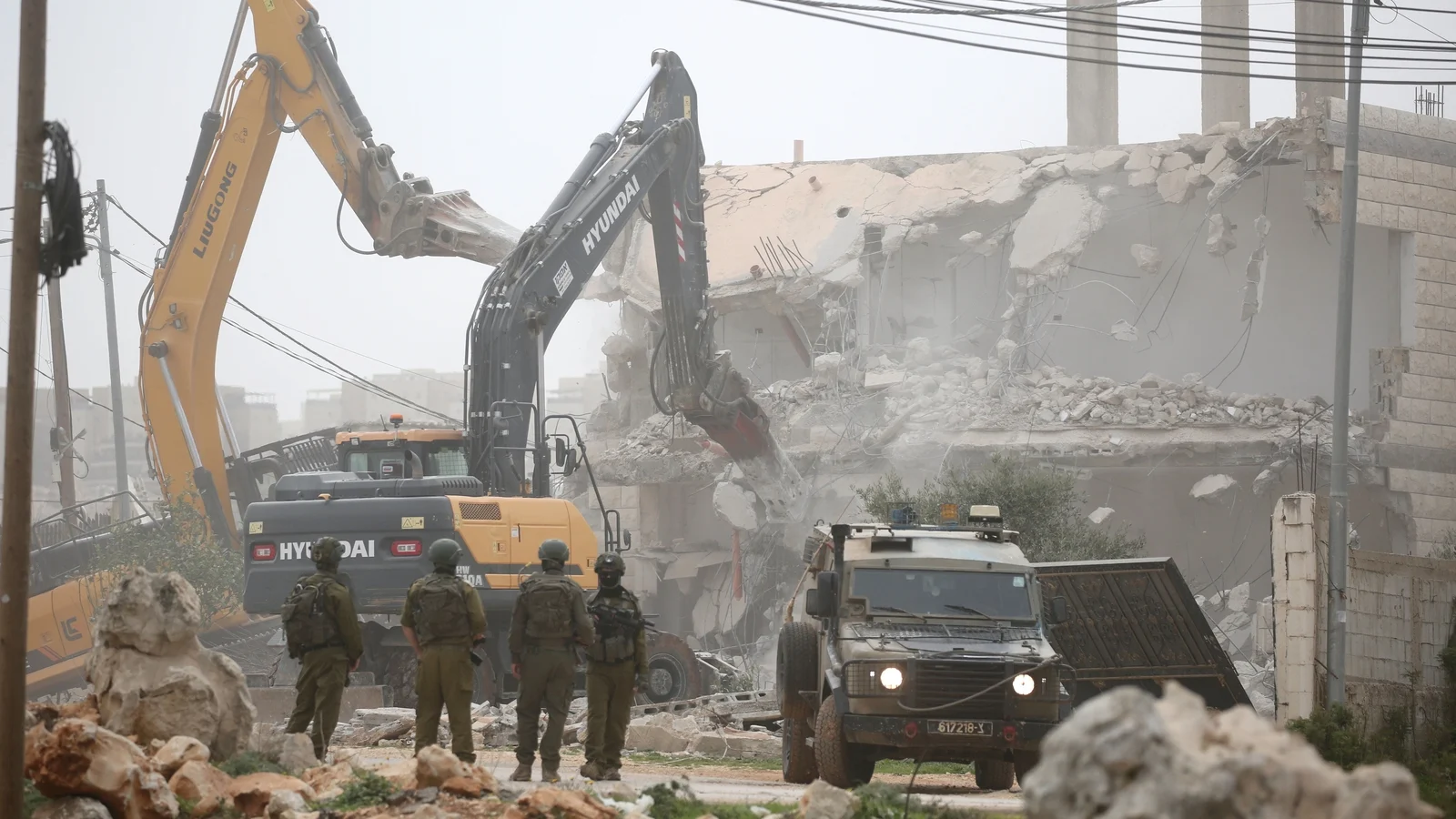
Those concerns are not abstract. The West Bank is home to roughly 3 million Palestinians and—by most international tallies—some 475,000 Israeli settlers living in settlements outside East Jerusalem, with hundreds of thousands more Israeli residents in annexed East Jerusalem. For Palestinians, modest shifts in building permits, land registries, and the enforcement of zoning rules are existential: they determine whether a family can build a home, keep their olive trees, or be pushed into a maze of legal limbo.
On the Ground: People, Profit, Politics
In the market streets of Hebron, vendors spoke of permits and fear. “We have had orders to close stalls when inspectors come, or to move,” said Sahar Abu‑Khalil, who sells spices near the old city. “If they say the land is now under different control, where do we go? My mother’s house is on that street.”
On the other side of the argument, Israeli officials frame the moves as a reassertion of historic ties. “This is our ancient homeland,” said an official close to the foreign ministry, who asked not to be named, echoing a sentiment voiced publicly by ministers in Jerusalem. “People around the world should understand the historical and legal complexity here.”
Gideon Sa’ar, Israel’s foreign minister, has argued that Jewish presence in the land is rooted in history—an argument that resonates in some quarters in Israel and among diaspora communities. Britain’s foreign secretary, Yvette Cooper, who chaired the Security Council meeting, countered that the international community must act to preserve the possibility of a viable Palestinian state and prevent further destabilization.
Global Friction, Local Pain
The current debate is unfolding alongside a diplomatic maneuver that many saw as provocative: a US convening of a so‑called Board of Peace, chaired by President Donald Trump, which was first announced as part of Gaza reconstruction efforts but has since been framed as a broader forum to tackle multiple international conflicts. The United Nations was not invited to participate in the upcoming meeting, a move criticized by some diplomats.
“The board is not talking. It’s doing,” said the US ambassador to the UN, Mike Waltz, in a tone meant to dismiss critics. Others see the move as an attempt to create parallel institutions—bypassing established multilateral mechanisms at a moment when global cooperation matters most.
Meanwhile, everyday Palestinians feel the squeeze: tax transfers to the Palestinian Authority have been delayed at times; economic indicators show a fragile recovery in the West Bank after repeated shocks. Unemployment remains high—official Palestinian figures list unemployment in the West Bank and Gaza combined as well above pre‑2019 levels in many areas—and development funds are stretched thin.
Questions for Readers and the Future
Ask yourself: what does sovereignty look like when the borders of daily life are defined by permits, apps and checkpoints rather than by a treaty on a map? How do holy places stay holy when access is a matter of security clearances?
“People think of geopolitics as distant and abstract,” said Dr. Haddad. “But it is the shopkeeper who can’t get a license, the imam barred from his mosque, the farmer whose trees are flagged for confiscation. Those micro‑decisions add up to a macro‑change.”
As Ramadan settles over streets and courtyards, the rituals continue even under strain: the call to prayer, lit by lanterns and the hush of iftar gatherings. But the rituals exist now alongside a new administrative reality. It is intimate and political at once—holy moments shaped by the weight of international diplomacy and the grain of local life.
In the end, the question may not be who wins an argument in a council room, but whether the human ties that have held communities together—prayer, market, kinship—can survive the slow, quiet remapping of a landscape. Will the next generation remember how to cross without permits, or will they inherit a geography that requires permission to belong?