A Carrier in the Blue: The World Waits
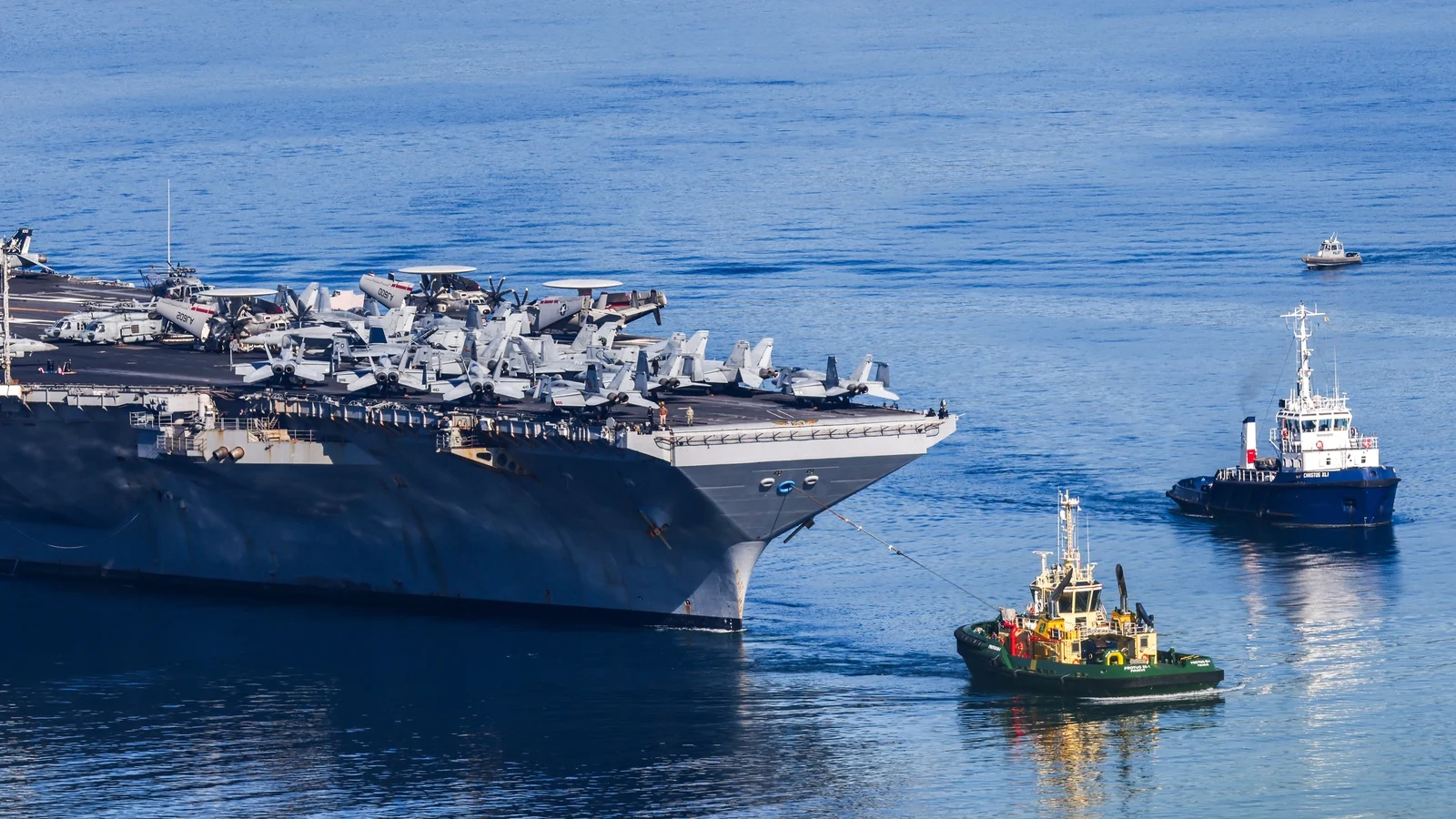
The Mediterranean is a corridor of old empires and new anxieties. On a clear morning off the shores of Crete, sailors aboard the USS Gerald R. Ford watched the island slip by like a postcard while the rest of the globe readied itself for something far less picturesque: the possibility of a new, large-scale military confrontation with Iran.
It is not just any ship. The Gerald R. Ford is the largest warship the United States has ever built — a city of steel displacing roughly 100,000 tons, carrying several thousand crew and an air wing that can be unleashed across continents. Its arrival at the U.S. base on Crete signaled a logistical muscle-flex that has made analysts and diplomats exchange sober, sometimes panicked, calculations.
“When a carrier this size moves, it changes the conversation,” said a retired naval analyst who has briefed NATO capitals for decades. “It speaks in a language that other governments understand: we are prepared, we can sustain operations, and we are offering options — from deterrence to direct action.”
From Diplomacy to Brinkmanship: The Two-Edged Sword
On one hand, the deployment has been framed by hawks as a long-overdue answer to Tehran’s regional ambitions; on the other, it has intensified fears that a misstep could spark a conflagration with consequences far beyond the Middle East.
“Having tens of ships and hundreds of aircraft in theater gives you a menu of choices,” said a visiting professor of international security in London. “But a menu that looks full also creates expectations — and expectations turn into pressures on leaders to use what they’ve amassed.”
That pressure was visible in Washington. In a recent speech, the U.S. president reiterated a hard line on Iran’s nuclear ambitions and missile programs, language that plays well to domestic audiences who demand toughness. But rhetoric can be slippery; intelligence assessments and strategic realities often tell a more complicated story.
Talks and Tension
At the same time, diplomats hustled. Negotiators convened in Geneva for talks that diplomats privately described as painstaking and cautious. Tehran said progress was made; Washington’s official delegation remained tight-lipped, a signal that, for now, all levers — military and diplomatic — remained in play.
“You keep all options open when you want leverage,” said a former diplomat who has worked sanctions dossiers. “But there’s a world of difference between having options and using them responsibly. The latter requires a very clear exit plan. I don’t see that emerging yet.”
Voices from the Street: Fear, Defiance, Fatigue
Away from the polished briefings and bar charts, ordinary people brace in ways that don’t make headlines. In Tehran, a fruit seller on a narrow alleyway painted with images of past martyrs smiled bitterly when asked what he fears most.
“We have endured sanctions and shortages for years,” he said. “What terrifies people is not slogans, it’s not even missiles. It’s losing what little stability we have. My customers are teachers, cleaners, old people on pensions. If doors close, if ports stop, it is them who suffer.”
On the flight deck of a destroyer shadowing the carrier group, a petty officer described life as a study in adrenaline and tedium: standing watches at dawn and dusk, sleeping in cramped racks, the hum of engines the only constant companion.
“You prepare for the worst, but most days it’s maintenance, drills, and waiting,” she said. “But everyone knows — when readiness is this high, something will happen. People start asking hard questions at home. Wives call. Mothers worry. That human cost is easy to overlook in White House briefings.”
Regional Neighbors Watch — and Fear
Across the Gulf, Washington’s Arab partners, who for years have viewed Tehran as a rival, were not universally supportive of a military route. Saudi Arabia, Qatar, Oman, Türkiye and Egypt have urged restraint. Their calculation is stark: a war in Iran could send millions fleeing borders, disrupt energy flows, and redraw the map of influence in the region.
Consider the Strait of Hormuz — a narrow choke point through which roughly one-fifth of the world’s seaborne oil transits, and a substantial portion of global liquified natural gas shipments. A sustained disruption there would ripple across global markets, pushing energy prices and inflation higher and tightening budgets from New Delhi to Nairobi to Berlin.
“We saw what migration did to Europe after Syria,” said an aid worker who tracked displacement in 2015–2018. “A conflict in Iran could produce waves that dwarf that crisis. Countries that are already stretched would face something catastrophic.”
A Complex Adversary
Many analysts warned against simplifying Iran into a caricature that can be swiftly toppled. The country — home to roughly 86 million people — is geographically vast, politically fractured, and allied in parts with groups and states that complicate any foreign intervention.
“Iran is not Venezuela; it is not isolated from external actors,” said a security analyst who studies state networks. “Russia, China and North Korea are sources of components and know-how. And internally, there are forces, militias and social dynamics that could turn a precise strike into a prolonged insurgency.”
History in the Wings: Lessons Unlearned?
There is also the ghost of past interventions: why did the U.S. and its allies refrain from the high-risk option in decades past? Memories of Afghanistan, Iraq and Libya — conflicts that left long tails of instability and human suffering — still inform the calculations of many who would prefer sanctions and diplomacy over missiles and boots on the ground.
“We have to be brutally honest with ourselves,” said a group of former service members in an open letter to policymakers. “Regime-change wars have a moral cost and often fail to deliver security for civilians. Strength without wisdom has hollow consequences.”
What Would a War Mean for the World?
Let’s list the stakes in plain terms:
- Humanitarian: Millions could be displaced internally and across borders.
- Economic: Energy price shocks and global inflation could follow.
- Security: Proxy actors across Lebanon, Yemen and Iraq could escalate in unpredictable ways.
- Geopolitical: Major powers with ties to Tehran might be drawn into broader rivalry, complicating a conflict further.
“The arithmetic of war is deceptive,” an academic who advised NATO told me. “You count ships, aircraft, and munitions. You don’t easily count the networks of families, commerce, and grievances that war unravels.”
Where Do We Go From Here?
Decision-makers in Washington, Tehran and capitals across Europe and the Middle East now face a series of moral and strategic questions. Is the current deployment a credible deterrent? Is it a pressure tactic to strengthen diplomacy? Or is it the first drumbeat in a campaign that could take years to play out?
There are no easy answers. But there are responsibilities: to civilians who would bear the brunt, to economies that would wobble, and to a global order that has already been taxed by pandemic shocks, climate disasters, and rising inequality.
So what do you think? Should nations lean into forceful deterrence when words have failed, or should they double down on diplomacy even when it feels painfully slow? The world is watching, and the next few weeks will tell whether this moment moves toward resolution or escalation.