When the Sky Shuts: How a Middle East Airspace Closure Sent Shockwaves Through Global Travel
There are moments when the world shrinks to the size of a terminal gate. You watch the departures board flicker from green to red, hear the airline desk click into emergency mode, and suddenly the carefully stitched plans of thousands of people unravel.
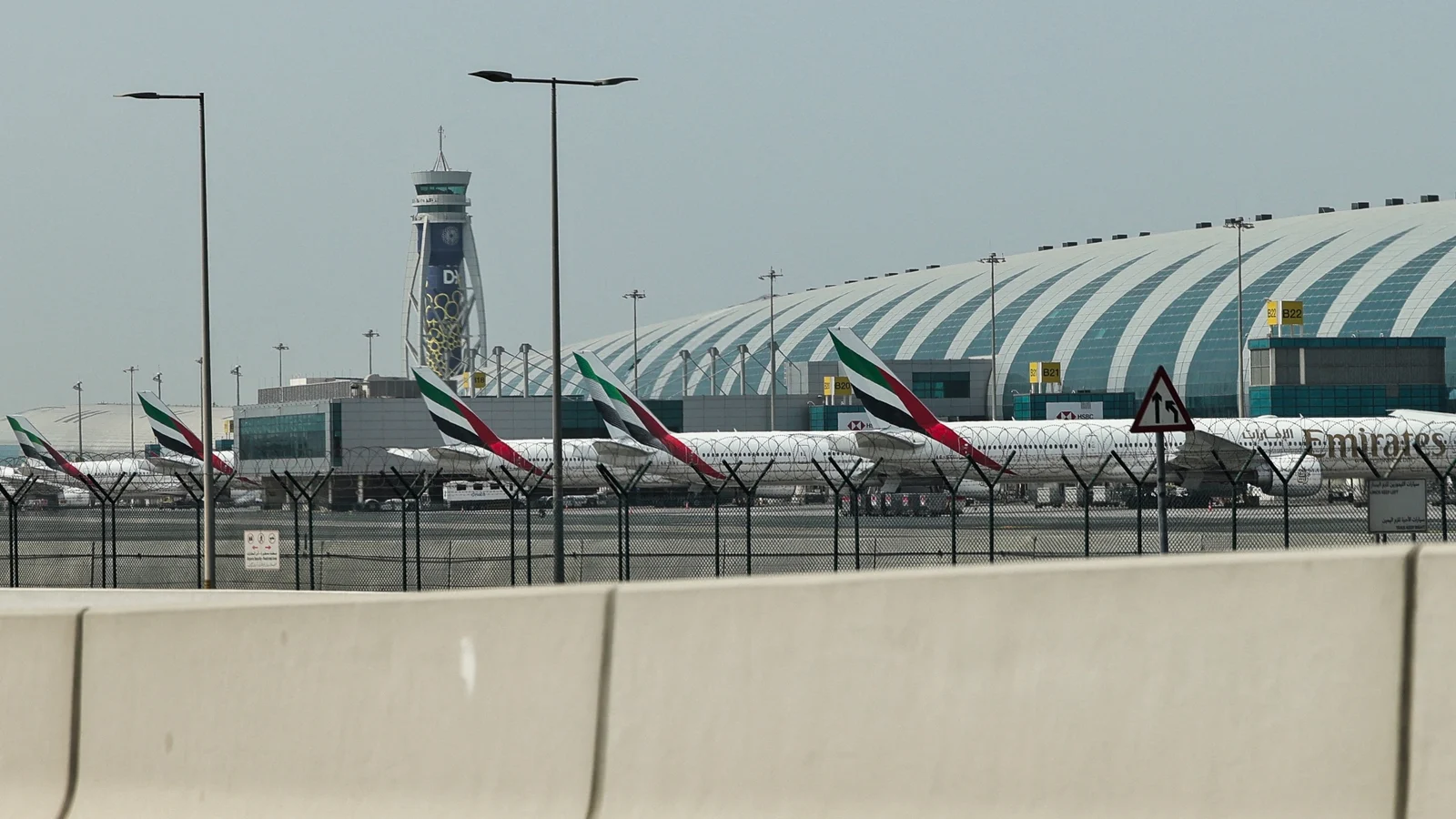
That is the image unfolding this week as a sudden closure of key Middle Eastern airspace — and the grounding of hubs in Dubai, Doha and Abu Dhabi — ripped a hole through global flight routes. The disruption is not a blip. It is a sprawling, messy rerouting of people, schedules and supply chains that has left hotels full, prices jittery and passengers asking whether the era of ultra‑efficient hub travel has a brittle underbelly.
Not just a few flights — a cascading problem
Look at the numbers and the scale becomes chillingly clear. Analysed flight data showed that, on one day alone, 1,579 of 3,990 flights planned to operate to the Middle East were cancelled — roughly 40 percent. Of those cancellations, some 747 flights were destined for the United Arab Emirates and 285 for Qatar. Dublin’s airport authority, daa, estimates 5,000–6,000 passengers have already felt the impact locally — and that’s only the opening act.
“Dublin’s a hub airport; we normally operate a dozen to 14 daily connections to the Gulf,” Graeme McQueen, head of media relations at the daa, told national media. “When those hubs stop, passengers either stay, pivot or are stranded. It’s been chaotic.”
Half a million travellers a day pass through Dubai, Doha and Abu Dhabi under normal circumstances; with those arteries closed, east–west flows — the flights that knit Europe to Asia and Australia — have been severely constricted. “We’ve not seen this level of regional hub disruption outside of a global pandemic,” said one aviation analyst. “The Gulf carriers are central to modern long‑haul travel.”
Inside the terminals: humanity and inconvenience
Walk into any major hub and you would see a shared tableau: people camped on luggage, small children wrapped in blanket jackets, conference travellers staring at screens searching for alternate routings, and airport staff juggling phone calls into the night. A woman from Dublin, stranded in Doha, described the sound of distant explosions and the tingle of uncertainty. “It felt like the whole room held its breath,” she said. “We were all just waiting for the next message.”
Elsewhere, at a makeshift information desk, a hotel concierge helps rebook a family of four who were due to fly to Melbourne for a holiday. “We’ve rearranged rooms twice in 24 hours,” she sighed. “People are tired but polite; they know it’s bigger than any one airline.”
Airport culture and the human details
There are cultural threads woven into the chaos. A retired Irish couple sheltering at Dublin Airport passed around a thermos of tea, offering quiet solidarity. At an overflow hotel near Dubai International, an expat chef pivoted his usual menu to offer simple porridge and flatbreads for stranded passengers, turning his kitchen into a small island of calm. Security staff — multilingual, patient, exhausted — became the unsung translators of worry into action.
Where the airlines stand
The response from carriers has been a patchwork of cancellations, reroutes and flexible rebooking policies. Major operators altered schedules across the region:
- Air France and KLM suspended or warned of disruption on Middle Eastern routes, with some cancellations stretching into early March.
- British Airways opened rebooking windows and refunds for passengers with travel through affected countries.
- Etihad confirmed all commercial flights to and from Abu Dhabi were grounded while Qatar Airways paused operations into Doha.
- Other airlines such as Lufthansa, Singapore Airlines and Turkish Airlines listed multiple suspensions spanning the Middle Eastern network for days ahead.
For many passengers the alternatives are thin. Analysts point out that direct flights from Europe to Southeast Asia or Australasia — the routes that could absorb diverted passengers — are already heavily booked. “There’s simply not a great deal of spare capacity,” said an aviation consultant. “Even where alternatives exist, they’re premium or full.”
Economic tremors: stocks, oil and tourism
Markets responded instantly. Travel shares fell in sympathy: TUI slid roughly 8.5 percent, Lufthansa around 6.5 percent and IAG, British Airways’ parent, near 4.8 percent. Cruise and hotel stocks also retreated as the prospect of prolonged disruption set in.
Fuel prices, too, tightened the screw. Brent crude spiked by around 7 percent, touching levels not seen in months — a reminder that geopolitics at altitude has consequences on the ground, from ticket prices to airline margins.
Major events, small mercy
Not every calendar item is collapsing. Organisers of the Australian Grand Prix, for example, expressed confidence the race would go ahead despite staff scrambling to rearrange travel. “We’re adapting; contingency plans are in place,” one official said. It’s a small solace for fans and workers who must still thread new itineraries through a thinning web of flights.
What travellers can do now
If you’re scheduled to travel to or through the affected hubs, here are some practical steps gleaned from airline staff, airport reps and veteran travellers:
- Check your airline’s website first — they often update rebooking and refund policies online before calling centres catch up.
- Consider travel insurance that covers cancellations tied to political unrest or airspace closures; read the fine print.
- Stay flexible: overnighting near the airport or choosing a longer, multi‑stop routing might be the only way forward.
- Expect longer queues and delays — build extra time if you must move between airports or change airlines.
What this means for the future of global travel
There is a deeper question here. We’ve built a travel ecosystem that prizes speed and efficiency — the hub-and-spoke model that concentrates millions of passengers through a handful of mega-hubs. That model is marvelously efficient until the hubs are closed.
Will airlines diversify routes? Will governments invest in redundancy? Or will passengers, burned by the experience, demand more resilient, direct connections? These are not only business questions; they are about how we keep the world connected in an increasingly volatile geopolitical climate.
As you read this, someone is repacking a suitcase, switching a phone number to voicemail, or choosing between sleeping on a terminal bench and a cramped hotel room. They are part of a ripple that began in the skies above the Gulf and reached around the planet. How we respond — with compassion, better planning, and clearer communication — will determine whether this week’s chaos is a one-off or the beginning of a new normal.
Where were you when the departures board went dark? How would you plan differently if the sky could close for days? The answers will shape travel for years to come.