The Man in the Bathtub: How a Name Began to Unravel a Global Mystery
They arrived in an ambulance as if it were an art project and a relief mission rolled into one. The vehicle bumped up the lane to a block hollowed out by explosions, metal ribs and concrete screaming against a cold Ukrainian sky. Three figures climbed out: two masked, one not. One of the three leaned on prosthetic legs, steady as a volunteer with a camera and a purpose.
Minutes later, against an apartment wall that yesterday was a room and today was rubble, a small, ridiculous, heartbreaking scene took shape: a bearded man in a bathtub, lathering himself in the middle of wreckage. The paint was clean and wry. The idea was simple and cruel in equal measure — life’s intimate rituals colliding with the devastation of war.
That mural on a gutted wall outside Kyiv would be claimed by Banksy. For decades, the name “Banksy” has been less an identity than a performance: a mask worn by an anonymous provocateur who turned the streets into a mirror for public conscience. But last year, after an in-depth investigation, reporters followed threads that led not to a mythical band of renegades but to a name on a passport: Robin Gunningham. Later, they found a record of that name reappearing as David Jones on travel documents — a commonplace British alias, a camouflage that blends in with thousands of others.
Horenka: Where Paint Meets the Sound of Shells
Horenka sits less than eight kilometres east of Bucha, the town that shocked the world after mass killings were found there. Walk its lanes and you feel the political in your bones. Neighbors brew coffee on single-burner stoves and tell you, without fuss, about ambulances that brought both aid and subversive art. “They came like medics but they painted hope,” said Tetiana Reznychenko, a resident who boiled water and handed cups to the men that day. “I remember looking at that bathtub and thinking: who makes a joke now? Then I felt something like grief and a smile at the same time.”
Giles Duley, the documentary photographer who lost limbs in Afghanistan and has spent years delivering ambulances to Ukraine, later acknowledged helping escort painters to sites. “If it drew attention to the living, to the broken, to survivors — then it had value,” he told a reporter. “Art can be a stretcher as much as a siren.”
The graffiti that traveled with an ambulance
The images in Ukraine were not anonymous postings on a wall and then forgotten. Banksy himself posted footage on Instagram, a short, shadowed film showing a hooded man at work amid the wreckage. Social feeds exploded. The art world, the curious, and the grieving tuned in. People tried to capture a clue in every camera angle, in every limp shirt sleeve. Reporters on the ground showed locals photographic line-ups of rumored candidates. Eyes widened. Heads shook. Recognition flickered like a half-remembered song.
Following Tracks from Bristol to Kyiv and Back
The chase crossed continents but used small, painfully human things: passport stamps, arrest records, school magazines. A key clue was a name on the move. On 28 October 2022, people with documented ties to British street culture — including a photographer and a musician connected to the trip-hop band Massive Attack — crossed into Ukraine from Poland. Around the same time, a passport for “David Jones” left Ukraine. The birthdate on that passport matched the birthdate of Robin Gunningham, a Bristol native born in 1973 who had been whispered about in tabloids since the early 2000s.
David Jones is not a rare name. In 2017, analysis by identity-data company GBG suggested there were roughly 6,000 men in the UK with that name. It is, in other words, excellent camouflage.
But camouflage only matters when someone takes it off. In 2000, court records in New York show that a man named Robin Gunningham was arrested after allegedly defacing a billboard on a rooftop on Hudson Street. The paperwork included signatures and pleas, echoes across decades. Photographs from Jamaica in 2004 — taken by a local photographer who later posted them online — show an artist at work; several images revealed the subject’s face from different angles. Those images were circulated and compared by journalists and enthusiasts for years.
The Cost of Anonymity — and Why It Matters
Banksy’s anonymity has been as integral to the work as his stencils. The mask lets the message move unfettered by celebrity. Critics say it keeps the audience looking outward at the commentary rather than inward at the artist’s biography. Fans feel the same privacy is a performance — art operating like an urban myth. Yet when that anonymity frays, conversations shift. Is it revelation or trespass to name a person who has cultivated mystery for decades?
“An artist’s work can be the public’s property in spirit, but their private life isn’t,” said Dr. Elena Marsh, an art historian at the University of Bristol. “When you pull the curtain back you change the art, sometimes irrevocably. A mural in a war zone has to be understood through the image itself — but the artist’s identity can shove viewers into new narratives: of accountability, of biography, of market value.”
From Vandal to National Treasure: The Economics of a Secret
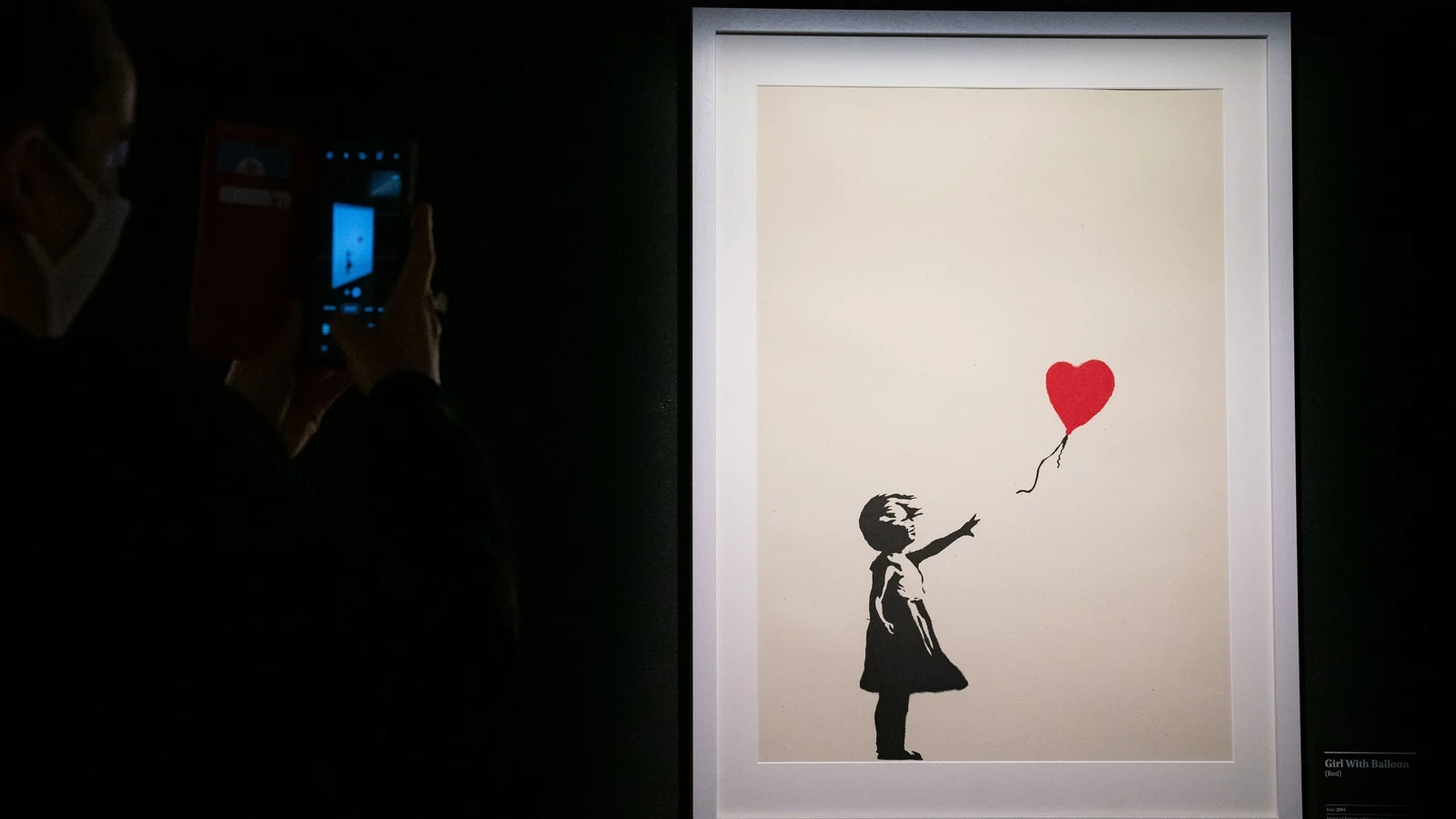
Banksy’s stencils have transformed urban walls into auction block headlines. His “Girl with Balloon” famously self-shredded at a Sotheby’s auction in 2018, then re-emerged as “Love is in the Bin” and fetched millions more than its original sale price. The piece’s dramatic alteration and the public spectacle around it turned a prank into an enormous financial and cultural event: the shredded canvas later sold for about $25 million.
Over the years, Banksy’s works have generated tens of millions of dollars. In Britain he occupies an odd pedestal: in some surveys the public has rated him more popular than historic masters like Rembrandt or Monet. Perhaps that says more about our appetite for accessible provocation than about aesthetics alone.
“There is a deep appetite for the unsanctioned voice,” said an auction-house associate who asked to remain anonymous. “Collectors want the edge. Institutions want the story. Banksy gave both and then refused the script.”
Ethics, Fame, and the Right to Hide
When a private man is suggested to be a public figure, community reactions vary. Some in Bristol, where a teenage Robin Gunningham once drew cartoons for his school magazine, shrug. “He was always a bit theatrical at school,” a former classmate told a local reporter. “He liked messing about on stage as much as on walls.” Others — art dealers, friends, and intermediaries — stay silent, bound by loyalty or legal obligations. “I don’t want to be the guy who exposes Banksy,” one well-known collector said in the wake of the investigation. Silence has its own moral weight.
But there is also a larger question. When an artist chooses to paint in a war zone, are they an observer, a protester, a profiteer, or an ally? The ambulance that arrived in Horenka was a literal vehicle of aid; the canvases were the ideological ones. “Art can spotlight suffering without solving it,” said a local humanitarian worker. “But it can also bring strangers to notice what we’ve been living every day.”
What Do We Owe Mystery?
So what are we left with after a name is placed beside a stencil? We have the image of a bathtub on a ruined wall, still as absurd and affronting as it was the day it was painted. We have legal notes, travel logs, and a decades-old arrest. We have the taste for celebrity that turns guerrilla art into auction fodder. And we have a question: does knowing the maker make the work truer or less true?
Perhaps the most honest answer is that both are possible. Identities illuminate; identities also confine. Banksy may be, in the ledger of bureaucracy, Robin Gunningham or a man who used the name David Jones. Or maybe Banksy is simply a set of impulses: mischief, critique, tenderness, and an unflinching eye for the absurd. Which one do you prefer to believe? When a mask slips for good, what do you lose — and what do you gain?
As you scroll past the picture of a mural on your feed, think of the people who live near that wall. Their memories are not lines in a police file. They are cups of coffee, the sound of children in a courtyard, the geographies of grief that art can sometimes, fleetingly, make visible.