Smoke over Habboush: A Ceasefire That Never Felt Like One
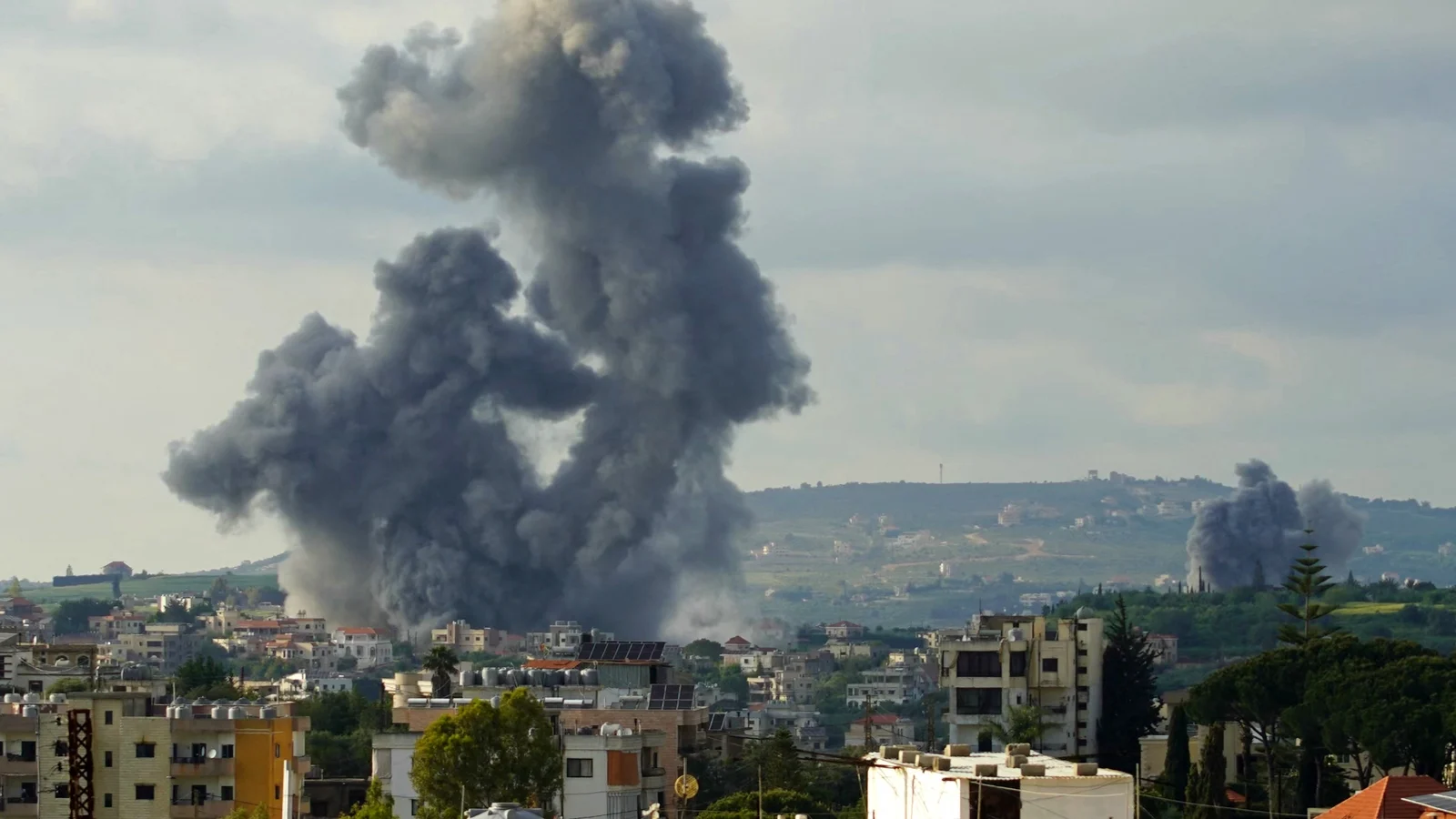
When the bombs fell in Habboush, the smoke didn’t simply rise — it climbed like a mute accusation against a fragile promise. I watched the images and, for a moment, could smell the burnt fabric and dust through the screen: whitecloaked volunteers running, a child’s shoe on a road, shutters trembling from the shock of another strike.
Lebanon’s health ministry later said 12 people were killed across the south in the latest Israeli strikes. Eight were killed in Habboush — among them a child and two women — and 21 people were wounded. In neighbouring Zrariyeh, four people died and four were injured. These are numbers, yes, but behind each figure is a family rearranged, a kitchen emptied of its familiar life.
The warning that came too late
Residents of Habboush say they were told by the Israeli army to leave to “open areas” at least one kilometre from the town. The problem was not only the order itself, but the timing. Less than an hour after the warning, state photographers captured clouds of smoke rising from the same streets the notice had told people to flee.
“They told us to go to the fields,” said one Habboush resident I spoke to over the phone, his voice brittle with sleep and fear. “But where do you go when there is nowhere safe? The open ground is only grass and the sky is still full of planes.”
Ceasefire in name, not in life
On 17 April a ceasefire was announced after more than six weeks of intense fighting between Israel and Hezbollah. The text of that agreement carved out an exception: Israel retained the right to act against “planned, imminent or ongoing attacks”. Yet the raids and artillery fire did not stop. Israel has continued to operate inside what is being called a “Yellow Line” — a 10-kilometre strip into Lebanese territory where soldiers have been conducting detonations and large demolitions.
In the town of Yaroun, local reports say soldiers detonated buildings and destroyed a monastery and a school run by a religious order. Shamaa, too, was the scene of detonations. The coastal city of Tyre — known to the world for its ancient ruins and its fishermen — heard the pounding of shells and warplanes in a place that, until recently, smelled of salt and frying fish at dawn.
Why those details matter
Monasteries and schools are not just bricks. They are places where histories and hopes live. To flatten a school is to flatten a generation’s classroom, its routine, its safe place to be a child. To demolish a religious site is to take at least a sliver of a community’s identity. These are symbolic and practical blows to the fabric of everyday life in a country already fraying at the edges.
Frontlines close to home: First responders under fire
Perhaps the most wrenching detail is the toll on those who run toward danger rather than away from it. Lebanon’s health ministry records show that since 2 March more than 2,600 people have been killed in Israeli strikes — a grim total that includes 103 emergency workers and paramedics. Two Lebanese Red Cross paramedics were among those killed in recent strikes.
“When our volunteers go out, they fear for their lives,” said a humanitarian coordinator who asked to remain unnamed for safety reasons. “They are not soldiers. They carry stretchers, water, blankets. Their job is to bring someone back to their family alive. The idea that someone who saves lives could be targeted is unbearable.”
Xavier Castellanos, the under-secretary general for national society development and coordination at the International Federation of Red Cross and Red Crescent Societies, offered a similar lament near Beirut: that the volunteers who step into rubble and smoke do so with a real fear that their mission makes them a target.
Voices from the ground
“My friend was a paramedic,” a neighbour in Ain Baal told me. “He would always make tea for us when he came by, even during checkpoints. Now his uniform is folded on a chair in his house. People ask how we sleep. I say, we don’t. We just rest with one eye open.”
These are ordinary people with breaks in their days for bread and coffee, for catching up at the souk, for Sunday prayers. The war has made heroism banal; saving a life is a daily chore that has become life-threatening.
Local colours: Tyre, olives and the weight of history
To understand the ache of the south, picture Tyre at dawn: fishermen hauling nets from the Mediterranean, the tiled roofs glittering, a hush broken by the call to prayer and the smell of za’atar warming in tiny bakeries. Now imagine those streets punctured by the sound of distant artillery. It is not just the loss of life — it is the theft of routine, the erasure of a community’s daily rituals.
Olive groves in the hills, family gardens divided by generations, monasteries that held manuscripts and memory — these are collateral in a war whose reverberations stretch far beyond borders. People point to the cedar trees inland and ask, “Who will claim our history when our homes are gone?”
Numbers that stubbornly refuse to capture reality
- Latest local tallies: 12 killed in recent southern strikes — 8 in Habboush, 4 in Zrariyeh;
- Wounded in those attacks: at least 25 people (21 in Habboush, 4 in Zrariyeh);
- Total fatalities since 2 March (Lebanon’s health ministry): more than 2,600, including 103 emergency workers;
- Ceasefire date: 17 April, with carve-outs for “planned, imminent or ongoing attacks”;
- “Yellow Line”: Israeli operations extending roughly 10 km inside Lebanon.
What this means beyond the tallies
Ask yourself: what does a ceasefire mean when the instruments of war still hold sway? To many Lebanese, it feels like a contract written in pencil — easy to erase. The continuation of strikes under a ceasefire umbrella raises questions about the shape of modern agreements and the calculus nations use when they say “we paused” but their planes remain in the air.
Globally, the images from Habboush and Tyre pose a larger challenge. We debate rules of engagement and the sanctity of humanitarian workers while entire neighbourhoods are reduced to addressless ruins. We speak of precision strikes while the casualties are mothers, children, paramedics, teachers.
Looking ahead
For people living in the south, days blur into a monotonous negotiation with danger: where to sleep, when to send the children to fetch water, whether to tend the goat that feeds the family. For humanitarian organisations, the dilemmas are thornier: how to deliver aid when roads are uncertain, how to protect volunteers, how to maintain neutrality in a landscape where the map of danger shifts daily.
“We need corridors for aid that are respected,” a Beirut-based aid worker told me. “This isn’t charity. It’s survival. And survival needs rules — rules that everyone has to follow.”
Questions to hold with you
As you close this piece, consider these questions: Can a ceasefire be meaningful while exceptions swallow the rule? How do we protect those who risk everything to rescue a neighbour? And what responsibility do distant bystanders — the global community, policymakers, readers of this post — have to turn numbers into urgent action?
The south of Lebanon is not just a theatre of war; it is a collection of towns with kitchens, olive trees, priests, teachers, and volunteers. The smoke that rose over Habboush was not just from an explosion. It was the smoke of homes, histories, and fragile agreements burning in real time. If we are to keep witnessing, let it be with the intent to understand and to act.