A City Awakes to Sirens: Tehran, Tel Aviv and the Fragile Breaths Between War and Peace
It was not the ordinary clatter of Tehran traffic nor the soft bargaining in the neighborhood bazaar that woke people before dawn. It was a horizon lit by explosions and the distant, jagged sound of missiles cleaving the cold morning air.
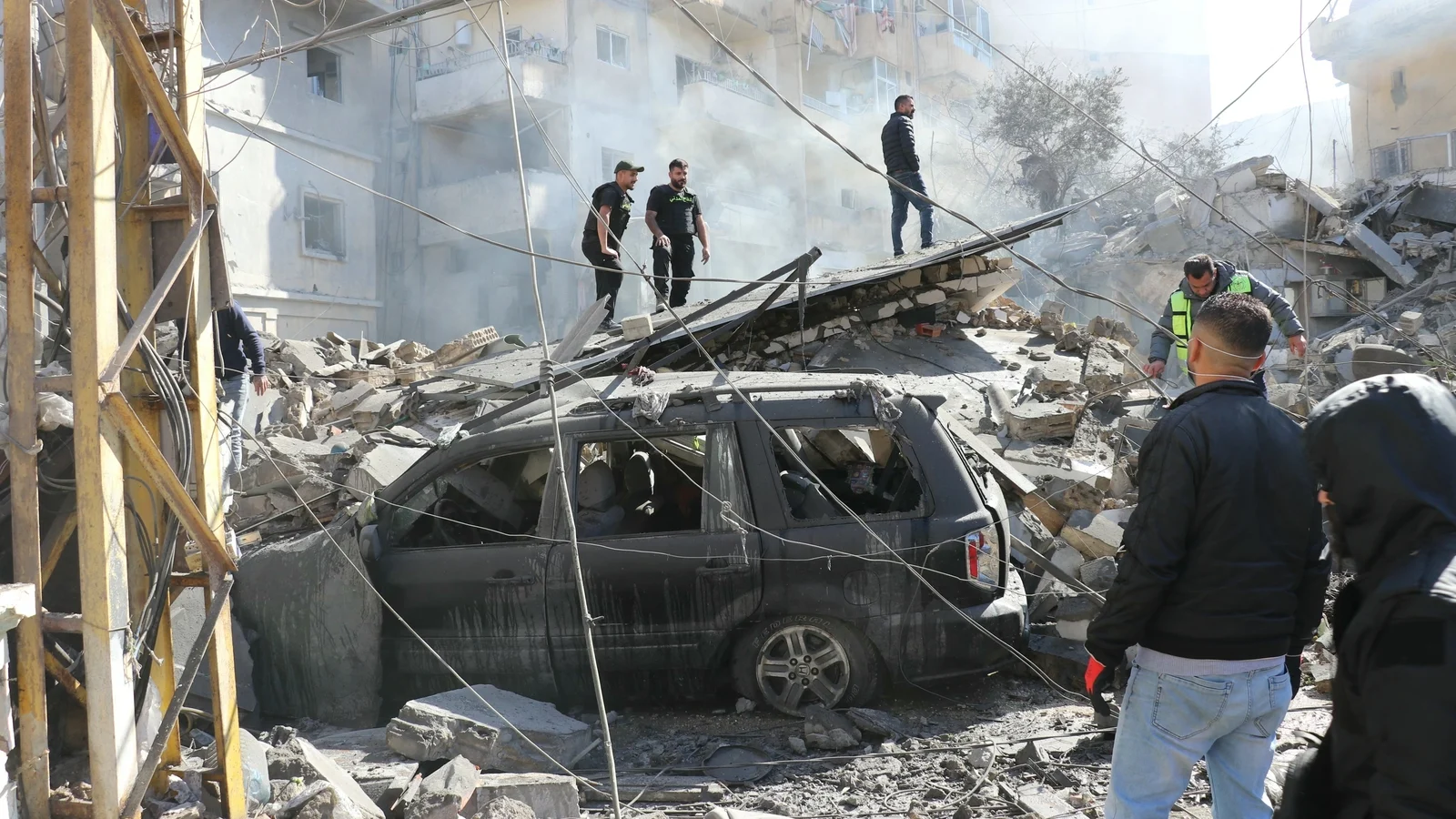
On one side of that stretch of sky, Israeli forces announced a series of strikes across Iran’s capital. On the other, Iranian media described rescuers picking through the rubble of a residential neighborhood, the air thick with dust and the unmistakable, human sound of people calling for those they love.
“I grabbed my daughter and we hid in the stairwell,” said a woman in north Tehran who identified herself only as Leila. “The windows shook. We don’t know if our neighbors are alive yet. I can taste metal in my mouth.”
When cities become battlefields, the smallest human details — a scorched curtain, a child’s toy in dust — become the most eloquent testimony to what is being lost.
The Latest Blows and Counterblows
The Israeli Defense Forces posted on social media that it had struck infrastructure targets across Tehran. Iran’s semi-official SNN agency reported that the strikes hit a residential area, with emergency crews searching for survivors amid collapsed concrete and twisted metal.
Kuwait and Saudi Arabia both reported repelling fresh drone attacks, though they stopped short of publicly identifying the attackers. In Kuwait, drones struck a fuel tank at the international airport, igniting a blaze. Kuwait’s Civil Aviation Authority said there were no casualties, but the incident shuttered operations and set off fears about the safety of civilian hubs in wartime.
Iran’s Revolutionary Guards said they had launched strikes targeting Israeli cities — including Tel Aviv and the northern town of Kiryat Shmona — and also struck U.S. bases in Kuwait, Jordan and Bahrain, according to state media. In Tel Aviv, emergency services were pictured at the site of an Iranian missile strike, smoke curling above a scarred skyline.
“You feel like you’re in the middle of a nightmare,” said Amir, an ambulance driver who had been at scenes in Tel Aviv. “We’re trained for emergencies, but this is different: people are not just hurt, they’re shattered.”
Small Devices, Big Consequences
Drones — relatively low-cost but increasingly weaponized — have amplified the theater of conflict. Analysts say their use has made borders more porous, enabling attacks on infrastructure far from front lines. “Drones change the calculus,” said Dr. Helena Rivers, a defense analyst who studies unmanned systems. “They’re cheap, deniable and disruptive. We’re seeing a rapid evolution in asymmetrical warfare.”
Talks Between Bombs: A 15-Point Plan and Fragile Diplomacy
In the midst of these strikes, President Donald Trump told reporters the United States was making progress in outreach aimed at ending the war, and that “the right people” in Iran were engaged in talks. Media reports — notably the New York Times and Israeli Channel 12 — said Washington had sent Tehran a 15-point proposal that could include a temporary, month-long ceasefire.
According to these reports, the plan reportedly touches on the dismantling of Iran’s nuclear program, halting support for proxy groups such as Hezbollah, and reopening the Strait of Hormuz to international shipping. A White House aide, speaking on background, said the proposal was intended to be a starting point for negotiation rather than a final blueprint.
But in Tehran, hardliners signaled skepticism. Mohammad Baqer Qalibaf, speaker of Iran’s parliament, dismissed parts of the reporting as “fake news,” underscoring the political complexity of turning a paper plan into a durable accord.
Intermediaries, Offers and the Risk of Misstep
Pakistan’s prime minister publicly offered to host talks, and Oman — which has quietly served as a conduit for months — said progress had been made in earlier mediation. Yet even as diplomats hustle, the Pentagon reportedly prepares to send more troops to the region, including elements possibly drawn from the storied 82nd Airborne Division. If it goes ahead, that reinforcement would add to roughly 50,000 U.S. forces already reported in the area.
“Diplomacy and military posture are running on two parallel tracks,” observed Farah Mahmoud, a former UN arms inspector. “That’s normal — and dangerous. Each move in one lane affects the other. Misreading intentions here is very easy and very costly.”
How the World Feels the Shock
Beyond the immediate fear and grief, the war has sent tremors through global markets. The effective closure of the Strait of Hormuz — the narrow maritime nerve through which roughly 20% of the world’s oil and liquefied natural gas normally flows — has already produced what some analysts call the worst energy supply shock in modern history.
Reports that the U.S. had sent a ceasefire proposal gave markets a moment of hope: stocks ticked up and oil prices eased on the possibility that Gulf exports could resume. But hope is brittle in wartime; a single new attack can snap it in two.
Supply chains feel it, airlines feel it, consumers feel it. Fuel shortages and price volatility ripple from global shipping to the corner store. “This is not a regional problem,” said Sarah Klein, an energy economist. “It’s a global vulnerability. A disruption here means higher bills and rationed supplies thousands of miles away.”
On the Ground: Voices, Loss and the Ordinary Lives Interrupted
Scenes in the West Bank, where residents inspected the remains of an intercepted Iranian missile, and in neighborhoods of Tehran and Tel Aviv, shared an unsettling sameness: broken glass, smoke-streaked facades, quiet people who had been forced to become witnesses. A shopkeeper in Ramallah ran his hand along a charred shutter and told me, “We don’t want to be part of this war. We just want our children to sleep at night.”
Emergency workers on all sides speak of exhaustion and a strange camaraderie. “We don’t choose sides when we pull someone from the rubble,” said an Israeli medic. “We choose life.”
Questions to Carry Forward
What would peace look like after such a fracture? Can a 15-point plan — negotiated amid explosions and political theater — deliver the structural changes some demand: limits on nuclear development, an end to proxy warfare, and guarantees for freedom of navigation?
Perhaps the more urgent question is for readers far from this region: how quickly can global systems — markets, humanitarian aid networks, diplomatic institutions — move from crisis mode into constructive action? And at what human cost will the answers be found?
As the smoke settles tonight in parts of Tehran and Tel Aviv, and as diplomats and generals both weigh their next steps, remember the quiet facts behind the headlines: lives disrupted, fields of commerce shaken, and a fragile pact between nations hanging by a thread. The world watches not merely to see who wins or loses, but to ensure that ordinary people — mothers, shopkeepers, ambulance drivers — do not become permanent collateral in a conflict that could have been resolved at a table, not on a map of rubble.