Between Bluff and Bombs: A Gulf on Edge
There is a peculiar hush that has settled over parts of Tehran and the ports hugging the Persian Gulf — not the silence of calm, but the taut silence of people waiting to see which wire will snap. Across the world, trading floors, government halls and kitchen tables are watching the same shared spectacle: a superpower loudly threatening to unleash overwhelming force, and a defiant state publicly insisting it will not bend.
The dinner that became a declaration
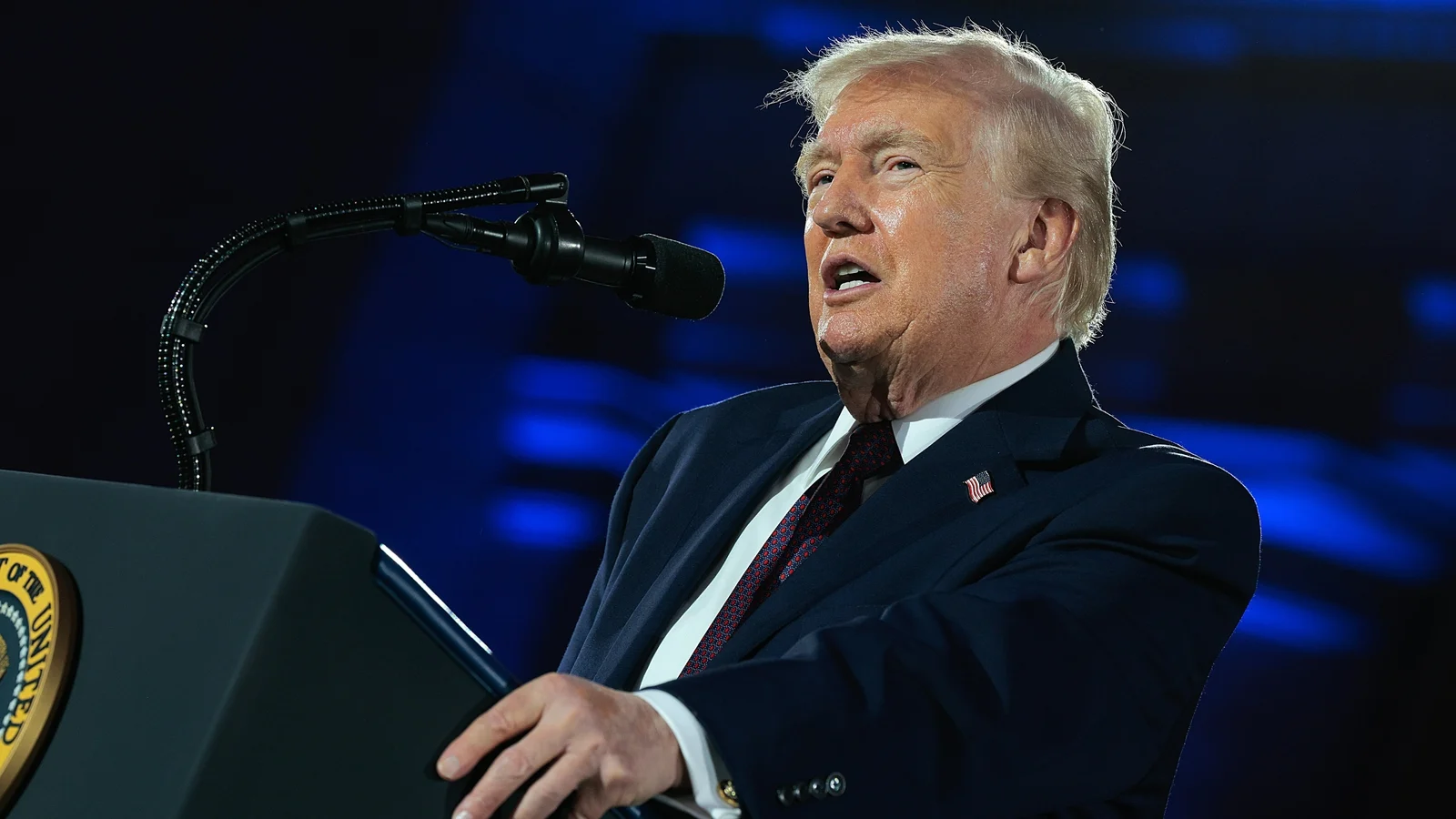
At a private dinner with Republican lawmakers, the U.S. president leaned into a line that has been ricocheting across cable networks and social feeds. He said Iran wanted a deal, he said Iranian negotiators were afraid to admit it, and he framed the whole episode as a military operation — carefully avoiding the “w” word that would trigger a constitutional chorus demanding congressional approval.
“They want an agreement badly, but they’re scared to say so,” he told his audience. “They’re worried about reprisals from their own side — and yes, they’re wary of us too.”
Inside the White House, aides spoke in a language of maximal pressure. “We’re delivering a clear message: if Tehran does not accept the reality of their situation, we will strike harder than before,” a senior administration official said on background. “This is not bluster.”
Tehran’s public posture — and the private unease
In Tehran, senior diplomats were equally categorical but in the opposite direction. “We do not intend to negotiate,” one foreign ministry statement bluntly asserted, reflecting official defiance. On the ground, though, the mood was more complicated.
“People talk in whispers — in the teahouses, in the bazaars,” said Sahar*, a middle-aged tea seller near the Grand Bazaar. “The men who used to shout in the square are quieter now. You can feel fear in the air, not for the war itself, but for what comes next.”
A university student, who asked not to be named, echoed that private strain. “Publicly we are told to be brave. But everyone knows a negotiation behind closed doors looks different than the slogans on the billboards,” she said. “There are families with sons at the border and they don’t want this to get worse.”
What’s actually at stake: oil, shipping, and the global economy
Less poetic and more fearsome is the geometry: the Strait of Hormuz, a narrow funnel of water through which roughly one-fifth of the world’s seaborne oil passes. Close that faucet, and the global oil market gasps.
Analysts remind us that chokepoints like Hormuz are not abstract strategic prizes; they are arteries. “Even short-term disruptions in flows through Hormuz can spike tanker rates, scramble refining margins and feed inflation,” said Laila Chen, an energy policy analyst at a Washington think tank. “Economies that import energy will feel it in a matter of days.”
Central banks and economists are already doing the math. Some estimates suggest that a sustained supply shock could add several percentage points to inflation in vulnerable economies and shave growth in import-dependent nations. In several countries, officials are watching forecasts that show inflation trajectories deteriorating if the conflict widens.
Military moves and media moves
The U.S. has signaled it is reinforcing its presence in the Gulf: thousands of airborne troops, additional marines, and a heightened naval posture. Officials say the build-up is calibrated — deterrence, they argue, not escalation. “Troops are being staged to give us options,” a Pentagon source said. “But the president has been explicit: this is a limited operation unless Tehran changes course.”
Yet rhetoric matters. “Words like ‘unleash hell’ or talk of hitting someone ‘harder than they’ve ever been hit’ change calculations,” said Amal Haddad, a professor of Middle East studies in Beirut. “They can compress decision timelines and ratchet up paranoia on both sides.”
Inside the negotiation room — if one really exists
There is a persistent narrative that talks are happening quietly — in third countries, through backchannels, with non-clerical figures in Iran acting as interlocutors. Islamabad has been mentioned as a potential mediator; Islamabad’s officials have historically played that role between Washington and Tehran on several occasions.
“Diplomacy often goes underground when stakes are high,” noted a former diplomat who has worked Gulf negotiations. “Public denials and private contacts are two sides of the same coin. Neither side wants to show weakness at home.”
For the public, the lack of clarity is maddening. “Who is talking to whom? Who’s representing who?” asked Reza, a taxi driver in Shiraz, frustrated. “We hear headlines but nothing that comforts us. The fear is the not knowing.”
Domestic politics: a theater as much as a strategy
In Washington, the unfolding drama has been folded into domestic political battles. The administration’s choice to term the campaign a “military operation” instead of a “war” is not just semantics. It is a legal and political strategy to manage congressional oversight.
“This administration has repeatedly chosen language to keep options open, both in theater and at home,” said a congressional staffer who asked to remain anonymous. “They’re trying to limit the political fallout while keeping the pressure on.”
Democrats have criticized the approach as reckless and designed to sidestep Congress; Republicans counter that decisive action is needed to deter a state they describe as aggressive and destabilizing. The partisan reverberations add a new, domestic front to an already complicated conflict.
Human stories and the moral calculus
Beyond geopolitics lies the quieter ledger of human cost: sailors rerouted, merchants watching insurance bills spike, families who have lost breadwinners in earlier rounds of violence. “We are small merchants,” said Farideh, a rug trader in Isfahan. “If ports close, people don’t have work. If the price of fuel doubles, everything becomes harder. Politics plays out on our tables.”
And then there is the psychological cost. Long decades of conflict have left scars — in memory, in urban landscapes, and in the way people speak to one another. “Every time a new crisis flares, it reopens old wounds,” said Haddad. “And it teaches new generations that force is a language of politics.”
So what now?
We sit between two kinds of certainty: the near certainty that something will change — markets, troops, rhetoric — and the uncertainty of how big that something will be. Will cooler heads prevail and broker a face-saving exit? Will escalation be contained to naval and aerial exchanges? Or will the fractures deepen into a longer, messier war?
Ask yourself: when a nation boasts about “decimating” another — even in the hyperbole of a political dinner — what does that do to the incentives for diplomacy? And when leaders publicly deny negotiation while quietly nudging channels open, who really wins? The winners are rarely the grand strategists; they are the people whose lives are spent navigating the fallout.
Final thought
In a world where headlines travel faster than compassion, it’s worth pausing to listen to the smaller sounds: the shopkeeper’s slow exhale, the captain’s worried call to his agent, the student asking whether a future is being gambled away. Wars and operations begin in capitals, but their echoes settle in kitchens, classrooms and marketplaces. That is where the true cost is counted.