When Peacekeepers Become Targets: A Night in Southern Lebanon
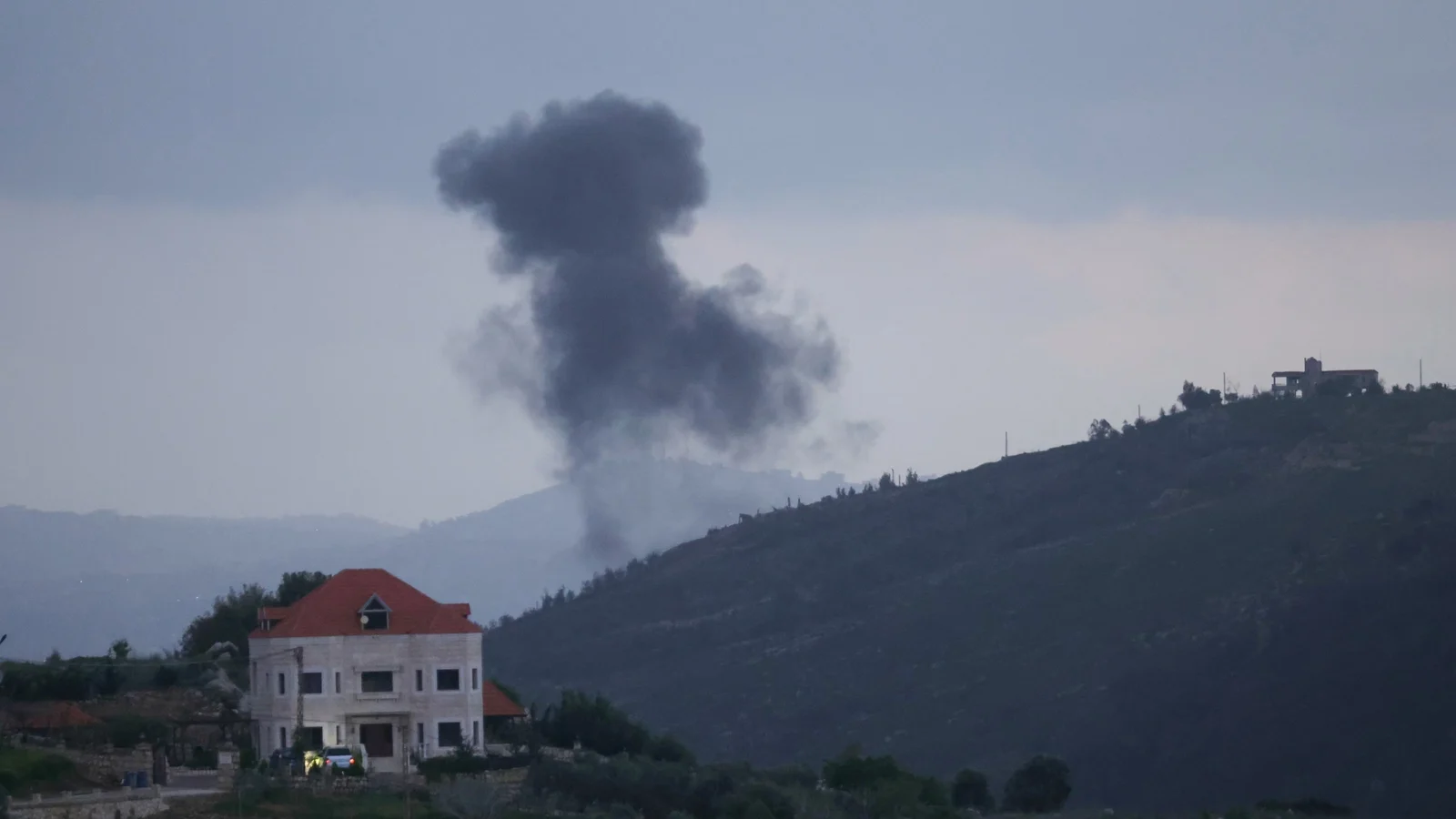
The night air over southern Lebanon carried a brittle stillness — the kind that always seems to come before something breaks. In the village of Adchit al-Qusayr, olive trees cast long, trembling shadows over stone houses. Somewhere not far off, a radio buzzed with the dull, anxious chatter of soldiers on watch. And then a projectile slammed into a UNIFIL position, exploding with a violence that felt both sudden and, in a bleak way, inevitable.
By morning, the United Nations Interim Force in Lebanon (UNIFIL) had confirmed what every whispered fear had feared: an Indonesian peacekeeper had been killed and another critically wounded at the site.
Faces Behind the Blue Helmets
These are not faceless figures in a diplomatic briefing. They are people — fathers and mothers, brothers and sisters — sent from faraway places to keep a sliver of calm in a landscape where calm is thin. “He used to bring cookies to the kids on our street,” said Amal, a woman who runs a tiny grocery near Bint Jbeil, speaking softly about the peacekeepers who patrol her town’s lanes. “When you see them, you think, ‘This is hope.’ Now we are empty of that.”
UNIFIL, created in 1978 to monitor the ceasefire along Lebanon’s southern border, currently operates under a mandate that will continue through 31 December 2026. The force is made up of personnel from more than 40 countries — an international quilt of uniforms and languages sewn together by the pact that peace is worth the risk.
The Incident
UNIFIL said the fatality occurred near Adchit al-Qusayr. Indonesia’s foreign ministry confirmed the deceased was an Indonesian national and reported that three other members of the Indonesian contingent were injured by indirect artillery fire in the vicinity.
“A peacekeeper was tragically killed last night when a projectile exploded in a UNIFIL position near Adchit Al Qusayr. Another was critically injured. No one should ever lose their life serving the cause of peace,” UNIFIL wrote on social media, the terse lines echoing louder than the truest of dispatches.
Antonio Guterres, the UN secretary-general, expressed sorrow and condemnation. “My deepest condolences to the family, friends & colleagues of the peacekeeper who lost their life,” he wrote.
Caught Between Giants
For months, southern Lebanon has been a tinderbox. The recent escalation began in earnest in early March, when Hezbollah fired rockets toward Israel in response to strikes that targeted Iran. Israel’s ensuing operations against Hezbollah have pushed parts of Lebanon into open conflict, and UN positions — meant to be neutral watchtowers — have found themselves increasingly in the line of fire.
It’s not the first time UNIFIL has been struck. On 6 March, Ghanaian soldiers were wounded when their headquarters was hit by missile strikes; Israeli forces later acknowledged that tank fire had struck a UN position that day. In a separate incident, Irish contingent reports noted a roadside device detonated near a patrol, injuring a Polish member of an Irish-led battalion’s unit.
“We are supposed to be a buffer,” said Captain Patrick O’Donnell, an Irish officer currently attached to the UN contingent near Bint Jbeil. “But a buffer that bleeds isn’t doing its job. The laws of war protect us — or at least they’re supposed to. When that collapses, everything else does too.”
How Dangerous Is It, Really?
Numbers can flatten a human story, but they also help us see patterns. UNIFIL’s long tenure — nearly five decades in different forms — has followed the arc of regional tensions. After the UN Security Council voted unanimously last August to end the mission, pressure mounted from some states to wind down the force, and the mission’s final mandate now runs to the end of 2026. Yet the physics of conflict do not respect timetables on paper.
Several thousand personnel from a mosaic of nations still operate along the Blue Line — the UN-demarcated boundary between Lebanon and Israel. They patrol villages, man checkpoints, and monitor ceasefire violations. Increasingly, that puts them on the frontlines of a conflict they did not choose.
In the Streets and the Olive Groves
Walk the lanes of Bint Jbeil and you will hear a language of its own: the clatter of men repairing tires at dusk, the persistent bleat of goats, the exchange of news over concrete stoops. “We sleep with our shoes by the door,” murmured Hassan, who teaches geography at the town school. “When planes fly, you don’t have time to think. You only have time to act. The children ask why the soldiers wear blue. They say ‘they are angels,’ but the angels are getting hurt.”
These micro-scenes matter. They illustrate how conflict reaches down into the ordinary, forcing residents to adapt rituals of survival — curfews, whispered commutes to fetch water, neighborhood groups that swap updates like life-saving currency.
Voices and Vows
In a statement, UNIFIL urged all parties to respect international law and ensure the safety of UN personnel. Indonesia condemned the attack and reaffirmed its stance opposing the violence in southern Lebanon.
“Any harm to peacekeepers is unacceptable,” Indonesia’s foreign ministry said, adding that an investigation was underway to determine the projectile’s origin.
On the ground, the responses are raw and immediate. “We don’t know who fired that night,” said Leila, an aid worker who ferries medical supplies between towns. “But we see soldiers — not fighters — getting shot. It’s grotesque. Peacekeepers are not the enemy.”
What This Means for the Bigger Picture
Why should someone sitting thousands of miles away care about a skirmish in a lemon-scented valley of Lebanon? Because the attack on UN peacekeepers signals a troubling erosion of norms that underpin international stability.
Peacekeeping has always been a precarious enterprise: countries send their most trusted sons and daughters into volatile landscapes under the promise that the world will back their neutrality. When that neutrality is violated, the ripple effects are profound. Nations reconsider contributions; governments weigh casualties against political returns; and local communities — the very people the peacekeepers aim to protect — are left feeling more exposed than ever.
What happens when the guardian becomes a casualty? Who stands between those living on a border and the rising tide of conflict? These are not rhetorical questions. They demand policy attention, fresh negotiations, and, crucially, respect for legal obligations in war.
Closing Thoughts: A Call to Remember the Human Cost
When the night ends and morning light reveals the damage, what remains is the human ledger — a tally of grief, resilience, and stubborn hope. The Indonesian soldier who was killed had a story, not a statistic. The injured peacekeeper has loved ones who will calculate the cost of every midnight alarm and speculative headline.
As the international community watches, we must ask: are we content to watch peacekeepers fall like weather vanes in a storm? Or will we push for a renewed respect for the protective laws that make peacekeeping possible?
For the families in Indonesia, the teachers in Bint Jbeil, and the soldiers who still don the blue helmet, answers cannot come soon enough.
- What you can do: Follow verified updates from UNIFIL and credible news outlets, support humanitarian groups working in the region, and remember the human stories behind the headlines.