Flames on the Water: A Tanker Aflame off Dubai and an Oil-Soaked World Holding Its Breath
At dusk, the Persian Gulf sometimes looks like a sheet of burnished metal — yachts, tankers and the distant needles of Dubai’s skyline reflected on a river of oil. Last night that mirror shattered.
Mariners in small dhows described a column of black smoke rising where a Kuwait-flagged crude tanker, loaded to the brim, burned following what authorities said was a drone strike. The Al‑Salmi — capable of carrying roughly two million barrels of crude, a floating storehouse worth well into the hundreds of millions of dollars — became an instant, fiery punctuation mark in a conflict that refuses to stay confined to maps.
“We could see orange at first, then the smoke turned the whole horizon grey,” said Ahmed al‑Mansouri, a tugboat captain who was helping ferry crews away from the scene. “There was a smell of diesel and burning metal. For a moment, Dubai felt less like a city of glass and more like a place on the edge.”
Immediate Facts, Lingering Questions
Dubai authorities reported the blaze was brought under control and that no injuries had been recorded. Kuwait Petroleum Corporation confirmed crews were assessing damage and monitoring for a possible oil spill. Insurance underwriters and environmental experts will now watch closely; a spill in this busy waterway could affect everything from fisheries to the tiny coral gardens scattered along the emirate’s shallow coast.
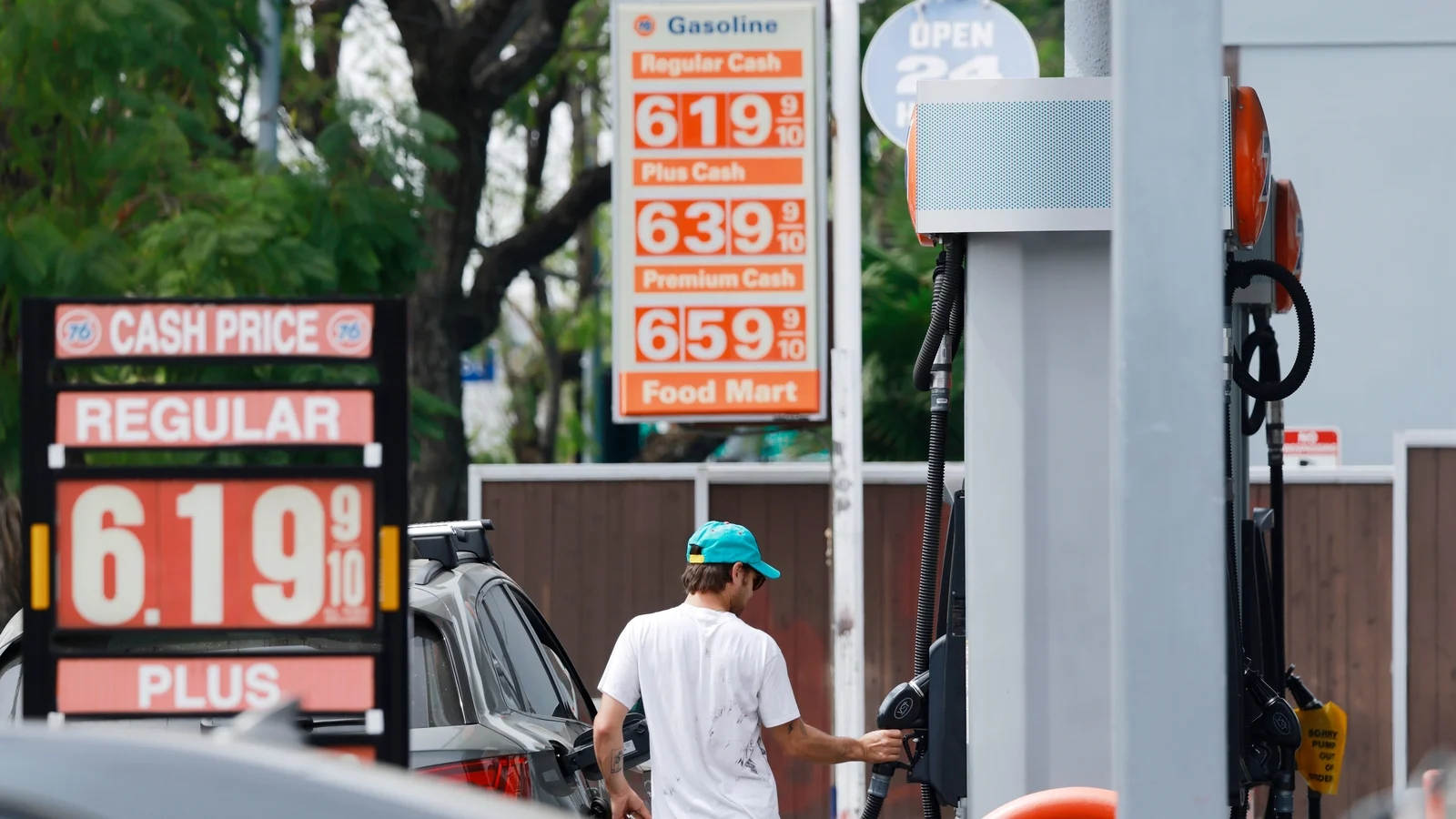
Short-term market reactions were swift. Global crude ticked higher after the news, amid already tight supplies — U.S. crude briefly exceeded $101 a barrel, and the national average retail price of gasoline in the United States crossed $4 a gallon, according to price-tracking services. For millions of households, that’s not an abstract economic indicator; it is a grocery-list calculation, a gas-station sting.
A Conflict That Leapt off the Map
This incident is the latest chapter in a month-long spiral of strikes, counterstrikes and regional proxies. Since the U.S. and Israel launched strikes against Iran on February 28, attacks on merchant vessels in the Gulf and the Strait of Hormuz — by missiles, explosive drones and other means — have multiplied.
Houthi forces in Yemen recently fired missiles and drones at Israel; Turkey reported a ballistic missile from Iran that briefly entered Turkish airspace before being intercepted by NATO defenses. In Lebanon, Israeli strikes targeting Hezbollah positions left the capital with trails of black smoke and a deepening humanitarian chill after three Indonesian UN peacekeepers were killed in two separate incidents.
Thousands of troops from the U.S. Army’s 82nd Airborne Division have been reported moving into the region, a mobilization meant to broaden Washington’s options as diplomacy and deterrence proceed in uneasy parallel. A senior U.S. official, speaking on condition of anonymity, told journalists the reinforcements were intended to “protect maritime traffic and provide a range of options to commanders on the ground.”
Why the Strait of Hormuz Matters
When people outside the region hear “Hormuz,” they may not picture the narrow ribbons of water it is — a strategic chokepoint through which roughly one-fifth of the world’s traded oil and liquefied natural gas normally passes. Close it, and the ripple effects are global: shipping reroutes, freight costs climb, supply chains wobble, and the political pressure on leaders intensifies.
President Donald Trump issued stark warnings tied to that chokepoint, saying in public comments that if the strait remained blocked, the United States would resort to destroying Iranian electricity generation, oil wells and infrastructure on Kharg Island — the latter a critical hub in Iran’s export system. He also floated an idea that raised eyebrows in capitals and markets alike: asking Arab states to shoulder the financial burden of the military campaign.
“We all want a quick end to this,” said Dr. Leila Farahani, an energy security analyst in London. “But threats to critical infrastructure are a dangerous game. Damage to desalination and power plants would ripple through civilian populations and could create humanitarian crises that are far harder to manage than shipping delays.”
On the Streets and the Waterways
In Tehran, citizens gathered in Enqelab Square to protest foreign attacks, their chants a heavy, living echo of national grievance. In the small restaurants along Dubai Creek, expats and Emiratis watched the headlines scroll by on phones and the hum of air-conditioning units, and debated what would come next.
“We shop, we work, we commute. If prices go up, it’s real money out of my pocket,” said Maria Alvarez, a teacher who commutes from Jumeirah to a school near the marina. “I don’t want my classroom to become another place where geopolitics is explained in the salaries students won’t get.”
Economy, Elections and the Politics of Fuel
Fuel prices have swiftly become a political fault line. For U.S. leaders who campaigned on lowering energy costs, the spike is a proximate problem — one that could affect voter sentiment ahead of elections. The White House has sought emergency funding to support military operations, requesting tens of billions for the campaign; in Congress, such asks face resistance, especially when the public questions the direct benefits.
“When you see oil above $100, that is not just a number on the screen,” said Tom Reynolds, an economics professor at a Midwestern university. “It translates into higher transport costs, pricier goods, and strained household budgets. It also shifts leverage: energy-exporting states hold more sway, and importers get squeezed.”
What Would a Wider War Look Like?
Analysts warn that an escalation that takes out power grids, oil infrastructure or desalination facilities would carry humanitarian fallout — from electrical outages in major cities to potable water shortages in places that rely on desalination. Those are not just strategic targets; they are lifelines.
“We have to remember that behind each infrastructure node are hospitals, schools and factories,” said Rana Haddad, a humanitarian coordinator with a Middle Eastern NGO. “When power goes, the people who suffer first are often those who can least afford it.”
Where Do We Go From Here?
Diplomacy is threading its way through the crisis. Reports suggest intermediaries are carrying proposals back and forth — officials in Cairo, Ankara and Islamabad have been cited as backchannels in recent days. Yet Tehran has publicly dismissed some offers as unrealistic, while U.S. spokespeople say private talk differs from public posture.
So we ask you, reader: what do you imagine a durable peace looks like in a region that has carried so much of the world’s energy — and so much of the world’s risk — for decades? Is it enforceable security in the Strait of Hormuz, international guarantees to keep trade flowing, or a deeper reconfiguring of global energy dependence?
The Al‑Salmi’s smoldering hull is more than a headline. It is a reminder that the map we study is also a lived landscape: port workers, tug captains, fishermen, market vendors, and millions of consumers all connected by a fragile, combustible network of commerce and politics.
Tonight, the lights along the Dubai skyline will burn on. The smugglers and the insurance brokers will tally losses. Diplomats will shuttle papers. But in the harbor, a crewless tanker drifting in the wake of flame will stand as a fulcrum — a small, terrible object that can tilt oil markets, shape diplomatic choices and, for a while, change the way the world breathes.
- Key figures: roughly 20% of global traded oil and LNG normally pass through the Strait of Hormuz.
- Market snapshot: U.S. crude above $101 a barrel and national gasoline prices in the U.S. crossing $4 a gallon after a series of strikes.
- Human cost and risk: incidents have already killed peacekeepers and strained humanitarian services in Lebanon and elsewhere.
We will continue to follow this story from the water’s edge and the negotiation table. If you were one of the people watching the smoke last night, what did you think? And if you’re reading this from far away — do you feel the ripple of this crisis in your daily life? Tell us how, and let’s keep the conversation going.