Between Bluster and Breakthrough: A World Holding Its Breath
On a rain-slicked evening in Washington, with cameras trained and advisers whispering behind closed doors, the president told reporters the United States could be pulling back from its campaign against Iran in “a matter of weeks.” The sentence landed like a pebble in a pond—tiny at first, then sending widening ripples through capitals, markets and living rooms from Tehran to Tokyo.
That promise—“we’ll be leaving very soon,” as he put it—came wrapped in contradictions that have become the defining rhythm of this fifth week of open hostilities. One moment the White House talks up pressure and military leverage; the next it nods to diplomacy as a viable exit. Which is the plan? The answer, as anyone who’s followed modern crises knows, is rarely tidy.
The Frontlines: Blows, Bargaining and Backchannels
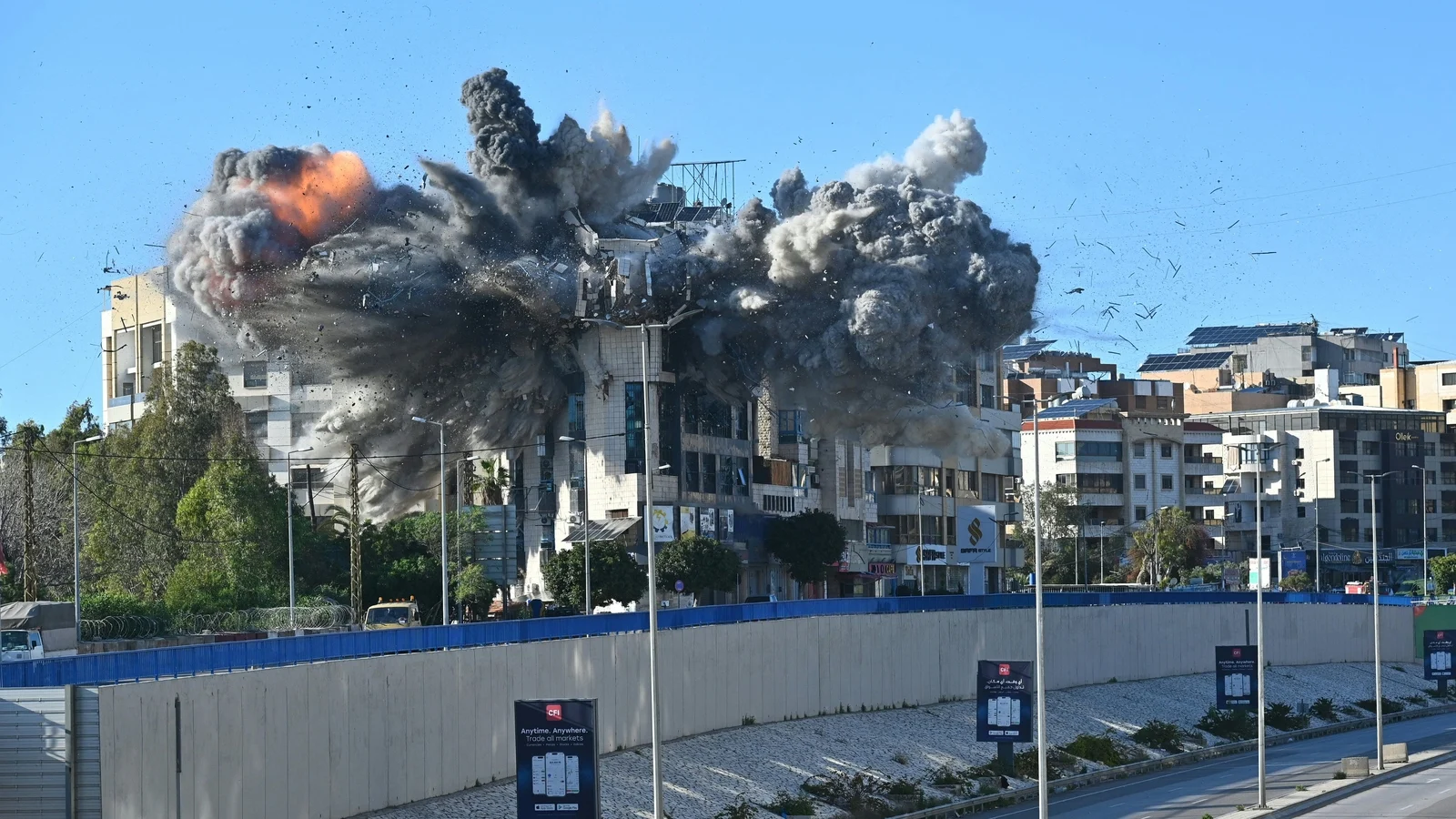
On the ground, the war has been everything the nightly reels warned it would be: airstrikes in Lebanon and Syria, missile exchanges over Damascus, and attacks on research and port facilities that have left parts of Iran’s southern coast in the dark. U.S. commanders say they’ve struck scores of Iranian naval vessels and key infrastructure; Tehran has responded with threats—some symbolic, some concrete—against Western economic targets.
“We have more options, and they have fewer,” a senior U.S. defense official told reporters in Washington. “The coming days will be decisive.”
Meanwhile, Iran’s Revolutionary Guard released a list of companies it said would be targeted from a specific evening—names that sound like the icons of modern commerce: Microsoft, Google, Apple, Intel, IBM, Tesla, Boeing. For digital-native economies and investors, that was a chillier echo than any missile flyover.
- Microsoft
- Apple
- Intel
- IBM
- Tesla
- Boeing
“Threats are cheap in a war of words,” one U.S. White House aide shrugged. “We’ve been preparing for escalation and de-escalation. Diplomacy is simply another tool.”
Street-Level Stories: Fear, Fuel, and the Quiet of Normal Life
Walk through Tehran’s Enghelab Square on a day like any other and you’ll find the usual crowd—students arguing about films, vendors hawking steaming samosas, a grandmother bent over a shopping bag. But there’s an undercurrent of strain: a weather station and a municipal building knocked out in recent strikes; fishermen in Bushehr watching an empty horizon where their livelihoods once cruised; families tallying the cost of disrupted supply chains.
“We have to live,” said Farideh, a seamstress whose shop fronts the square. “If the radios scream and the air smells of smoke, we keep sewing. But we also know every headline is another layer of worry—about fuel, about travel, about whether our sons will be called.”
Her words capture something that rarely shows up in strategy memos: wars are aggregations of small losses. In the United States, a political headache is emerging as gasoline prices march past $4 a gallon—GasBuddy data shows this is the highest national average in over three years—pinching household budgets and reshaping voter temperament ahead of midterm ballots.
Allies and Fractures: NATO’s Uneasy Chorus
The conflict has peeled open fissures among longstanding allies. Some European governments have pushed back on particular U.S.-orchestrated strikes; others have encouraged a harder line. France and Italy, according to diplomatic sources, have expressed reservations about certain operations. Britain found itself in the crosshairs of criticism for what some in Washington termed insufficient support.
“Alliances are not magic,” an EU foreign policy analyst observed. “They’re negotiated, messy, and now they’re being tested by a war that spreads risk into the global economy.”
China and Pakistan, in a diplomatic counter-movement, have urged immediate ceasefire and talks. Pakistan’s foreign ministry has positioned itself as a mediator; Beijing’s calls for restraint have been unambiguous. In a conflict where regional actors’ fates are intimately linked, external mediators may be the only ones with the credibility to convene parties for meaningful talks.
Questions of Exit: How Do Wars End?
The U.S. president was careful to say Iran doesn’t have to “make a deal” with him personally for U.S. forces to scale back. That phrasing—emphatic yet opaque—raises a larger question: what counts as victory? Is it a negotiated ceasefire that preserves certain red lines? Is it a unilateral reduction of forces? Or is it a slow, grinding attrition that leaves political objectives unmet?
“Two-thirds of Americans want this over quickly,” said a recent Reuters/Ipsos poll—a blunt statistic that reframes military calculus through the lens of domestic politics. Public patience for drawn-out conflict is short; the political costs of every higher gas bill or delayed shipment are immediate.
Can Diplomacy Hold Where Bombs Cannot?
Backchannel messages are flowing: Iran’s foreign ministry acknowledged receiving direct messages from a U.S. special envoy, but described them as “communications, not negotiations.” That distinction matters. Communication can prevent miscalculation; negotiation requires concessions and political courage on both sides.
“Messages get you from escalation to conversation,” said Leyla Hosseini, a Tehran-based academic. “But they don’t fix structural mistrust. That is the long work.”
What This Means for the World
Beyond the headlines, the conflict is a case study in the fragility of interconnected systems. Oil flows through the Strait of Hormuz, and that flow is not just barrels of crude but the bloodstream of global trade. Airline routes are being rerouted; insurers are recalibrating risk; ports shake when radars go silent. And economies, large and small, absorb these shocks in households and factories.
We are also seeing the return of a worrying trope: economic coercion by proxy. Targeting corporate giants—real or aspirational—is a reminder that modern warfare includes cyber and supply-chain fronts as much as missiles and ships.
So What Should You Watch For?
- Official statements from the White House and Tehran—both tone and detail matter.
- Energy market signals—price spikes, shipping insurance rates, and refinery cutbacks.
- Alliance cohesion—will NATO and regional partners present a united front, or splinter into differing aims?
- Local resilience—how communities in Beirut, Bushehr, and beyond cope will tell us more than any strategic briefing.
In the coming days, the president plans to address the nation. Will he announce a withdrawal timetable, a new diplomatic push, or a recalibration of U.S. objectives? The world will lean in to listen.
And you—what do you think should be the priority: ending the fighting quickly at the cost of some aims, or holding out for a more complete set of guarantees? It’s a terrible, necessary conversation that every democracy must have when the price of war lands on kitchen tables as well as on maps.
There will be more statements. There will be more missiles and more messages. But between the noise and the spin, the human cost keeps returning: families keeping watch in squares and seaside towns, workers counting how many liters they can afford, diplomats chasing a fragile thread of agreement. That fragile thread might yet be the thing that pulls the world back from a precipice.