A Rescue in the Mountains, Smoke Over the Gulf: How a Single Day Unraveled the Calm
There are days when history feels less like a headline and more like the brittle clack of a distant storm—sudden, loud and impossible to ignore. One such day unfurled over the Persian Gulf and the ragged ridgelines of Iran: an F-15 crew was reported down, a daring recovery mission pulled an airman from hostile terrain, and, far below, the evening sky above Kuwait darkened with smoke after drone strikes on critical infrastructure.
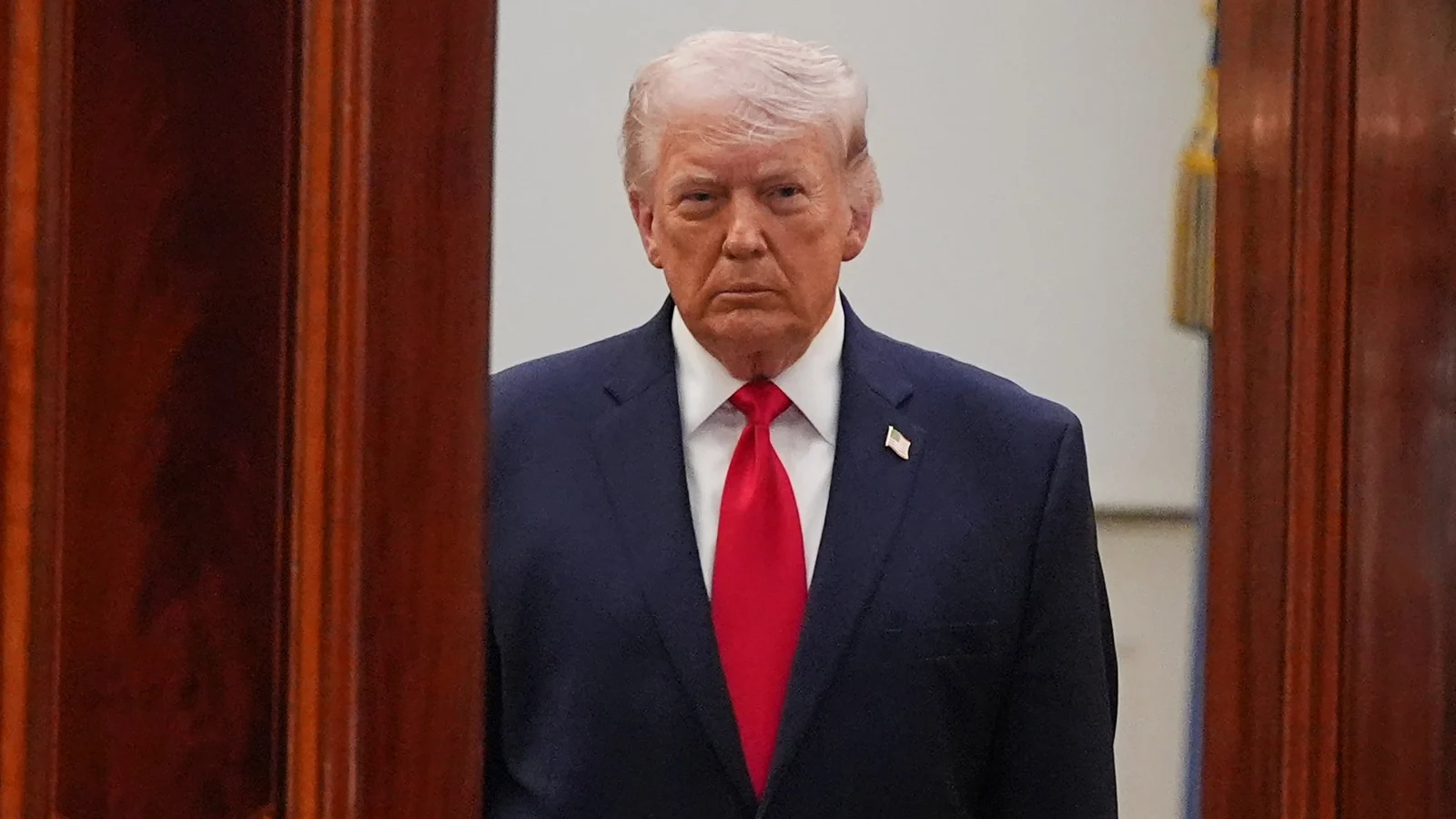
The drama began where desert meets sea and geopolitics meets everyday life. “We got him!” President Donald Trump later declared on his social feed, a short, triumphant message that summed up hours of frantic planning and aerial horsepower. Officials said one pilot had been rescued previously; the second airman—the one who had been hiding in the mountains and evading capture—was recovered after what U.S. sources described as a meticulously choreographed search-and-rescue operation involving dozens of aircraft.
Behind the Rescue
Imagine being pinned against craggy rock and wind-whipped scrub, aware that hostile forces are closing in. “He was never truly alone,” the President wrote, emphasizing the around-the-clock monitoring and coordination that steered rescue crews into the danger zone. U.S. briefings framed the mission as a rare feat: two pilots retrieved separately, deep in enemy territory, in what one official called “a textbook display of joint air power and resolve.”
“It was tense—all of us held our breath,” said one unnamed rescue team member in a debrief cited by American sources. “We flew low, fast, and close. The terrain was brutal, but we had the best medevac and firepower covering us. We do not leave anyone behind.” The rescued airman was reported injured but in stable condition.
Smoke and Silence in Kuwait
While the rescue played out hundreds of miles away, Kuwait—typically a quiet, wealthy node on the Gulf—woke to sirens and the acrid smell of burning electronics. The Shuwaikh complex, home to the Kuwaiti oil ministry and the Kuwait Petroleum Corporation (KPC) headquarters, was struck by a drone attack that ignited fires and inflicted “significant material damage,” according to state media and ministry statements.
Kuwait’s electricity and water ministry announced that two power generation units were taken offline after strikes targeted power and desalination facilities. The outages cut into services that hundreds of thousands rely on, even as officials reported the fortunate news that there were no casualties. “We were lucky this time,” said a hospital nurse near Shuwaikh. “But luck runs out. The vulnerability is terrifying.”
Voices from the Ground
On a side street near the complex, a cafe owner brewed coffee and watched smoke curl over the skyline. “People here worry about basic things: the kids, the shop, the rent,” she said. “Now we worry about the electricity, the water, whether the gulf will close again and if the prices will rise. It hits us in our daily life.”
A Kuwaiti civil servant who requested anonymity told me, “We are in shock. The buildings are damaged—but worse is the message: even places we thought were protected are in reach. The line between war and home feels paper-thin.”
The Wider Escalation: Strait of Hormuz and a Global Jitter
This week’s flashpoints sit inside a larger, worrying arc. The U.S.-Israeli campaign against Iran has broadened over six weeks; Iran has responded with strikes on Israel and Gulf states hosting American forces. Crucially, Tehran has at times aimed to choke the Strait of Hormuz—the narrow waterway through which roughly one-fifth of the world’s seaborne oil and liquefied natural gas passes. When that channel is constricted, global markets feel it in real time.
Energy markets, which rely on the steady movement of crude and gas, are particularly sensitive. Even the threat of prolonged closures sends ripples through shipping, insurance costs, and national budgets. “If shipping through the Hormuz route is curtailed, you don’t just feel it in fuel prices—you feel it in food transport, in industrial input costs and in the fragile economies of import-dependent nations,” said Dr. Hanan Qureshi, a maritime economist at a London thinktank.
Those stakes explain the rhetoric. President Trump issued a stark ultimatum—his previous 10-day window apparently narrowed—and Israeli officials signaled readiness to hit Iranian energy infrastructure within days if Washington gave the nod. Tehran, in turn, warned of a regional inferno should the conflict accelerate.
What a Closure Means
- About 20% of global seaborne oil flows through the Strait of Hormuz in normal times (a figure often cited by international energy agencies).
- Disruptions can drive up shipping insurance premiums, reroute tankers via longer paths, and pinch already volatile commodity markets.
- Power and desalination plants in Gulf states are critical—any damage threatens water and electricity security for millions in a region where desalination provides a large share of drinking water.
Human Costs and Global Consequences
Beyond raw numbers are people—families who queue for water when plants are offline, merchants who watch supply chains stutter, emergency responders who mend the wounded and the infrastructure alike. The war, now in its sixth week, has already claimed thousands of lives and sent shockwaves through global markets. The possibility of oil infrastructure attacks—announced as a credible option by Israeli strategists—threatens longer-term economic damage that could spill across continents.
“This is not a purely local quarrel anymore,” Dr. Qureshi warned. “It’s an economic contagion. Markets, already fragile after years of pandemic disruption and a warming planet, can’t afford another sustained supply shock.”
Questions That Remain
Will the rescue of the downed airman mark a turning point in morale and resolve, or will it simply add fuel to a widening fire? Can diplomacy reassert itself before the strategically vital Strait of Hormuz becomes a choke point for the global economy? And perhaps most pressing: how do ordinary people—those who run small businesses or tend hospital wards—recover their sense of safety when the theater of war intrudes upon daily life?
On the streets of Kuwait City and in the shadow of the Gulf’s oil terminals, those questions are not abstract. They are urgent. “We want the politicians to fix this,” said a mechanic at a workshop near the harbor. “We want to work. We want our children to have a normal life. Is that too much to ask?”
Where We Go from Here
For now, the immediate drama has subsided—the pilots are safe, fires are contained, and official statements ebb and flow. But the conditions that produced the crisis remain: a volatile regional conflict, fragile infrastructure, and a maritime chokepoint with outsized influence on global livelihoods.
In the weeks to come, watch for three things: whether energy facilities become targets, how long the Strait of Hormuz remains partially or fully closed, and whether diplomatic channels—public or back-channel—can thread these disparate dangers into a ceasefire. Until then, the Gulf’s shimmering heat will conceal a deeper, colder truth: in a globalized world, no windless waterway is merely someone else’s problem.