On the Edge of Midnight: A Strait, a Deadline, and the Taste of War
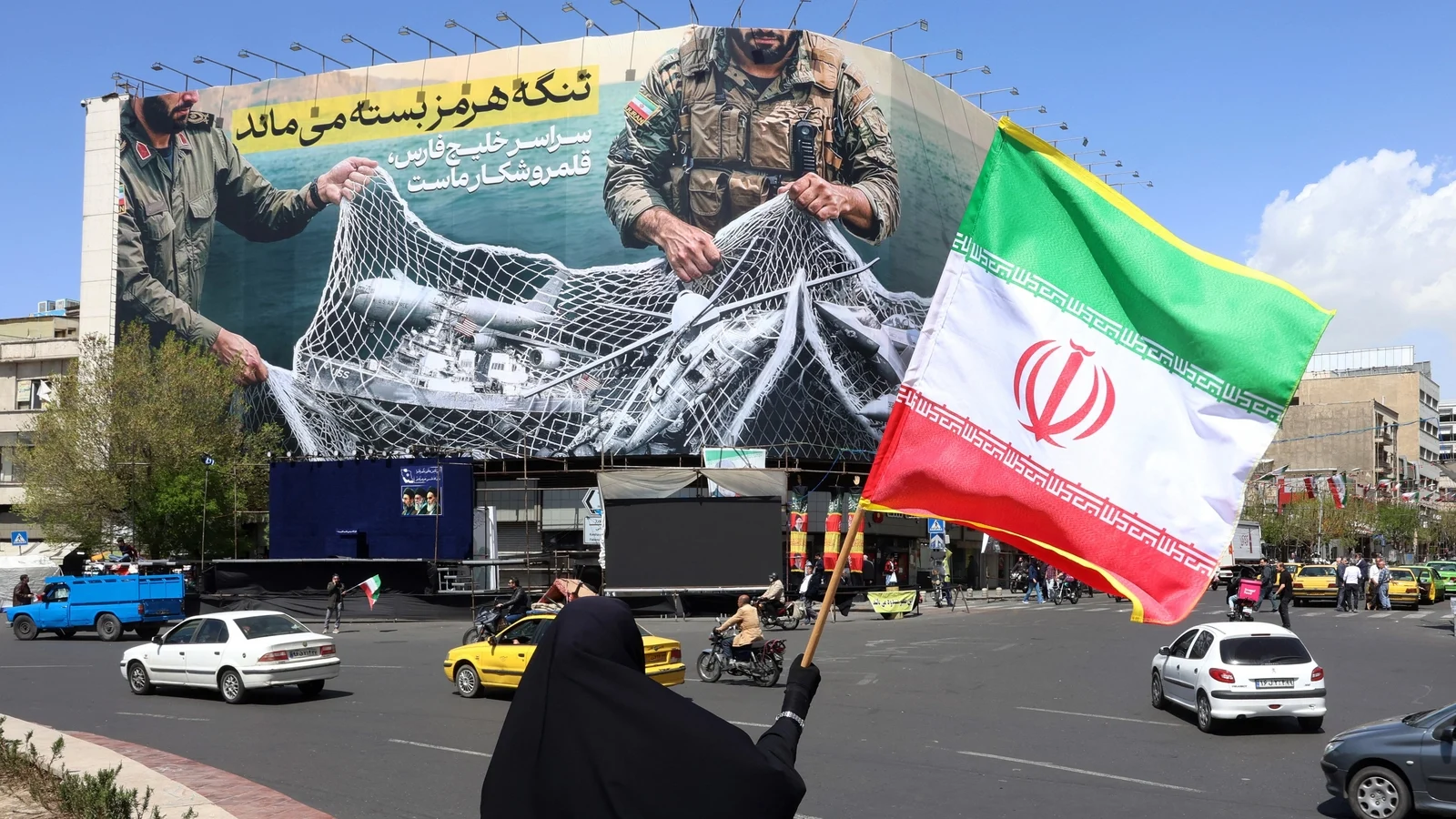
There are moments when the world seems to hold its breath — when a single choke point, a terse ultimatum, and a few incendiary words can bend markets, unsettle cities, and rewrite human plans. This morning was one of those mornings. The Strait of Hormuz, that narrow artery through which roughly one in five barrels of the world’s oil flows, remained effectively closed. A deadline set by a U.S. president loomed; a counter-offer from Tehran arrived in the form of a handwritten-sounding, ten-point response. And across the region, people went about their days as sirens, screens, and whispered rumors rewired normality.
“If you stand where I stand, the sky looks like a scoreboard,” said Miriam, a café owner near Tel Aviv’s Jaffa port, as she watched the news scroll on a phone propped between espresso cups. “Everyone counts the seconds and the chances. We make coffee anyway.”
Diplomacy, Declined
In recent days an uneasy diplomatic shuttle carried a U.S. proposal — reportedly brokered with Pakistan as intermediary — offering Iran an immediate ceasefire and the lifting of its effective blockade of Hormuz, followed by talks aimed at a broader settlement within two to three weeks. According to a source familiar with the plan, Tehran answered not with a yes or no but with a list: ten clauses that read like a list of national priorities — an end to regional conflicts, a written protocol guaranteeing safe passage through Hormuz, the lifting of sanctions, and commitments toward reconstruction.
“We submitted conditions, not capitulation,” said one Iranian official quoted by state media. “Our people have paid a heavy price; any agreement must restore dignity and safety first.”
Across the ocean, a different voice thundered. The U.S. president set a hard deadline: open the strait by a specified hour or face devastating strikes targeting critical infrastructure. “The entire country can be taken out in one night,” he told reporters, adding grim specifics about power plants and bridges. “That night might be tomorrow night.” He later brushed aside questions about the legality of such threats.
Words that Push and Pull
Rhetoric is combustible. For millions of people in the region, the words were not abstract; they were the prelude to blackouts, evacuation drills, and prayers. Iran’s deputy sports minister urged artists and athletes to form human chains around power stations — a call mixing symbolism with civic defiance. The Iranian U.N. envoy described the threats as “direct incitement to terrorism” and warned of international-law consequences.
“When leaders speak of ‘taking out’ an entire country’s infrastructure, it’s not a metaphor for most of us,” said Dr. Rania Haddad, a researcher on conflict displacement. “It’s a very real fear of loss — of hospitals, of water, of lifesaving electricity.”
Fighting and Fallout
Combat did not wait for diplomacy to conclude. The Israeli military reported strikes targeting what it described as Iranian government infrastructure in Tehran and beyond, while it activated air defenses to intercept projectiles launched in its direction. Saudi Arabia said it intercepted ballistic missiles aimed at its eastern provinces, with debris falling near energy facilities.
Authorities in the Gulf — Saudi Arabia, the United Arab Emirates, and Bahrain — issued simultaneous public-safety alerts. Meanwhile, the Iranian semi-official Mehr news agency reported heavy damage to a synagogue in central Tehran after a projectile struck the area, underscoring how fragile civilian life has become amid state-on-state exchanges.
Casualty figures reported by rights groups stitch a grim tapestry. U.S.-based HRANA counted more than 3,500 deaths in Iran and nearly 1,500 fatalities in Lebanon, where fighting has pounded communities as Israel targets forces it ties to Iran. Thirteen U.S. service members were reported killed since hostilities flared; a downed F-15E and a daring rescue deep inside Iranian territory briefly pushed Washington to the brink of a larger escalation before special forces extracted a stranded airman.
The Global Price of a Narrow Passage
Markets listen when ships stop moving. Oil hovered around $110 a barrel as the deadline approached — a number that translates directly into higher pump prices, strained household budgets, and renewed inflationary pressure in economies still recovering from pandemic shocks. The Strait of Hormuz is not just a ribbon of water; it is a lever on the global economy.
“When supply routes falter, every face at the gas station pays the cost,” said Javier Alvarez, an energy analyst in Madrid. “Even nations far from the Gulf will feel this in manufacturing, shipping rates, and power bills.”
Local Color: Streets Beyond the Headlines
In Tehran, a fruit vendor named Soraya wrapped her remaining pomegranates in newspaper and shrugged at customers who asked what will happen next. “We talk, then we sell,” she said. “My grandson’s school closed today. He asked if the lights will still work. I told him we will light candles if we must.”
In Tel Aviv a line of protesters gathered outside the U.S. embassy, holding signs that read “No More War” and “Sanity Before Arsenals.” “We came because our children are tired of sirens,” said Yosef, a father with a stroller. “This is not a prophecy; this is our living room.”
Legal, Moral, and Strategic Fault Lines
Lawyers and historians watching demand clarity. Deliberate attacks on civilian infrastructure — especially power plants that sustain hospitals and water systems — raise stark legal questions under international humanitarian law. “The principle of proportionality exists for a reason,” said Professor Miriam Klein, an international-law expert. “Targeting civilian infrastructure as a punitive tool risks criminal liability if it cannot be linked to legitimate military objectives and if the expected civilian harm is disproportionate.”
Strategists, meanwhile, warn that what begins as targeted strikes can cascade into broader conflagrations. Proxy dynamics in the Middle East, arms proliferation, and the intertwining of local grievances mean that conflict lines are rarely clean or predictable.
What Comes Next?
We are left with open-ended questions: Will the Strait reopen? Will a fragile ceasefire lead to lasting talks? Can sanctions, reconstruction, and guarantees be stitched together fast enough to convince people that peace is more than a promise?
“Negotiations fail when they ignore the human ledger,” a former diplomat observed. “Anyone who thinks they can paper over the losses without addressing truth, compensation, and safe passage is betting on another cycle of violence.”
For people on the ground, the abstract contours of high diplomacy mean practical choices: whether to refill medicine cabinets, whether to send children to school, whether to board a ship through a disputed channel. For readers far from the Gulf, the consequences are less immediate but real: the cost of goods, the stability of markets, the ethical weight of global alliances.
How Will You Watch?
As journalists, citizens, and neighbors of a shared planet, our task is not only to track headlines but to hold the human stories at their center. Whose lights will go out if power plants are destroyed? Which school will close first? Whose voice will be the last to speak at a funeral?
What do you think should be done next — more diplomacy, tougher deterrence, a humanitarian corridor, or something else? I’d love to hear your perspectives. Leave a comment, share a story from your own community, or simply sit with this discomfort: decisions made in capital rooms travel fast, and they land hardest on ordinary people with ordinary lives.
For now, the strait remains narrow, the deadline ticks, and the world watches — waiting to see whether the worst words of this weekend will become the worst night in our recent memory, or whether cooler heads will, at the last possible minute, redraw a path toward calm.