Released at Dawn: A Journalist Walks Out of the Shadow of Baghdad
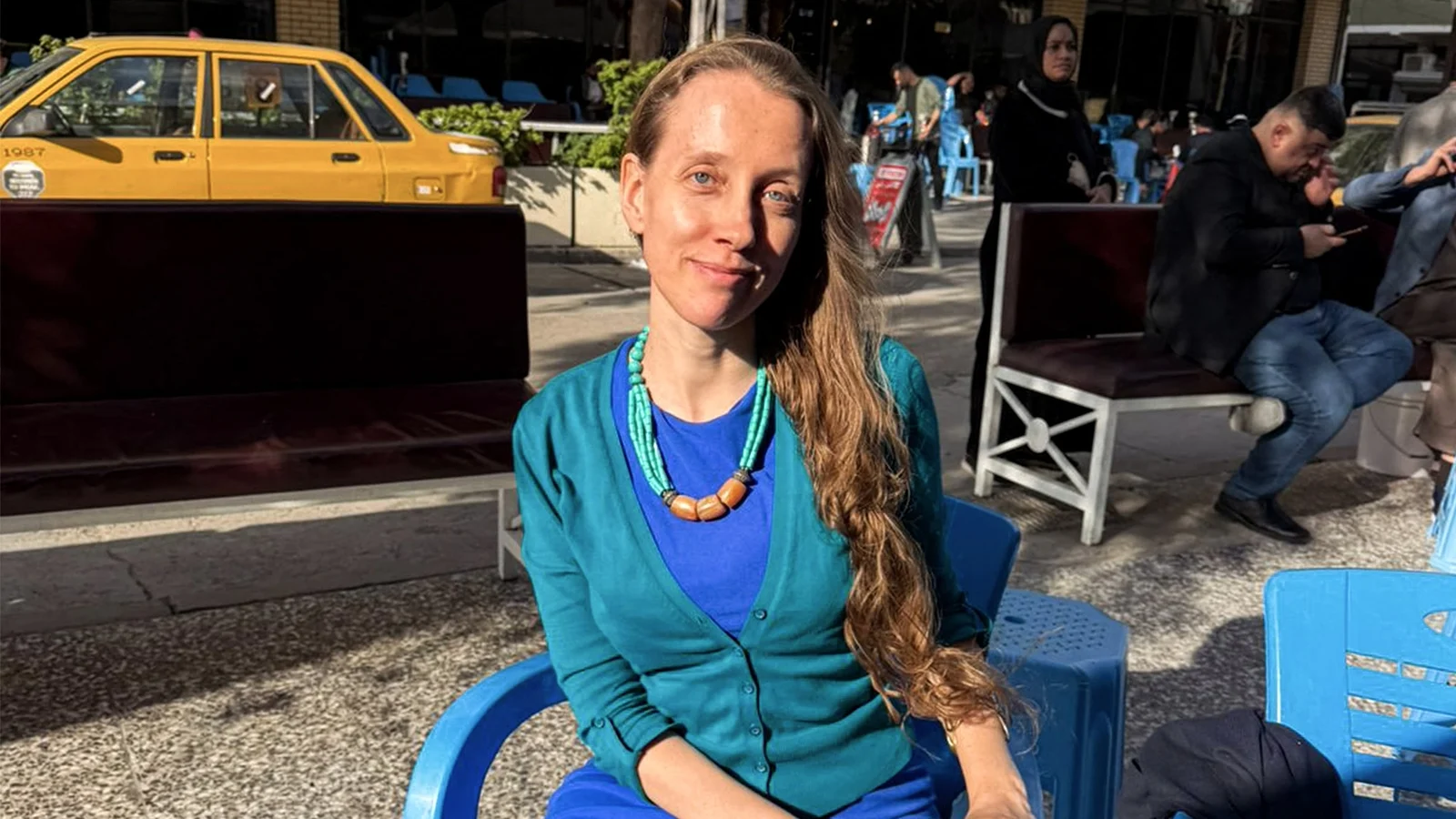
The streets of Baghdad woke up a little less tense the morning Shelly Kittleson stepped out of captivity. Word traveled like it does in this city — slow at first, then building steam: shopkeepers closing their shutters paused mid-sweep, drivers eased off their horns, and a woman selling sweet tea on the corner lowered her kettle and stared at a buzzing phone.
For a week, international newsrooms had watched and waited as Iraq’s murky politics, regional rivalries and the dangerous art of reporting collided in one single, anxious story. Then, just hours before a fragile ceasefire between the United States and Iran was announced, a statement from Kataeb Hezbollah — the Iran-backed armed group that had held her — declared she would be freed on the condition that she leave the country immediately.
What happened, in plain terms
Shelly Kittleson, a U.S. journalist based in Rome and known for her reporting across the Middle East, was seized in Baghdad a week earlier. The group that took her said it was responding to political stances and operating under the logic of the broader fight they cast as a defense against foreign aggression. An Iraqi security source later told authorities had arrested at least one suspect with alleged ties to the abduction. U.S. diplomats said they were assisting in her safe return.
“We are relieved that this American is now free and working with us to ensure she departs Iraq safely,” said a U.S. State Department spokesperson in a statement. “We will continue to press for the safety of all journalists and hold accountable those who target them.”
Voices from the city
The reactions on the ground mixed gratitude with unease. “It feels like we were holding our breath for days,” said Rami, a taxi driver who ferries foreign journalists around the city. “But it’s not over. Today it’s one person. Tomorrow it could be any of us who speak too loudly about the wrong thing.”
Leila Hassan, an Iraqi freelance reporter who has covered protests and militias for more than a decade, spoke softly about the daily calculus journalists do here. “You learn which routes to avoid, which checkpoints are dangerous, who you can trust,” she said. “Still, the work matters. People need to be heard.” Her voice trembled not with fear alone but with the fatigue of an industry that has become more dangerous and more essential at once.
Wider currents: the geopolitics behind a single abduction
This incident is not an isolated criminal act; it sits at the intersection of local power struggles and regional geopolitics. Kataeb Hezbollah, a powerful non-state actor in Iraq, is among the groups that have shaped Baghdad’s post-2003 landscape. The United States has long designated the organization as terror-linked, and its members have been at the center of tensions between Washington and Tehran for years.
The timing — a release announced just hours before a U.S.-Iran ceasefire — immediately prompted speculation. Was the gesture a goodwill offering to smooth negotiations? A calculated public-relations move? Or a concession forced by pressure from Iraqi authorities trying to limit escalation on home turf?
“Releasing a high-profile detainee right before a diplomatic turn is rarely coincidence,” said Dr. Mona Al-Saadi, an analyst of Iraqi security affairs. “It sends signals to multiple audiences: to domestic supporters, to Iran, to Washington, and to a watching international community that wants stability. But it also underscores how journalists and civilians are pawns in larger strategic games.”
Journalists in harm’s way: the global context
Watching this unfold, readers might reasonably ask: how common are such incidents? Over the past two decades, Iraq has transformed from a place where kidnappings were tragically routine during the sectarian civil war to a country where security has generally improved — but not uniformly. In the mid-2000s, abductions reached alarming peaks; in more recent years, police and international monitors say cases have fallen as state institutions reassert control. Still, the risk has not disappeared, especially when powerful militias operate with autonomy.
Globally, journalists continue to face danger: conflicts, authoritarian crackdowns, and politically motivated detentions keep hundreds behind bars and put many more at risk of violence. Organizations that track press freedom count dozens of attacks on journalists each year in war zones and politically tense regions. Those statistics are not cold numbers — they stand for human lives, careers interrupted, families bereaved, and stories left untold.
Personal cost and professional courage
Shelly Kittleson has reported from the region for years. Colleagues describe her as methodical and kind, someone who would, as one put it, “ask hard questions with a cup of tea on the table and a map on her lap.” Her work for outlets such as Al-Monitor gave readers insights into underreported corners of Iraqi politics and society. Her abduction revived an old fear among reporters: in these volatile hours, the simple act of listening and writing can become perilous.
“Journalists are not invulnerable,” said Jamal Saeed, a veteran cameraman in Baghdad. “Sometimes we get a wave of calls after a kidnapping — friends offering safe houses, drivers refusing to take certain roads. But then we go back to work because that’s what we do. We tell the story.”
What this release might mean — and what it might not
The conditional nature of Kittleson’s release — leave now and do not return — underlines a grim choice journalists sometimes face: freedom at the cost of access. If reporters are forced out of the country, who will bear witness to the tensions that remain? Who will document the accountability gaps, the protests, the quiet resilience of civilians living through geopolitical rivalries?
And there is the ethical puzzle for governments and news organizations: how to balance public safety with the imperative to protect press freedom. Should administrations issue travel warnings? Should media outlets pull correspondents from the most dangerous spots? Each choice carries trade-offs for truth-telling and safety.
“We must protect people,” said the U.S. State Department spokesperson, “but we must also ensure that journalists have the ability to do their work. Those goals are not mutually exclusive, but they are increasingly hard to reconcile.”
Looking forward: questions for readers
As the dust settles — however briefly — in Baghdad, here are some questions to sit with: What price is acceptable for reporting the truth? How should international actors respond when non-state groups use hostage-taking as leverage? Are we prepared to accept a world in which witness-bearing journalists are pushed out of the zones they cover?
These are not rhetorical but urgent. The story of one freed journalist is a human drama — relief, reunion, trauma — and also a snapshot of a broader, global dilemma about power, media, and the rules of war.
As you read this, consider the people who continue to file from the front lines of power and conflict. Their safety is not merely a logistical concern; it is a measure of how much value we place on being informed. When a reporter walks out of captivity and into a waiting car, they carry more than their own story — they carry the fragile promise that someone is still watching, still asking, still recording. In a world of shifting alliances, that promise can feel like the most important thing of all.