A Suspended Inferno: Two Weeks to Reopen the Strait
The clock had been running down like a hairline fuse, and then — in a gesture that felt half reprieve, half bargaining chip — the explosion was put on pause.
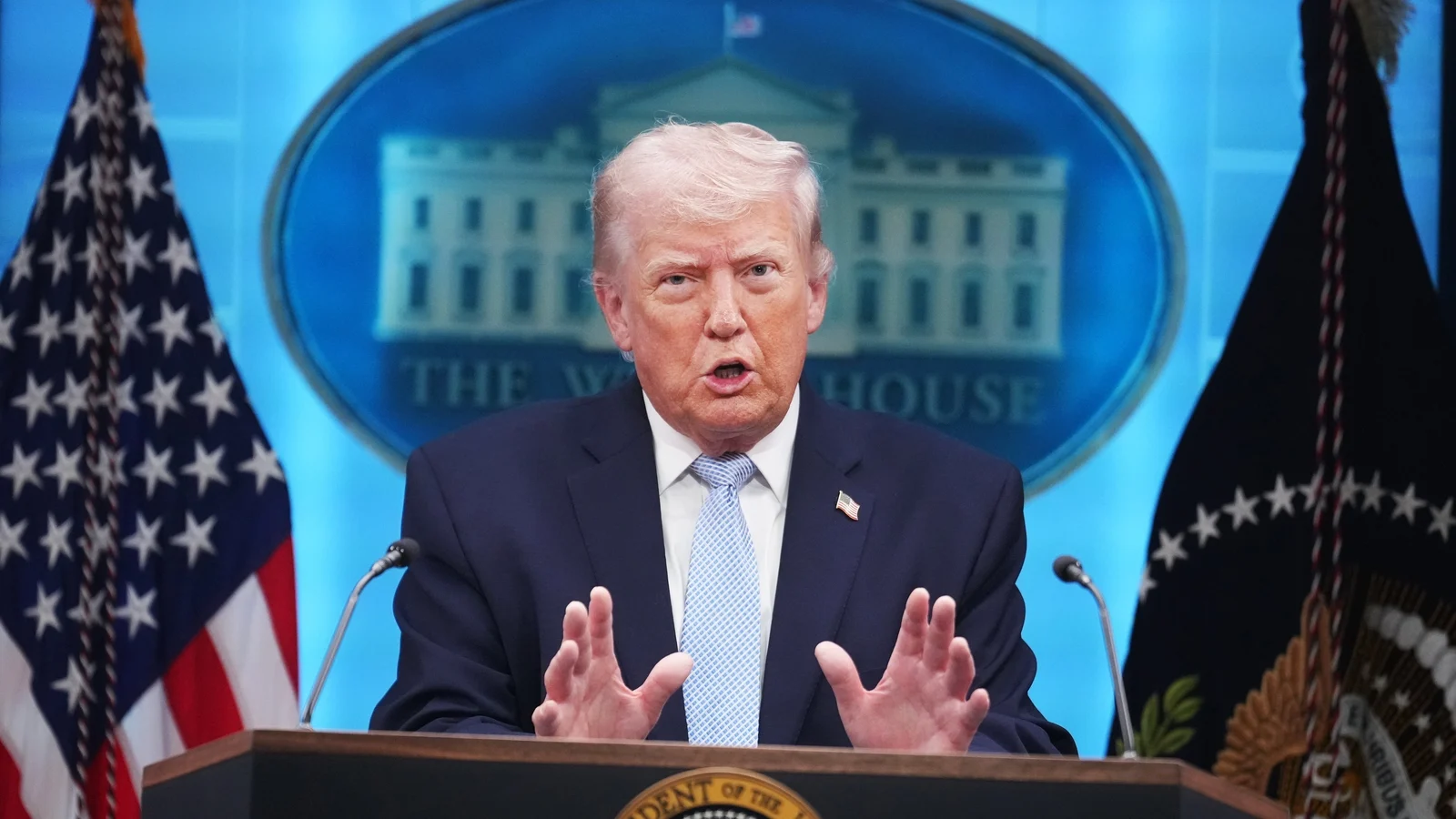
Late one night, hours before a deadline President Donald Trump had set for devastating strikes against Iran, Washington announced a two‑week suspension of bombing. The condition was stark: Tehran must reopen the Strait of Hormuz — the narrow waterway through which a significant share of the world’s seaborne oil flows — and do so completely, immediately and safely.
It read like a scene from an old Cold War thriller: a global choke point used as both bargaining leverage and the fulcrum for a fragile ceasefire. But this was not fiction. It was another chapter in a conflict that, until now, had seen weeks of US and Israeli strikes that shattered infrastructure, rattled regional capitals, and sent oil markets into spasms.
On the streets of Tehran
A woman picks her way through the rubble of a once-busy neighborhood where a rail bridge and other structures lie crumbled. A shopkeeper wipes dust from his hands and says, quietly, “We were not ready for this — for bridges collapsing like toothpicks. We are not the commanders, we are the people.”
There is a peculiar hush in parts of the city now: the call to prayer still threads through the air, vendors still hawk flatbreads at dawn, but the steady hum of daily commerce has frayed. “People are exhausted,” a young father who asked not to be named told me. “We are bargaining for time, but what matters is safety for our children.” Iran, home to roughly 90 million people, has been prodded and punished in equal measure over the last five weeks.
Diplomacy through Islamabad
It was Pakistan, unexpectedly, that slid into the role of mediator. Islamabad put forward the proposal that led to the temporary halt — a two‑week window for talks that Tehran accepted. Pakistani Prime Minister Shehbaz Sharif framed the move as a diplomatic lifeline: “These efforts for a peaceful settlement are progressing steadily,” he said, announcing a ceasefire “effective immediately” across multiple fronts.
Iran’s leadership responded by outlining a ten‑point plan that, according to Iranian state media, touched on sanctions relief, secure transit through the Strait of Hormuz, and the withdrawal of US combat forces from regional bases. Foreign Minister Abbas Araghchi said Iran would stop its retaliatory strikes if attacks against it ceased, and that safe passage through the Hormuz could be arranged for two weeks in coordination with Iran’s armed forces.
Pakistani officials told journalists in Islamabad that talks were set to begin on 10 April and could last up to 15 days, extendable by mutual consent. Behind the scenes, diplomats framed the window not as a ceasefire that would end the war but as a breathing space to negotiate the outlines of a more durable arrangement.
What’s on the table?
The contours of Tehran’s proposal, as described in public statements and diplomatic briefings, were focused on three broad aims:
- Ensuring safe transit through the Strait of Hormuz and reopening it to international shipping;
- Securing sanctions relief that would ease economic pressure on Iran’s civilians;
- Agreeing on the withdrawal of foreign combat forces from regional bases to reduce forward military presence.
These are not small asks. The Strait of Hormuz is one of the planet’s most consequential maritime choke points: roughly one‑fifth of seaborne crude oil has historically flowed through that narrows, making its status critical to energy markets and to governments from Tokyo to Rome. When the strait is threatened, prices spike and supply chains shudder.
Markets reacted immediately. Oil prices, which had climbed since the beginning of the war, took a sharp dive on news of the two‑week pause — a reminder of how fragile global energy stability remains when geopolitics turns hot.
Voices from across the region
Not everyone saw the pause as a triumph. “Two weeks is not peace; it’s a breath before the next storm,” said Laleh, an Iranian teacher in Tehran. “We need guarantees, not just headlines.”
A Pakistani diplomat in Islamabad, speaking on the condition of anonymity, framed the mediation differently: “This is about giving diplomacy a chance. The world was teetering towards something catastrophic. Islamabad offered a way to step back from the edge.”
In Jerusalem, Prime Minister Benjamin Netanyahu publicly welcomed the US decision but made clear one caveat: Israel’s operations, he said, would not necessarily be curtailed in all theaters — notably Lebanon. “We support de‑escalation where it suits Israeli security,” said an Israeli official. “Our calculus must protect our citizens from rocket fire and cross‑border threats.”
And in the ports along the Persian Gulf, sailors and dockworkers watched tankers come and go with renewed anxiety. “Every time a ship comes in, we are grateful and afraid at the same time,” said Reza, a longshoreman at the port of Bandar Abbas. “This is our livelihood. If the strait is closed, families suffer quickly.”
Wider consequences and the hard questions
What happens in a fortnight will tell us whether this pause is the start of a negotiated de‑escalation or simply a tactical lull. The diplomatic choreography — Pakistan mediating, Iran tabling a ten‑point plan, the US setting public deadlines — raises uncomfortable questions about the rules of engagement in the 21st century: Who legitimizes force? How far can economic pressure and military threats be used before civilian harm becomes intolerable?
These incidents are not isolated. Since the conflict expanded, infrastructure across Iran has been struck — bridges, rail links and, according to Iranian sources, facilities on Kharg Island, a vital hub for its oil exports. Iran, in turn, has launched strikes against Gulf Arab states hosting US troops, and Israel has escalated operations in Lebanon in response to rocket fire from Hezbollah. The region is a lattice of tit‑for‑tat reprisals, each one reverberating further than the last.
At the United Nations, attempts to produce a unified response have been stymied by divisions among major powers. Russia and China vetoed a text aimed at reopening the Strait of Hormuz, underscoring how this is as much about geopolitics as it is about regional stability.
So what should readers be watching for in the coming days? Look for three signals: whether the Strait is in fact reopened and kept open; whether the talks in Islamabad produce a credible, verifiable timetable for sanctions relief and troop withdrawals; and whether hostilities — including strikes on civilian infrastructure — cease in practice, not just on paper.
Two weeks is a long time in wartime politics. It is also a fragile window for diplomacy to prove it can save lives and livelihoods. Will leaders choose negotiation over annihilation? Will ordinary people on both sides get the space to breathe again? The answer will say as much about our shared fate as it does about any single leader’s calculation.
For now, the world watches. The ships keep threading the Hormuz like beads on an anxious string, and in marketplaces and mosques and government halls, people whisper the same question: can peace be sewn in two weeks, or will the unstitched fabric of the region unravel further?