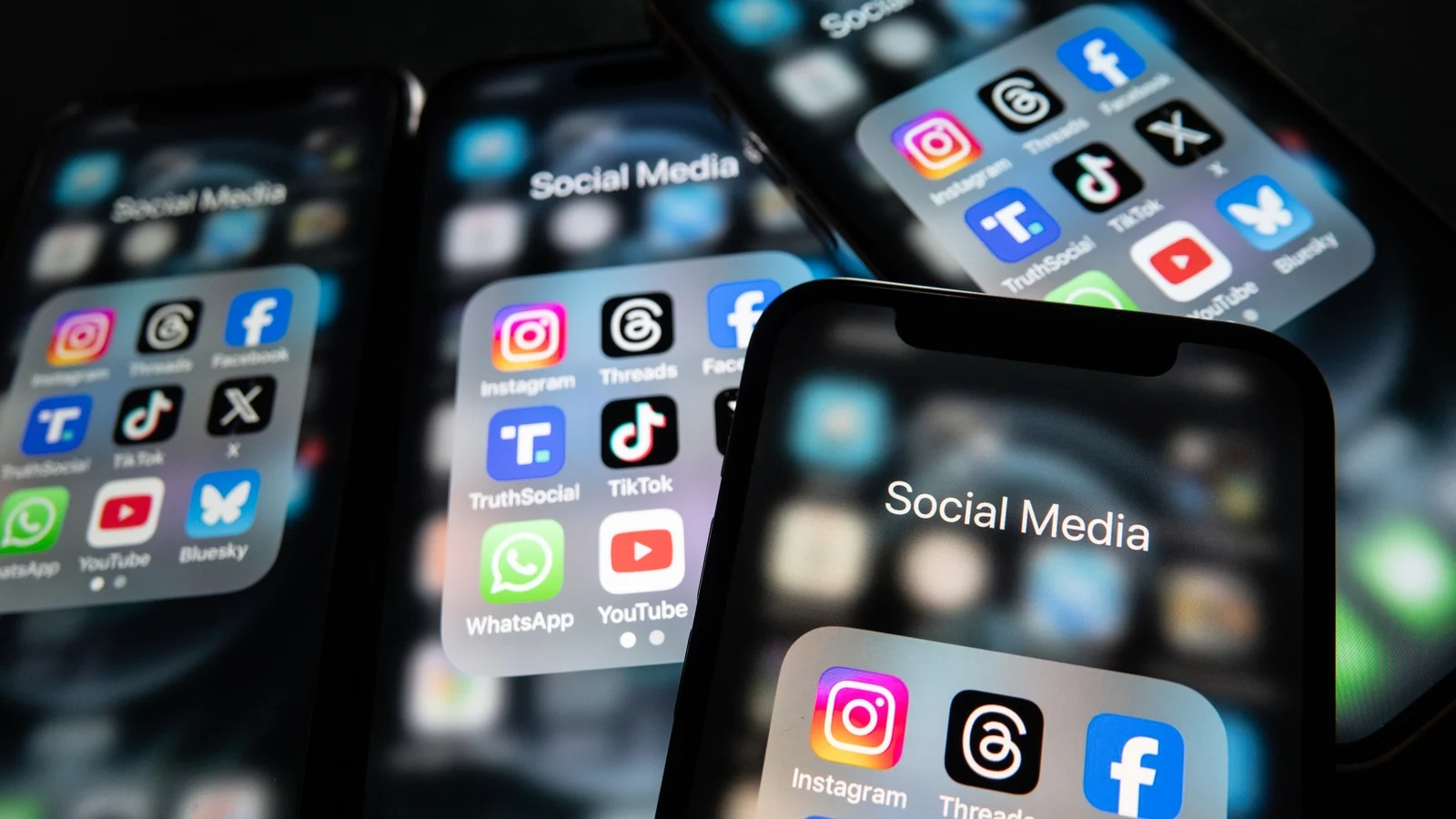
Greece’s bold move: a country tries to reclaim childhood from the screen
On a late spring afternoon in Athens, parents clustered outside a primary school laughed nervously as teenagers drifted by, faces lit by the blue glow of their phones. “They’re always there,” said Eleni, a mother of two, folding the corner of a paper coffee cup between her fingers. “At dinner, at the park, even when they should be doing homework.” Her tone was equal parts worry and weary acceptance. In a country that still prizes unhurried family meals and seaside summers, the ubiquity of social media feels like a new and relentless tide.
Against that background, Prime Minister Kyriakos Mitsotakis announced a measure that will reshape the daily lives of families: from 1 January next year, children under 15 will be banned from accessing social media platforms in Greece. He delivered the news on TikTok himself, in an unusual and pointed move — choosing the very medium at the center of the debate to speak directly to young people.
“Our aim is not to keep you away from technology but to combat addiction,” the prime minister said in the short video, reflecting a sentiment that has gained momentum around the world: the idea that unfettered social-media use in early adolescence can erode sleep, concentration, and emotional well-being. His office framed the law as a protective measure, a way to give children room to grow without constant curation and comparison.
Faces in the crowd: voices for and against
Reactions in Athens were immediate and split. “Finally,” said Sofia Papadopoulou, a primary school teacher in Piraeus. “I’ve seen pupils who can’t focus for more than twenty minutes without checking their phones. This could help bring back attention and presence.” She spoke with the quiet certainty of someone who has watched whole classes drift toward distraction.
But not everyone shared her enthusiasm. “It feels like a ban on friendships,” protested Nikos, a 15-year-old from Thessaloniki who relies on social apps to keep ties with classmates and relatives abroad. “We use these platforms to make plans, to learn, to find communities. Just blocking us feels unfair.” On the same afternoon, a group of teenagers posted a hashtag that trended locally: #LetUsChoose.
Outside the political stage, experts caution that the choice is not simple. “Screen time is a complex public-health issue; it intersects with sleep, bullying, and mental health,” said Dr. Maria Kostopoulou, a child psychologist in Athens. “The research shows correlations between heavy social-media use and higher rates of anxiety and depression among adolescents, but causation is trickier. A blanket age restriction is one approach—but alone, it won’t address underlying problems like family dynamics, school stress, or the content children encounter.”
Technology, trust, and the law
Implementing such a ban raises practical and ethical questions. How do platforms verify age without invading privacy? What mechanisms will ensure compliance? And who decides which apps fall under the restriction?
Officials in Thessaloniki and Athens acknowledge the hurdles. “We’re working with regulators and technology experts to develop age-verification tools that are effective yet protect user privacy,” said Yannis Iliopoulos, who serves as a spokesperson for Greece’s Ministry of Digital Governance. “We also want this to be part of a broader strategy: school education, parental support, and clearer rules for platforms.”
That last bit is crucial. Platforms can be notoriously difficult to police, and age rules have long been circumnavigated by teenagers who enter false birthdates. Enforcing a ban will demand a mix of technology, legislation, and cultural change.
Greece is not alone: a global ripple
The country’s decision arrives amid a growing international conversation about the appropriate digital age of consent and what role governments should play in guarding young minds.
- Australia — Last December Canberra pushed hard on tech companies, requiring platforms to remove accounts of under-16s or face hefty fines, framing the rule as a child-safety measure.
- Indonesia — Earlier this year Jakarta enforced a ban on social-media use by those under 16 and began challenging Google and Meta over compliance.
- Austria — Vienna has signalled plans to ban social-media use for under-14s and was preparing draft legislation to be presented soon.
- Spain and Denmark — Both have announced intentions to create a digital age of majority for social networks.
- Ireland — Dublin prefers an EU-wide decision but is prepared to act domestically if needed.
Whether these moves will converge into a unified European approach remains an open question. Mitsotakis has said he will press the European Union to follow Greece’s lead, framing the policy as a step toward harmonized child-protection standards across the bloc.
What the science says (and what it does not)
There is mounting evidence that excessive screen use during youth is linked with sleep disruption, diminished attention, and higher reports of mood disorders. Surveys from research centers like Pew have long shown that a significant share of teenagers are online almost constantly; other studies have tied high social-media engagement to lower self-esteem in some adolescents, especially young girls navigating body-image issues.
Yet many researchers urge nuance. “We can’t reduce childhood to screen time alone,” said Dr. Elena Rossi, a sociologist who studies youth culture. “Platforms are spaces for sociality, learning, and even activism. For some marginalized young people, online communities are lifelines. Policies must be careful not to deprive those children of vital connections.”
Local flavor: how Greek life frames the debate
In Greece, where extended family networks often blur the line between private and communal upbringing, debates about children’s upbringing have a particular resonance. Summer holidays spent with cousins on an island, loud family dinners, and community life are all cultural anchors that advocates for the ban argue are threatened by the encroachment of screens.
“When I was a child, we played until sunset, and screens were for the cinema on Saturdays,” reflected Dimitris, a fisherman in the Peloponnese. “I worry that today’s kids miss those simple pleasures.” That nostalgia shapes some of the political momentum: the desire to protect a certain kind of unstructured time that fosters imagination, social skills, and sleep.
Questions for us all
As Greece prepares to flip this legal switch, there are questions that reach beyond national borders: How do we balance protection with autonomy for young people coming of age online? Who gets to decide what is best for a generation whose social life is digitally mediated? And can technology companies be incentivized to design products that are less addictive and more age-appropriate?
These are not questions with easy answers. They ask us to consider what childhood should look like in the 21st century, and how public policy, parental guidance, schools, and tech companies must work—together—to nurture it.
One thing is clear in the cafes and sidewalks of Athens: the debate will be lived in the small, everyday moments—bedtimes, the first crush, the thwarted scroll through a feed. “I don’t want my child to feel watched by an algorithm all the time,” said Eleni, the mother we met at the start. “But I also know that simply turning phones off won’t teach them how to be resilient online. We need conversation, education, and rules that make sense.”
As Greece moves toward January, the world will be watching. Will the ban offer a blueprint for other nations, or will it reveal unforeseen consequences? Either way, it forces a conversation that most societies have been avoiding: what are we willing to do, and to change, in order to keep childhood intact?