When the sky over Beirut lit up: a fragile ceasefire, a region holding its breath
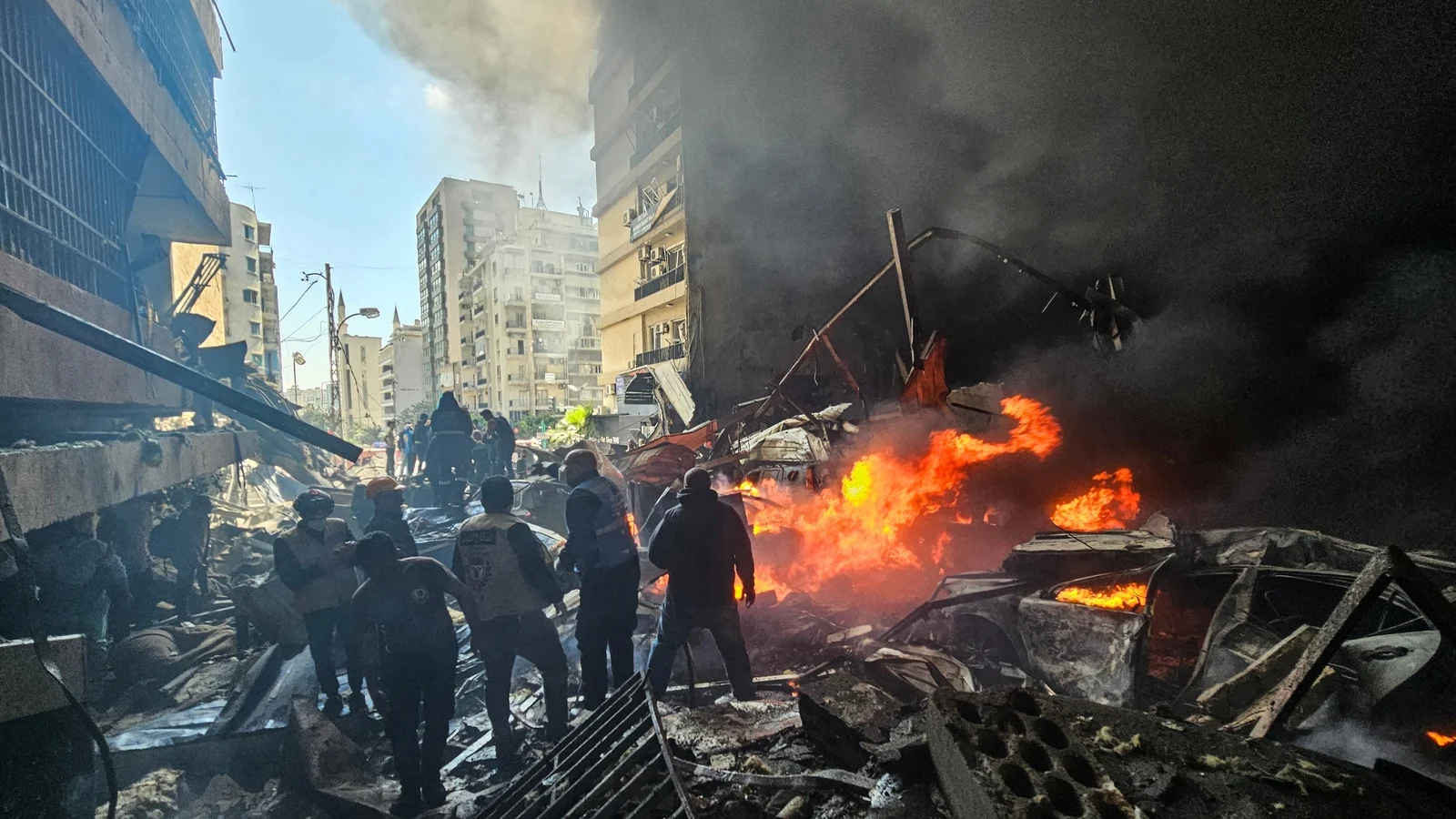
The night air pulsed with a sound that residents in southern Beirut said they had learned to dread. Bright orange blossoms of fire peeled away from concrete facades and a column of smoke rose black and furious, like the exclamation point of a sentence that refused to end.
By morning, Lebanon’s civil defence tallied 254 dead across the country; Beirut alone bore the brunt with 91 fatalities in the capital, rescuers said. Streets once filled with vendors and afternoon chatter had turned into a jagged gallery of scorched cars, collapsed shopfronts and the heady, metallic smell of burned fuel.
“There was no warning this time,” said Amal Haddad, a schoolteacher who lived through the blast. “We are exhausted — not just tired. You can’t sleep when you wonder if the next dawn will be your last.”
The ceasefire that wasn’t
What was announced as a two-week pause in fighting between the United States and Iran — a ceasefire that many hoped would be the first step toward a broader settlement — was immediately fragile. Washington and Tehran both claimed tactical victories after a five-week war that left thousands dead and reshaped calculations across the Gulf. But a crucial loophole unraveled fast: Israel made clear it did not consider Lebanon part of the ceasefire, and it unleashed what military analysts described as the heaviest strikes on Lebanese soil in years.
“We do not see Lebanon as covered by this arrangement,” said an official close to Israel’s security briefing. “Our operations against Hezbollah will continue as long as the threat persists.”
That stance sent ripples through the negotiations already scheduled to begin in Budapest, where U.S. Vice President J.D. Vance — leading the American delegation — told reporters that the ceasefire terms had been misunderstood by some parties. “I think some assumed the pause included every theatre,” he said. “It did not.”
Words of warning from Tehran
Tehran’s response was blunt. Mohammed-Bager Qalibaf, a senior Iranian official and parliament speaker, warned that recent Israeli operations across Lebanon violated key conditions of the pause and that Washington’s insistence on curbing Iran’s nuclear work was itself a breach of the spirit of the truce. “Under present conditions, moving to bilateral talks would be unreasonable,” he said in a televised statement.
For Iran, one non-negotiable piece of the puzzle is nuclear enrichment: Iranian officials insisted they retain the right to continue certain enrichment activities under whatever arrangement is struck. American leaders, on the other hand, are publicly framing the negotiation as a chance to roll back Tehran’s nuclear advances — a standoff that has proved one of the hardest to bridge.
Markets, shipping lanes and the new geography of power
While missiles fell and families fled, global markets responded in an almost paradoxical way. World stock indexes rallied, and oil prices plunged roughly 14%, settling near $95 per barrel after dipping to around $90.40. The volatility reflected markets balancing two things at once: relief that a wider war might be avoided and fear about the fragility of supply lines in the Gulf.
The Strait of Hormuz — the narrow maritime throat through which roughly one-fifth of the world’s seaborne oil moves — remained effectively closed to vessels without permits, shipping agents said. Iran demonstrated an ability to interdict flows by targeting pipelines used to skirt the choke point, and attacks on energy infrastructure were reported in Saudi Arabia, Kuwait, Bahrain and the UAE.
“What we saw is not simply the cost in barrels,” said Dr. Aisha Rahman, an energy and geopolitics scholar. “It’s a wake-up call: decades of expensive military presence in the region did not eliminate asymmetric leverage. Iran has shown it can disrupt flows in ways that matter to global economies.”
Crowds, flags and the strange comfort of survival
Back in Tehran, the night’s atmosphere was a complicated stew of triumph and unease. Crowds took to the streets waving the national flag, burning images of Israel and the United States, but there were also quieter, more private conversations about how long this fragile calm might hold.
“We cheered because the shelling stopped for a while,” said Alireza, 29, who works in a municipal office and joined relatives on a narrow balcony to watch the lights over the city. “But everyone knows the deal could change tomorrow. You don’t celebrate like normal when your neighbours can be hit at any time.”
What remains unresolved
For all the talk of ceasefires and delegations flying to negotiate, the core strategic questions remain stubbornly open. Iran retains stockpiles of uranium enriched to high levels and a vast missile and drone arsenal that can reach several neighbours. The clerical leadership in Tehran, which had weathered mass protests before the war, shows no visible signs of collapse. And across the Levant, local militias such as Hezbollah continue to complicate the landscape.
“Both sides are declaring victory, but neither has solved the underlying issues,” said Marcus Leone, a retired diplomat who now advises an international peace NGO. “You can pause the fighting — that’s necessary — but durable peace needs mechanisms to manage proxies, verify nuclear commitments, and rebuild trust. None of that is overnight work.”
The human ledger
Beyond geopolitical chess there is an immediate, brutal arithmetic: hospital lists, missing-person appeals, children who will carry nightmares forward. Ambulance sirens, street vendors sweeping rubble into neat piles, neighbours opening doors to shelter those displaced — these are the small acts that constitute survival.
“What matters most is not what maps or leaders decide,” reflected Amal Haddad as she returned to her shattered classroom to collect what books she could salvage. “It’s whether our children can go back to school without fear.”
Where do we go from here?
So what should the rest of the world do while this fragile interlude holds? Should mediators press for immediate, verifiable steps on nuclear materials and cantonments for armed groups? Or should they focus first on a humanitarian pause to tend to the war’s immediate victims?
Those questions aren’t only political; they’re ethical. They force us to ask what we value in a world where asymmetry in means does not necessarily translate into asymmetry in effects. They also compel citizens far from the region to reckon with how global markets, energy choices and foreign policy are threads in a single, tangled fabric.
For now, Beirut lits its candles, Tehran its flags, and diplomats fly to Budapest with agendas that, at best, only partially overlap. The ceasefire is a breathing space — fragile, contested, and painfully brief. The real work of peace, as ever, begins where the headlines end: in hospitals, classrooms, and the quiet rooms where families decide whether to stay or leave.
How would you begin to stitch peace from this patchwork? What would you demand of leaders, negotiators and global institutions? Think of the children on Amal’s street — what kind of stability would you want for them?