A Quiet, Heavy Handshake: What One KMT Visit to China Reveals About a Divided Strait
When Cheng Li-wun stepped off the plane in Shanghai, the city’s glass towers glinted like a promise and a warning at once. Lanterns swayed in the humid evening air, street vendors called out familiar Cantonese—and yet the walkways she would soon tread were threaded with an electricity that had less to do with the weather than with history.
Cheng’s visit to the mainland is the first by a leader of Taiwan’s Kuomintang in a decade. It was meant, by design, to be ceremonial and conciliatory: visits to Sun Yat-sen’s mausoleum in Nanjing, measured conversations with officials in Beijing, a public face of rapprochement. But in the crosshairs of modern geopolitics, ceremonial never stays ceremonial for long.
Across two shores: a meeting with consequence
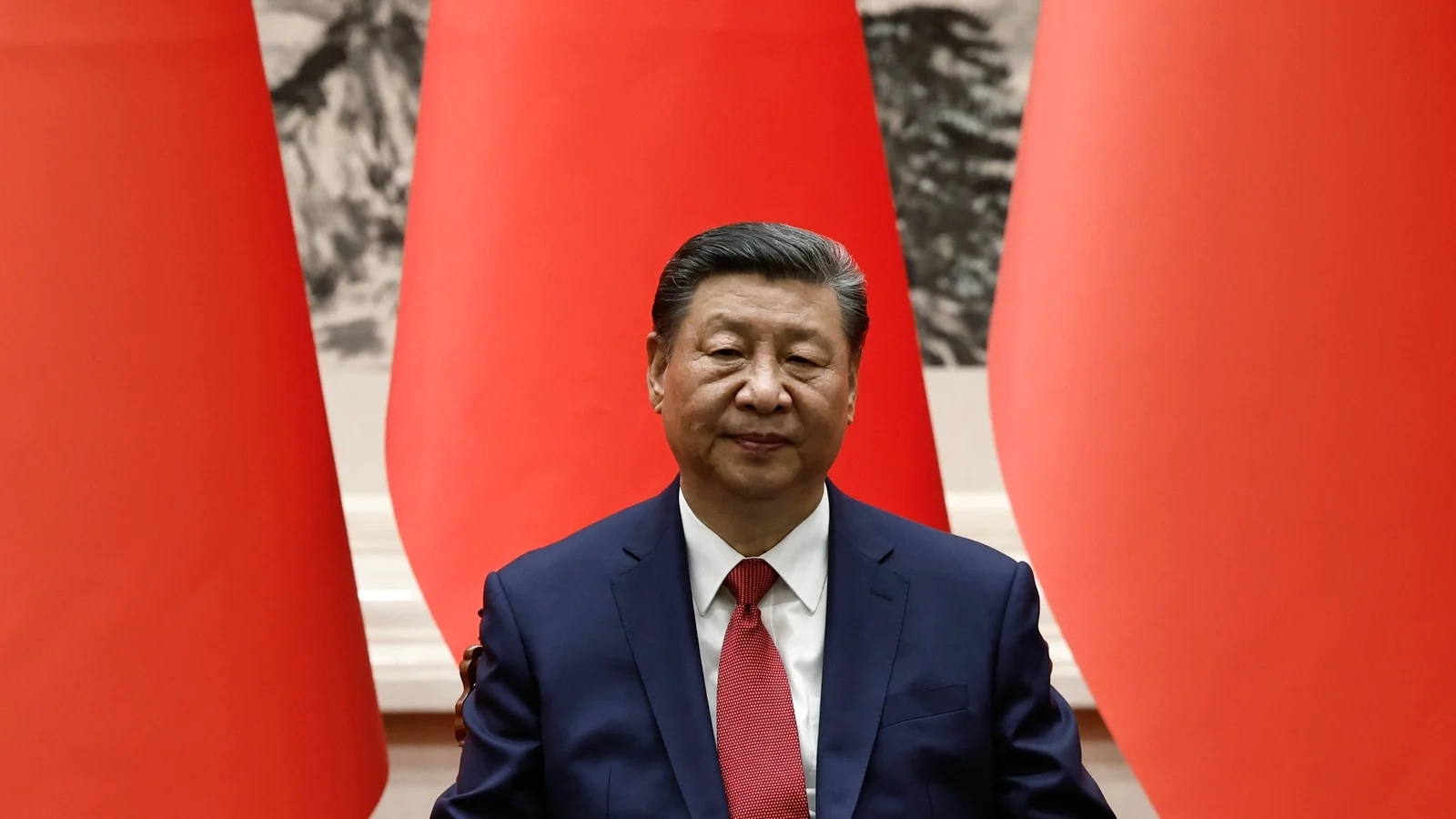
In the ornate halls where leaders exchange phrases that will be amplified for weeks, Xi Jinping told Cheng he was confident that people on both sides of the Taiwan Strait would “grow closer, edge nearer and become united.” The phrase landed like a stone thrown into a calm pool—ripples visible in Taiwan’s parliament, on its factory floors, and in the living rooms of retirees watching the nightly news.
“The sentiment Xi voiced is not just rhetoric,” said a mainland official who briefed local reporters after the meeting. “It’s narrative. It’s the story Beijing has been telling for years: an arc of reunion.”
Cheng, for her part, spoke of hope for a peaceful strait. “This cannot become a flashpoint for war,” she told delegates in Nanjing. “We must seek systemic solutions to avoid conflict; let our waters become a model, not a battleground.”
Why the timing matters
The optics of the visit are sharpened by timing. It comes a month before a planned summit between China’s leader and the US president in Beijing—a high-stakes meeting at the top of the world’s two most consequential capitals. It comes while Taiwan’s parliament grinds over a NT$1.25 trillion (about US$39 billion) defence budget, stalled months in a chamber led by Cheng’s KMT colleagues.
It also arrives against a backdrop of military pressure: Beijing has ramped up near-daily deployments of jets and warships around Taiwan, while Taiwan’s defence apparatus watches alertly. That sustained presence—incursions into air-defense identification zones, carrier task groups practicing in the East China Sea—has fundamentally altered everyday life for many on the island.
“You can feel it when you look up,” said Li Ming-hua, a retired navy petty officer who lives near Kaohsiung. “When the radio scrambles at night, you sit up. It makes people think: are we ready? Do our leaders see the same risks?”
Voices from Taiwan: Between pragmatism and anxiety
Back in Taipei, reactions were as varied as the city’s night markets. KMT supporters who favour warmer ties with Beijing welcomed Cheng’s mission as a pragmatic step to reduce tension.
“We need channels,” said Wu Cheng-an, owner of a tea shop near the Dadaocheng wharf. “Trade, family visits, cultural exchanges—these are how people stay connected. Fighting over headlines doesn’t feed the family.”
Others saw the trip through a darker lens. A university student, Mei, who asked not to use her surname, said, “Every handshake across the Strait feels like a vote. We’re called a democracy, but people here worry their choices will be compressed by larger powers.”
And then there are the pragmatic politicians. Faced with a stalled defence bill, KMT leaders have criticized the government’s approach. Cheng herself dismissed the “spend everything” tactic, offering instead a more limited purchase plan—NT$380 billion (around US$12 billion) earmarked for U.S. systems with flexibility for more, a line that drew both applause and skepticism.
Inside the corridors of power
“The KMT’s calculus is not only about policy,” said an analyst who studies Taiwan politics. “It’s also about identity politics and electoral arithmetic. Positioning themselves as brokers with Beijing can be a strategy to win over voters who prioritize stability and economic ties.”
Yet that strategy collides with broader concerns. Lai Ching-te, Taiwan’s current leader, has denounced Beijing’s military posturing as a threat to regional peace. “These maneuvers undermine stability,” Lai wrote on social media, underscoring the existential anxiety many in Taiwan feel under the shadow of a rising military neighbor.
Beyond the headlines: culture, memory and the shadow of Sun Yat-sen
One of Cheng’s stops—the mausoleum of Sun Yat-sen in Nanjing—was more than symbolism; it’s an invocation. Sun is one of the rare figures revered on both sides of the Strait, a shared ancestor in the genealogy of modern Chinese identity. The visit attempted to tap that common soil, to remind both camps of a mutual historical narrative.
Yet history is a palimpsest. While some Taiwanese see the Sun visit as a bridge, others see it as a selective memory—one that can be used to paper over differences in governance, rights, and aspirations.
“History is not just monuments,” said Dr. Hsu Wen-li, a historian in Taipei. “Monuments are curated. What matters is the living, lived experience of citizens—how they choose leaders, how they speak freely, how they keep dissent alive.”
What to watch next
There are practical questions now on the table. Will the KMT’s outreach cool military tensions or merely reframe them? Will Taiwan’s parliament resolve the defence budget impasse, and if so, by what compromise? And, perhaps most pressing: will the upcoming summit between the U.S. and China recalibrate regional security in ways that benefit or further alarm Taipei?
- NT$1.25 trillion: the defence bill stalling in Taiwan’s legislature (approx. US$39 billion)
- NT$380 billion: the KMT’s proposed starting allocation for U.S. weapons (approx. US$12 billion)
- Near-daily: the frequency Beijing’s military activity has been reported near Taiwan in recent years
Questions for the reader
How do nations stitch together security and dignity when one side insists on unity and the other insists on self-rule? When does conciliation become surrender? And who, ultimately, decides the story of a people divided by water yet bound by language, culture, and tangled histories?
These are not questions with neat answers. They are the kind of questions that keep ordinary people awake at night, that animate parliaments and dining-room arguments, that shape policy and elections. Cheng Li-wun’s trip did not resolve them. It threw them back into the public square, where they will be argued—loudly, passionately, uncertainly—until someone writes the next chapter.
For now, the strait remains both a seam and a scar: a place where everyday life goes on, the market merchants keep selling, children go to school, fishermen cast nets—and where the winds of geopolitics can, at any moment, change the weather for everyone living between the tides.