A Quiet Surge: What North Korea’s Latest Moves Really Mean
There is a particular hush that falls over a city when something shifts beneath the surface—like the low groan of a ship’s hull before it slices the waves. That same feeling is creeping through capitals from Seoul to Vienna: North Korea, long the island of stubborn rhetoric and secretive parades, is apparently stepping up the machinery that would let it build more nuclear weapons.
In Seoul this week, Rafael Grossi, director general of the International Atomic Energy Agency, used unusually blunt language. “We have been able to confirm that there’s a rapid increase in the operations,” he told reporters, pointing to activity at the Yongbyon complex and other facilities. The agency’s read is stark: operational increases at reprocessing plants and a light-water reactor, and the activation of other enrichment-related sites. Taken together, Grossi warned, the result is “a very serious increase” in North Korea’s capability to produce warheads—assessed at a few dozen.
Those words are short, clinical—but their implications are not. We’re not talking about rhetoric. We’re talking about industrial-scale work that converts material into weapons. For people living within eyesight of Pyongyang’s skyline, or in the port towns along the Yellow Sea, the changes are something felt rather than argued over.
The Evidence on the Ground
Yongbyon has long been the symbol and the sinew of Pyongyang’s nuclear ambitions: a graphite-moderated reactor, a reprocessing plant to extract plutonium, and in more recent years, a light-water reactor that could expand fuel production. International monitors have tracked activity there for decades—periods of shutdown followed by bursts of work. The reactor that Pyongyang once promised to disable has, according to multiple observers, been restarted again.
“We are seeing renewed heat, steam, and power usage consistent with operations,” an IAEA official said. “It’s not just one site; it’s a pattern.”
South Korea’s intelligence services, for their part, say they believe multiple enrichment facilities are being used—enrichment being the other route to a nuclear warhead, this time producing weapons-grade uranium. Reprocessing and enrichment together create options: plutonium-based warheads, uranium-based warheads, or both. For a regime that has long insisted its deterrent is non-negotiable, multiplying the pathways to a bomb is dangerous math for the wider region.
Missiles at Sea: A Naval Turn
As the reactors and reprocessing plants stir, Pyongyang’s navy is not idle. State media reported that Kim Jong-un personally witnessed tests of strategic cruise missiles and anti-ship missiles launched from the destroyer Choe Hyon. Two strategic cruise missiles reportedly flew for just over two hours; anti-ship missiles were said to have flown for 33 minutes. A photograph released by state media captures an initial stage of launch—an orange plume against a steel-blue sky.
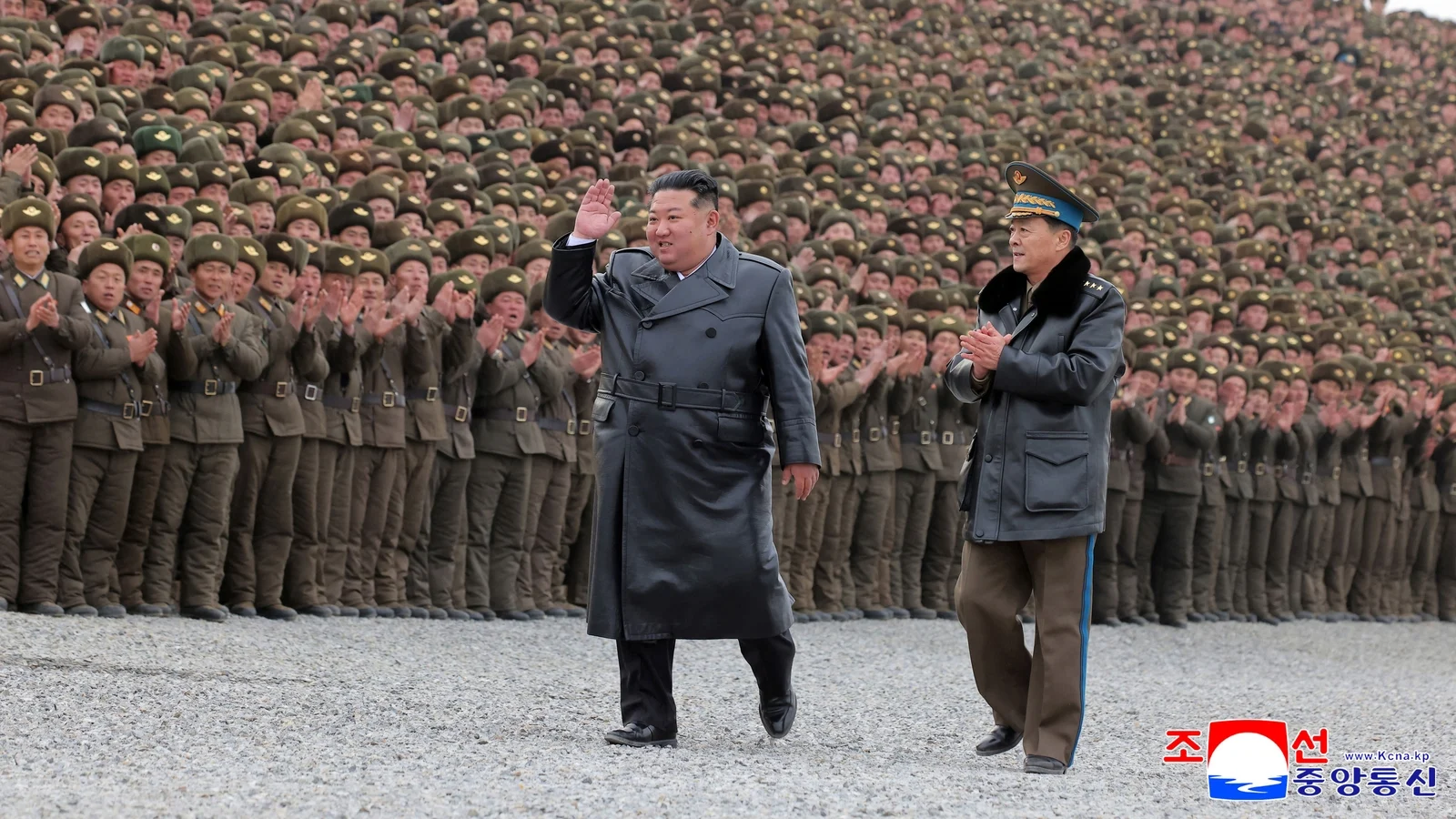
It’s a reminder that North Korea’s military modernization is not confined to one domain. Over the past year the country has launched two indigenously built 5,000-ton destroyers and is said to be plotting Nos. 3 and 4. Kim’s reported comment—that strengthening the nuclear deterrent remains the regime’s “most important priority task”—ties together the land, sea and arsenal ambitions into a single narrative of self-preservation and power projection.
Voices in the Shadow of the Tests
What do ordinary people say when you ask? The voices you hear are often cautious, sometimes fearful, and frequently laced with resigned pride.
“We’ve always lived with the rhetoric,” a small-business owner in Incheon told me on a rainy afternoon, prefacing her words with a sigh. “But this feels different—more real. My brother calls his sons and tells them to pay attention to the news. Families are talking.”
A fisherman on the Yellow Sea, who asked not to be named, described the missile photos they see on state-run television: “It looks like fireworks at first, but then you remember what they say those fireworks can do. People here respect strength—but they don’t want to see the world close in around us.”
Experts, too, are talking in darker tones. A non-proliferation analyst who follows the peninsula for a European think tank noted: “When a country increases both its fissile material production and its delivery platforms, the strategic calculus changes. The window for diplomacy narrows and the margin for error shrinks.”
Numbers, History, and Sanctions
Context matters. North Korea’s first nuclear test came in 2006; since then, the United Nations Security Council has imposed an array of sanctions aimed at curbing finance, trade, and technical assistance. Despite that pressure, the country continued to advance its programs—tests, satellite launches, missile firings. The Yongbyon site, once partially shuttered as part of past diplomatic talks, was reactivated in 2021. Since then, monitoring agencies have watched with increasing concern.
The IAEA’s “few dozen” estimate dovetails with assessments from multiple intelligence communities and think tanks that suggest Pyongyang could have tens of warheads already—enough, if integrated onto reliable delivery systems, to alter deterrence calculations across Asia and beyond. But numbers only tell part of the story. The speed of production, the variety of pathways, and the regime’s willingness to test and flaunt capabilities are what keep so many capitals awake at night.
Why the World Should Care
Why does this matter beyond the immediate neighborhood? Because nuclear proliferation is not a local puzzle—it is a global condition that affects treaties, alliances, and the architecture of deterrence. When one state visibly ramps up production, neighbors reassess their own strategies; alliances tighten, military budgets swell, and regional tensions mount.
There are also the messy, opaque threads between nations. Reports of military exchanges—munitions and possibly technologies moving between Pyongyang and other actors—have prompted questions about reciprocal arrangements. “If weapons or expertise flow between isolated states, you get a multiplication effect,” an arms-control scholar warned. “It’s not just one country’s capability you’re worrying about.”
And there is the human dimension. The state that celebrates missile parades is the same state that manages chronic food shortages, has limited internet access for its citizens, and leverages external tensions to preserve internal cohesion. These policies’ human costs are profound yet often absent from strategic conversations.
Choices and Consequences
So what comes next? Sanctions will likely be tightened rhetorically; diplomatic channels will be probed for signs of leverage; military readiness in South Korea and Japan will be recalibrated. All of this carries risk. Each action can harden stances, making dialogue more difficult. Each pause can be read as weakness or as opportunity.
As a global audience, what should we ask ourselves? Do we accept a future where capability begets capability, where nuclear thresholds are normalized? Or do we demand imaginative, sustained diplomacy that ties legitimate security concerns to verifiable steps, even as trust remains evasive?
In the end, the story unfolding on the Korean Peninsula is both immediate and existential: immediate in its potential to rattle a region and existential in what it says about the fragile architecture of global non‑proliferation. The images of missiles against the sky and the hum of reactors at Yongbyon are more than news items; they are a challenge. How we respond—collectively, patiently, and wisely—will shape not just Korean lives but the contours of security for years to come.