In the dust and heat: a country stranded between headlines
At a water point in Port Sudan, a donkey-drawn cart waits its turn. The vendor fills the blackened tank slowly, the animal swatting flies away with the practiced impatience of a creature used to long days and little water.
“We queue for hours,” says Amal, a 34-year-old mother balancing a toddler on her hip. “There is never enough. Sometimes I bring five jerrycans and return with two.”
That small scene—ordinary and brutal—is repeated across a nation now in its fourth year of bloodshed. It is the kind of image that gets squeezed out of daily media cycles: intimate, filthy, and impossible to reduce to a single statistic.
Four years in: why the world calls Sudan an “abandoned crisis”
When the United Nations describes Sudan as an “abandoned crisis,” it is not speaking in cliché. It is cataloguing neglect: the collapse of civic services, the forced movement of millions, the slow-burning hunger that sits behind every displaced camp’s perimeter.
“This grim and chastening anniversary marks another year when the world has failed to meet the test of Sudan,” said UN humanitarian chief Tom Fletcher, a blunt reminder that international attention has not yet translated into effective pressure on the combatants or adequate funding for relief.
Numbers that refuse to be abstract
- People displaced: roughly 13 million.
- People in need of aid: around 34 million—nearly two out of every three Sudanese.
- Estimated deaths: at least 59,000, with thousands more missing.
- Severe acute malnutrition: projected to rise toward 800,000 cases in the coming months.
- Health services functioning: only 63% of facilities remain fully or partially operational, amid outbreaks such as cholera.
Statistics can feel sterile, but each figure represents a person—someone like Amal, or a child in a camp in Darfur who hasn’t had a measles vaccination in two years. And then there are the mass crimes: UN experts concluded that the RSF’s offensive in el-Fasher displayed “the defining characteristics of genocide.”
On the ground: survival, resistance and grief
Walk through the neighborhoods of Omdurman and you will hear car horns, the crackle of radios, and the low rumble of generators as families try to hold on to the rhythms of ordinary life. Walk outside the city lines and the landscape is a different country—dented buildings, scorched fields, and the presence of men who carry more than farming tools.
“We were villagers; we were farmers,” says Ibrahim, an elder from a Kordofan town now under RSF influence. “We have become refugees in our own villages. We sleep in schools. We teach children how to fetch water without being shot.”
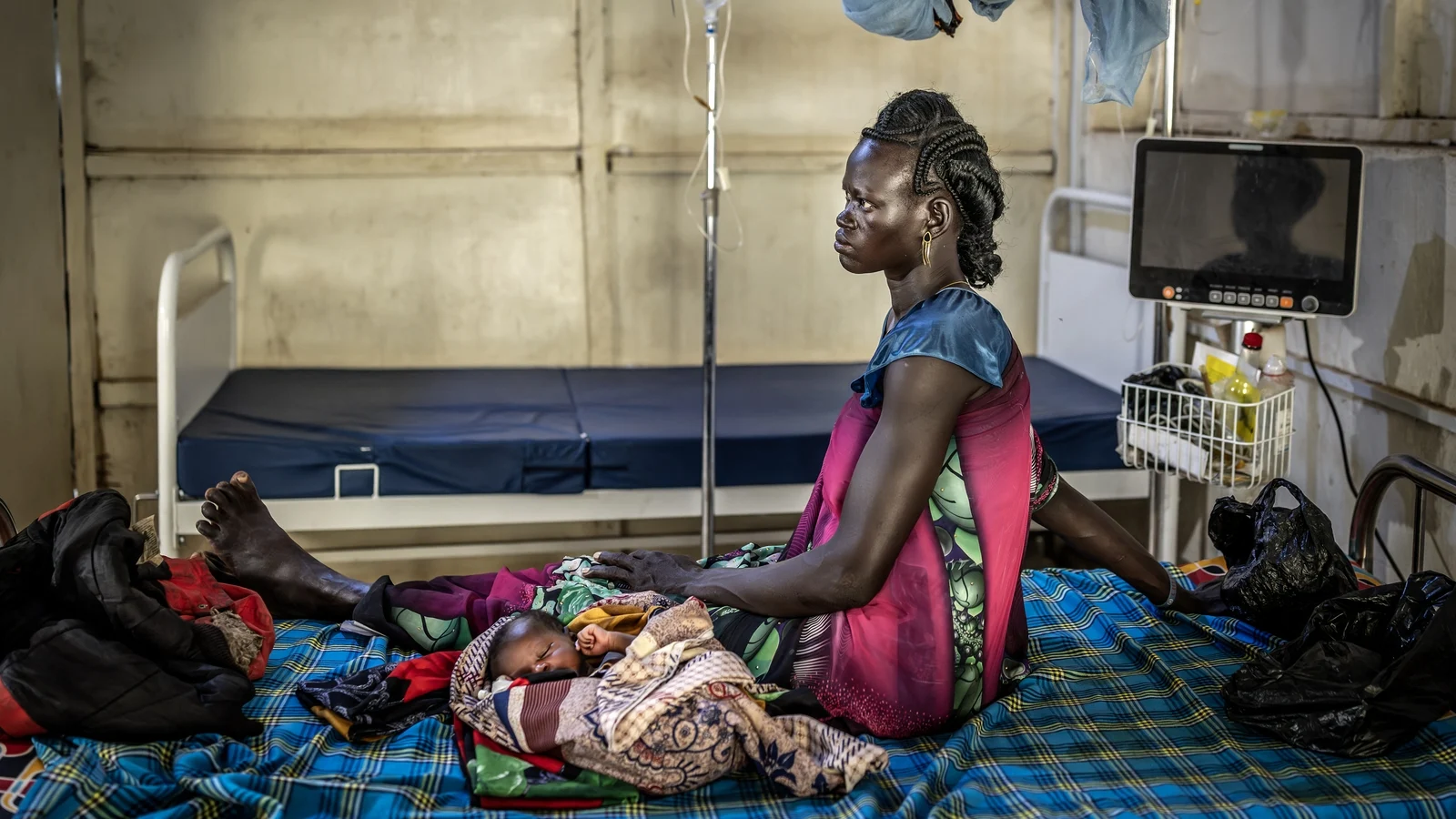
The scenes of daily endurance are punctuated by episodes of terrible violence: mass killings, rampant sexual violence, and assaults on hospitals and ambulances. The World Health Organization reports more than 2,000 health workers killed and continues to document repeated strikes on medical infrastructure.
A fractured nation and a complex regional chessboard
Sudan today is effectively two countries stitched together in a painful truce of violence. The military, internationally recognized and backed by Egypt, holds the north, east and central corridors—controlling ports, refineries and pipelines. The Rapid Support Forces (RSF), an armed paramilitary group that grew out of Darfur’s Janjaweed militias, control Darfur and large swaths of the west, where gold fields and oil-bearing zones sit under their control.
Accusations of outside backing complicate any simple narrative. UN experts and rights groups have alleged that the United Arab Emirates provided arms to the RSF—a charge the UAE has denied. Satellite imagery and research from institutions such as Yale’s Humanitarian Research Lab have also pointed to military support routes and foreign bases that shift the conflict’s dynamics beyond Sudan’s borders.
“This is no longer just an internal power struggle,” says an independent analyst who has studied the Horn of Africa for two decades. “It’s a regional proxy battleground, with resources at stake and neighbours trying not to be dragged in—sometimes unsuccessfully.”
When global distractions matter
Observers note that diplomatic energy has been redirected elsewhere—rising tensions in the Middle East, crises across the Sahel, the war in Ukraine—and that has left Sudan without a persistent, coordinated international push for a ceasefire. Germany’s recent conference in Berlin, convened to rally donors and promote a pause in fighting, was criticized by Khartoum as “unacceptable interference,” a reminder that even humanitarian diplomacy bumps up against questions of sovereignty and pride.
Famine, disease and the economics of despair
Food is getting more expensive. The immediate reason is complex: the Iran war’s disruption of shipping routes has pushed fuel prices in Sudan above 24%, and when diesel rises, everything that moves food—trucks, generators, pumps—costs more. That inflation seeps into market stalls and community kitchens where mothers decide whether to sell what little they have or keep food for the children.
The Integrated Food Security Phase Classification warned that cases of severe acute malnutrition—the deadliest form—are set to climb toward 800,000. Cholera and other preventable outbreaks quickly follow when sanitation crumbles and clinics cannot operate.
Who will be held to account?
The International Criminal Court has opened inquiries into atrocities in Darfur and beyond. Yet investigations take time. Survivors want more than legal rhetoric: they want protection, humanitarian corridors, and justice that does not require waiting years.
“We need immediate safety,” says Hawa, a teacher who fled el-Fasher last year. “We can wait for courts, but our children cannot wait for clean water.”
What needs to happen—and what you can imagine doing
There are practical steps: unfettered humanitarian access across front lines, targeted sanctions against those who profit from the conflict, emergency funding for food, water and shelter, and sustained diplomatic pressure from regional powers that still hold sway.
There are also moral steps. Amid donor fatigue and geopolitical distraction, Sudan’s suffering is easy to forget. Denise Brown, the top UN official in Sudan, pleaded publicly: “Please don’t call this the forgotten crisis. I’m referring to this as an abandoned crisis.” That phrasing is deliberate—an ask for momentum and memory.
What would it take for you to stay with this story? To click a donation link, to call a representative, or to keep a daily thought for a country whose ruins are not shown on every evening newscast? Empathy is not a finite resource if we treat it as practice rather than a headline sensation.
Looking ahead
Sudan’s war is stubborn because its causes are layered: power vacuums left after revolution, the economics of natural resources, local grievances, and foreign interests. And because there are no easy exits for a country sliced by competing armed actors.
But each small intervention—an airlift of therapeutic food, a negotiated safe corridor for a hospital, a foreign ministry convening that keeps pressure on warring leaders—can be life-saving. The question is whether the world will move beyond statements to consistent action.
As you close this piece, imagine Amal at her water cart again. Imagine her child drinking from a clean cup. That image is not sentimental; it is a test. Will the global community remember the donkey carts, the emptied clinics, the houses with the doorframes still standing—and will it respond?