Midnight Fear in Finchley: A Community Jars Awake as Flames Fail to Take
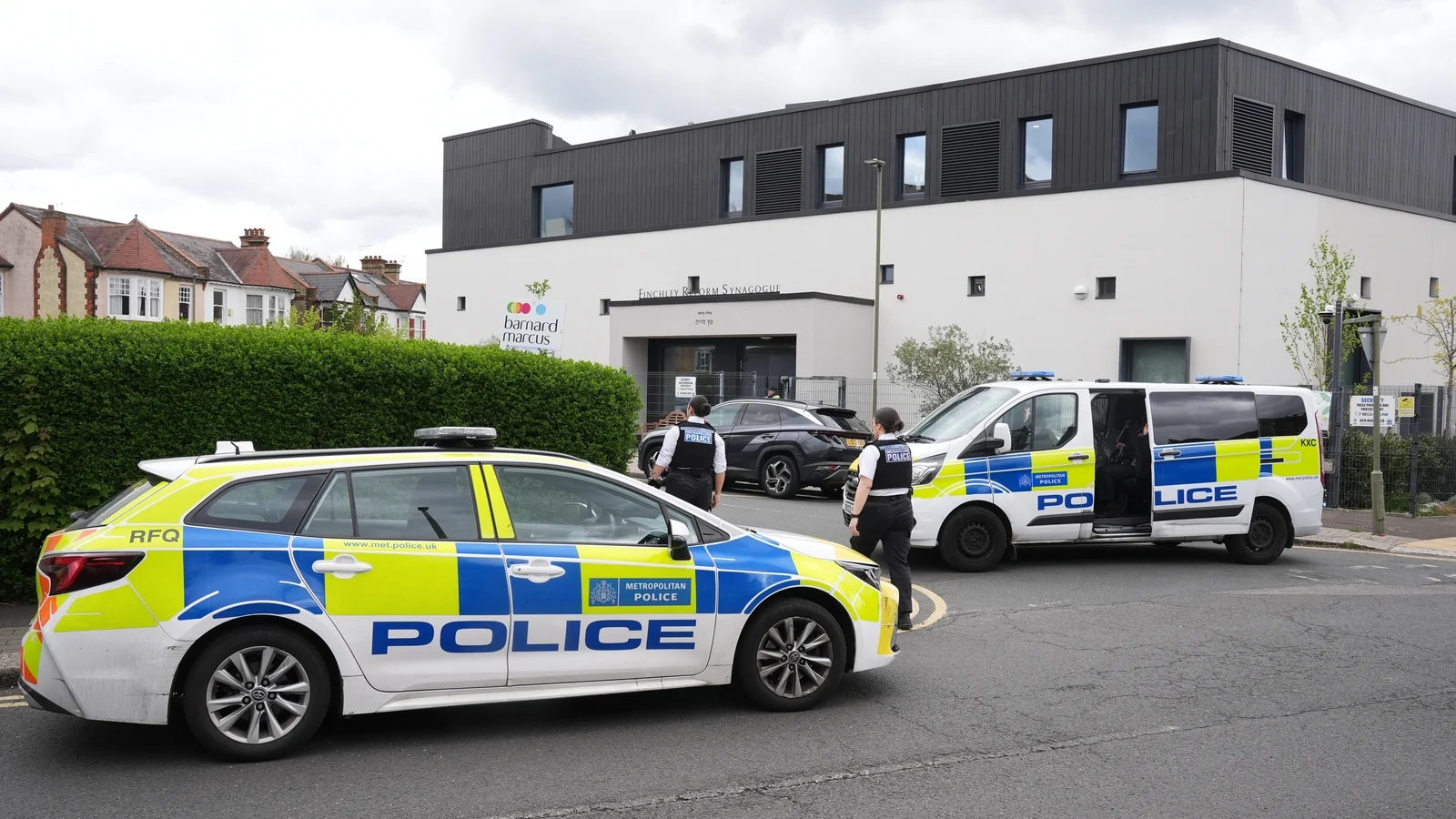
It was the kind of hour when streets soften and the city exhales. In Finchley, a north London neighborhood known for its kosher bakeries, weekday markets and the steady thrum of community life, that nightly quiet was ruptured. Around midnight, two figures in dark clothing and balaclavas approached a synagogue and hurled two bottles that police say were suspected to contain petrol. The petrol never caught. The bottles did.
What remained was a voice on the other end of a 999 call, the taste of adrenaline in people’s mouths and a neighborhood that felt — once again — cradled by fear. The Metropolitan Police described the episode as an “attempted arson attack” and said the incident is being treated as an antisemitic hate crime, with counter-terrorism detectives now assisting the investigation.
What Happened That Night
Details from police briefings have been crisp but grim. Two suspects, masked and intent on destruction, approached the synagogue shortly after midnight and threw two bottles suspected to contain petrol. Fortunately, neither bottle ignited — a small mercy that left the building intact but the community shaken.
“We are treating this as a hate crime,” a Metropolitan Police spokesperson told reporters. “We are pursuing all lines of inquiry and working closely with community partners to reassure those affected.”
A chilling pattern
This is not an isolated moment. The attack in Finchley arrives against a recent, worrying backdrop: an arson attack on ambulances run by the Jewish volunteer charity Hatzola in March, a deadly assault on a synagogue in Manchester on Yom Kippur in October 2025 that left two people dead and several injured, and prosecutions this year of people who plotted murderous attacks or were accused of spying on Jewish communities in London.
- Community Security Trust (CST) recorded 3,700 instances of anti-Jewish hate across the UK last year — a 4% rise on 2024, though still lower than in 2023.
- Two men and a boy were charged over the March ambulance arson that destroyed four Hatzola vehicles.
- In February, two men received life sentences after police foiled an Islamic State-inspired plot to attack a Jewish gathering in Manchester.
- Two Iranians appeared in a London court in March accused of spying on the Jewish community on behalf of Tehran.
How Finchley Is Feeling
Walk down Ballards Lane in daylight and you’ll see the ordinary markers of community life: the kosher butchers, shops advertising Sabbath hours, an elderly man pausing to read the newspaper outside a café. At night, those same streets feel vulnerable. Neighbors speak with a mixture of anger and exhaustion.
“People are scared,” said Miriam Levine, who runs a family bakery adjacent to the synagogue. “I had customers in last night shaking. They kept asking, ‘Is it safe to walk home?’ You don’t expect this in Finchley — but these days you can’t pretend it won’t happen.”
Volunteers from Hatzola — a group that provides free medical transport and emergency response to the area — have been a quiet, steady presence for years. Their ambulances, once torched in March, have become symbols of both service and vulnerability.
“We show up for everyone,” said Aron Katz, a Hatzola crew member. “We treat emergencies, we help mothers in labor, we carry grandparents. When the ambulances were destroyed, people felt the attack was on their lifeline. That sticks with you.”
Voices of Authority and Concern
Community leaders and security experts are urging calm and vigilance in equal measure.
“Our priority is the safety of worshippers and the wider community,” said a senior community security official. “We are liaising closely with police, and increasing patrols around synagogues and community centers. But security alone cannot cure the deeper malaise of hate.”
Dr. Aisha Rahman, a sociologist who studies communal violence and hate crimes, puts the uptick in context. “When international conflicts intensify, they often ripple through diasporas,” she said. “Identity politics, social media echo chambers and a rise in polarized rhetoric create tinder. The recent war in Gaza has coincided with spikes in antisemitic and Islamophobic incidents across Britain, which is sadly predictable from a social dynamics point of view.”
Broader Implications: A Local Scene, A Global Trend
Ask yourself: how does a midnight attack in a London suburb fit into a larger story? The Finchley incident points to two interlocking trends. First, local communities are increasingly targeted in a climate where international conflicts have domestic reverberations. Second, the weaponization of fear — through vandalism, arson, spying, or planned mass-casualty attacks — is eroding everyday trust.
These are not abstract concerns. They reach into daily decisions: will parents allow children to attend youth groups? Will elderly congregants go to services? Will volunteers risk their safety to keep vital services running? The answers to those questions shape civic life.
Security vs Social Cohesion
There is a difficult balance to strike. More police patrols and surveillance can protect people in the short term. But security measures alone do not heal mistrust, counter misinformation or build the inter-community bridges that reduce the likelihood of such attacks in the first place.
“We have to do both,” Dr. Rahman said. “Security is necessary. But so are educational initiatives, cross-community dialogue, and interventions aimed at online radicalization. Otherwise, we simply put a bandage on a wound that bleeds in slow, quiet ways.”
What Next?
As detectives follow leads, Finchley’s residents are doing what communities always do: tending their lives, supporting one another, and looking out for warning signs. We can all watch and ask ourselves what kind of response we want from society at large.
Would you support stepped-up security at houses of worship if it meant less investment in community programs? How should authorities balance civil liberties with protection against hate? These are messy trade-offs with no easy answers — but they are questions worth asking.
In the immediate term, neighbors plan vigils. Community centers have posted extra volunteer shifts. And the bakery that opened early this morning is offering free tea to anyone who needs to talk.
“We will keep coming back,” Miriam said, kneading dough as if it were a kind of prayer. “Fear can make you small, or it can make you stubborn. We choose stubbornness.”
Closing Thoughts
Finchley’s midnight alarm is a reminder that acts of hatred, however small or failed, have outsized effects. They chip away at trust, alter routines and force communities to spend precious energy defending the basic right to exist in peace. As investigators continue their work, the broader challenge remains: how do we build a public life resilient to the shocks of hatred — one that protects people and also fosters understanding?
If you live near a place of worship, consider visiting, donating to interfaith initiatives or simply knocking on a neighbor’s door. These modest, human acts are the often-overlooked counterweight to fear. In the end, safety is not produced by patrols alone; it is crafted by the small, steady choices of people who refuse to let terror define their streets.