Three Weeks on a Knife-Edge: Inside the White House Deal That Bought a Fragile Calm in Lebanon
On a spring afternoon in the Oval Office, behind the polished wood and portraits of presidents past, an uneasy peace was renewed for three more weeks.
President Donald Trump, flanked by an array of envoys and aides, announced that the ceasefire between Israel and Lebanon would be extended after a second round of US-mediated talks. Israel’s ambassador to Washington, Yechiel Leiter, and Lebanon’s ambassador, Nada Moawad, sat across the desk from Mr. Trump as Washington tried—once again—to pull the region back from the brink.
“The meeting went very well,” Mr. Trump posted on his social platform, adding that the United States would help Lebanon “protect itself from Hezbollah.” Those words landed like a promise and a warning at once.
A pause, not a full stop
The truce in place since mid-April has demonstrably reduced the roar of conflict; overnight barrages and the daily drumbeat of airstrikes have given way, at least partially, to silence. Yet silence here is fragile. Southern Lebanon remains punctured by fear: Israeli forces have established a self-declared buffer zone, and exchanges of fire have not entirely ceased.
“You can hear the quiet, but you can still smell the smoke,” said Karim, a fisherman from a coastal village south of the Blue Line. “We sleep with one eye open. We can’t forget what happened last week.”
Last week was Lebanon’s deadliest since the ceasefire took effect on 16 April. Local health authorities reported multiple casualties after an airstrike and subsequent shelling — three people killed, two wounded. Among the dead was a journalist, Amal Khalil, whose death was confirmed by her employer and a senior Lebanese military source. Reports like these remind residents that truce does not always mean safety.
Diplomacy in the Oval
The White House meeting brought a crowd: Vice-President J.D. Vance; Secretary of State Marco Rubio; US envoys including Mike Huckabee, Ambassador to Israel, and Michel Issa, Ambassador to Lebanon. The gathering was a reminder that the US remains central to the region’s political choreography—even as other powers, like Iran, pull strings from the wings.
“We want to prevent a return to full-scale fighting,” said a US official who asked not to be named. “This extension buys time—time for diplomacy, time to prevent further civilian suffering.”
But time for what? For some in Beirut, the pause is only a prelude to tougher, thornier questions: Who occupies territory? Who will withdraw? And how will Lebanon secure its border without directly negotiating with Israel—a step many in Beirut find politically toxic?
Hezbollah, Iran and the question of influence
Hezbollah, the Iran-backed militant group that triggered the recent escalation on 2 March, maintains that it “has the right to resist” occupying forces. Hassan Fadlallah, a Hezbollah lawmaker, told local media that the group favored the ceasefire so long as Israel complied fully.
“We want calm, but not surrender,” Fadlallah said in a televised statement. “If Israel continues assassinations and destroys homes, this calm will not hold.”
Lebanon’s government has publicly sought to push Hezbollah toward disarmament through peaceful means—an objective Israel has echoed as it seeks to press for Hezbollah’s dismantlement as part of any broader settlement. But for many Lebanese, the idea of direct, public negotiations with Israel is a political nonstarter.
The human geography of conflict
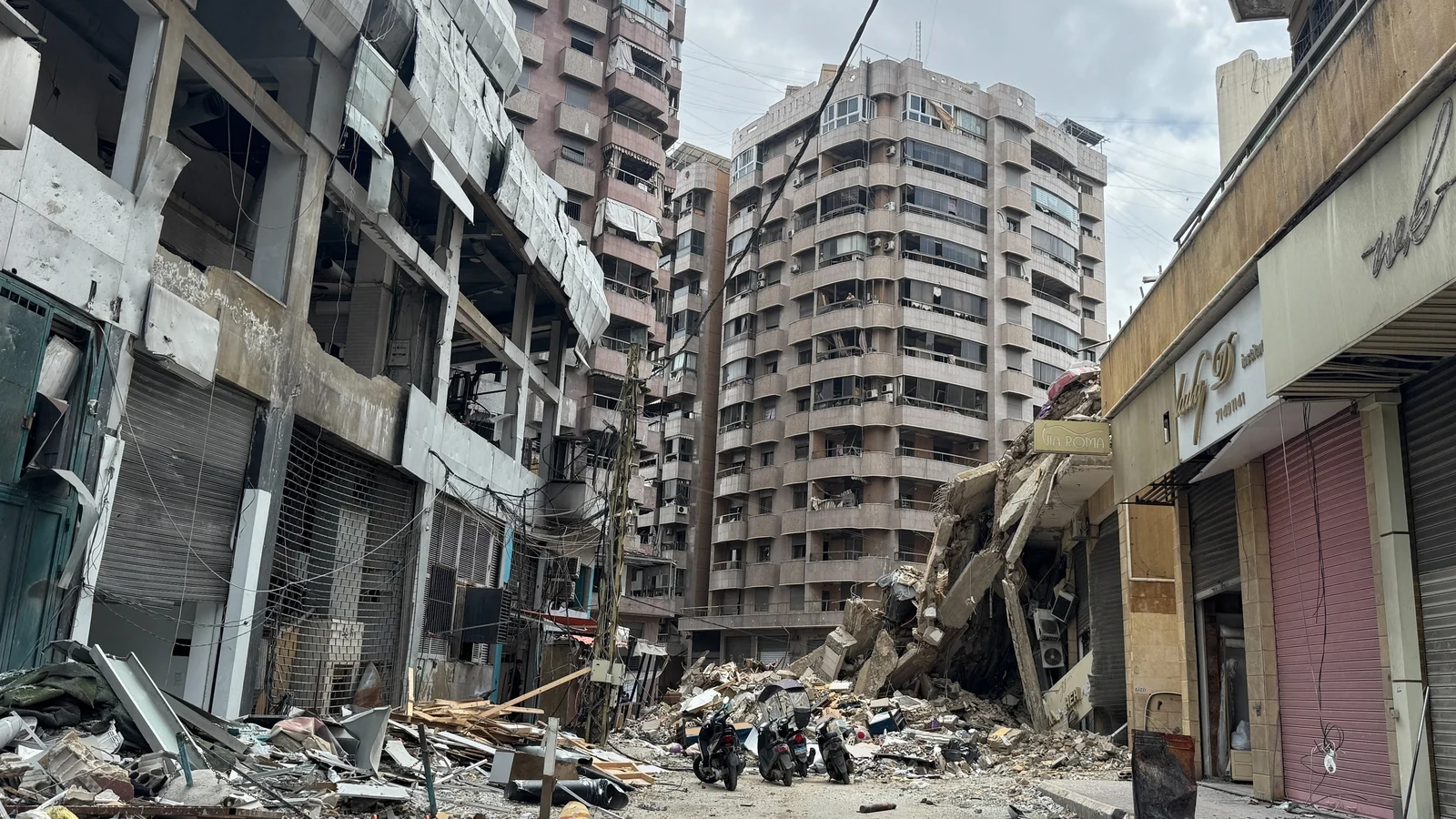
Walk through the south and you’ll see the evidence of small wars: collapsed roofs, shuttered schools, orange orchards ringed by sandbags. A UN-mapped frontier—the Blue Line—marks a frontier where fences, not friendship, now run. Israel says its occupied belt extends five to ten kilometers into Lebanese territory, a buffer it maintains to protect northern communities from rocket fire.
“My aunt’s house was bulldozed,” said Layla, a teacher in a village near the coast. “She had grandchildren. The government tells us not to go back. How do you teach when your students have lost their homes?”
Hezbollah has fired hundreds of rockets during the broader conflict, and Israel’s operations have caused extensive demolition. Lebanese authorities say nearly 2,500 people have been killed in Lebanon since Israel launched its offensive following Hezbollah’s 2 March attack. Those numbers stitch together grief, displacement and long-term trauma for families already strained by Lebanon’s economic crisis.
What the ceasefire covers—and what it doesn’t
In Washington, diplomats framed the truce as the first stage of a longer process. Beirut has signaled it will only advance to higher-level talks—potentially involving border delineation and a push for Israeli withdrawal—if the ceasefire is extended and respected. Israel has conditioned deeper negotiations on progress toward weakening Hezbollah’s military capacity.
“We are not naïve,” said a Lebanese government adviser. “An extension is meaningful only if it brings us closer to reclaiming our land and securing the return of detainees.”
The UN’s shrinking footprint
Looming over these delicate conversations is another reality: the future of UN peacekeeping in Lebanon.
UNIFIL, the United Nations Interim Force in Lebanon first deployed in 1978, now counts over 7,000 troops from 47 nations. But its mandate is due to expire later this year, and the UN has been candid: some form of international presence may remain, but it will likely be smaller.
Jean-Pierre Lacroix, the UN Under-Secretary-General for Peace Operations, has said he is consulting with parties and will present options to the Security Council by June. He has also highlighted grim financial constraints: the UN runs 11 peacekeeping missions and fields over 46,000 personnel worldwide, yet unpaid dues from member states have forced the organization to cut roughly 25% of some operations.
“We are looking at a presence that would probably be smaller than UNIFIL,” Lacroix said in recent briefings. “The Lebanese are clear they would like some continuing presence. The question is how to do that effectively.”
UNIFIL’s responsibilities—monitoring the ceasefire, supporting the Lebanese army in deploying south, and helping enforce arms restrictions—have been central to preventing an even worse conflagration. But as funding wanes, so does capacity. In recent weeks UNIFIL suffered five casualties: three peacekeepers from Indonesia and two from France.
Why this matters beyond the region
What’s happening in southern Lebanon feels local and parochial, but it is a prism for wider global trends: the shrinking bandwidth of international institutions, the rise of proxy warfare, and the brutal calculus that civilians across the world must endure when geopolitical titans compete.
Ask yourself: why should a peace for three weeks matter to a reader in Tokyo, Lagos or São Paulo? Because the pattern repeats—across continents—where fragile ceasefires become the longest, best hope for people repairing the small, human pieces of daily life after bombardment: a child’s school, a marketplace, the smell of citrus in a courtyard.
“We are tired of being collateral,” said Ahmad, who runs a small bakery near the southern towns. “We want rules that protect us. We want to work. We want our children to grow up without hiding in basements.”
What comes next?
The extension now buys negotiators breathing room. It gives UN and Lebanese officials time to build mechanisms for withdrawal maps, detainee returns and—and perhaps most importantly—the political cover for leaders to take difficult steps on both sides.
But pause does not equal resolution. The clock is ticking on UNIFIL’s mandate. Funding uncertainties loom. Regional rivalries—above all Iran’s influence over Hezbollah and Israel’s security imperative—press like two hands on a soft fruit.
For the people living along the Blue Line, diplomacy’s slow machinery can feel remote. Yet in those same towns, every new agreement—however imperfect—can mean the difference between a roof over a bed or rubble over a life.
So I will ask you: when peace is fragile, what should the international community prioritize—presence, political pressure, or the slow work of rebuilding institutions on the ground? And what price are ordinary people expected to pay while the diplomats debate?
For now, the world watches, and southern Lebanon waits—three weeks at a time.