Smoke Over the Bank: A Morning That Felt Like War Had Returned
There is a particular smell that arrives when rubble and diesel and fear mix: hot concrete, scorched fabric, and a metallic tang that gets into your throat. In Gaza City on a recent morning, that smell cut through a neighborhood already bruised by a long, stubborn conflict.
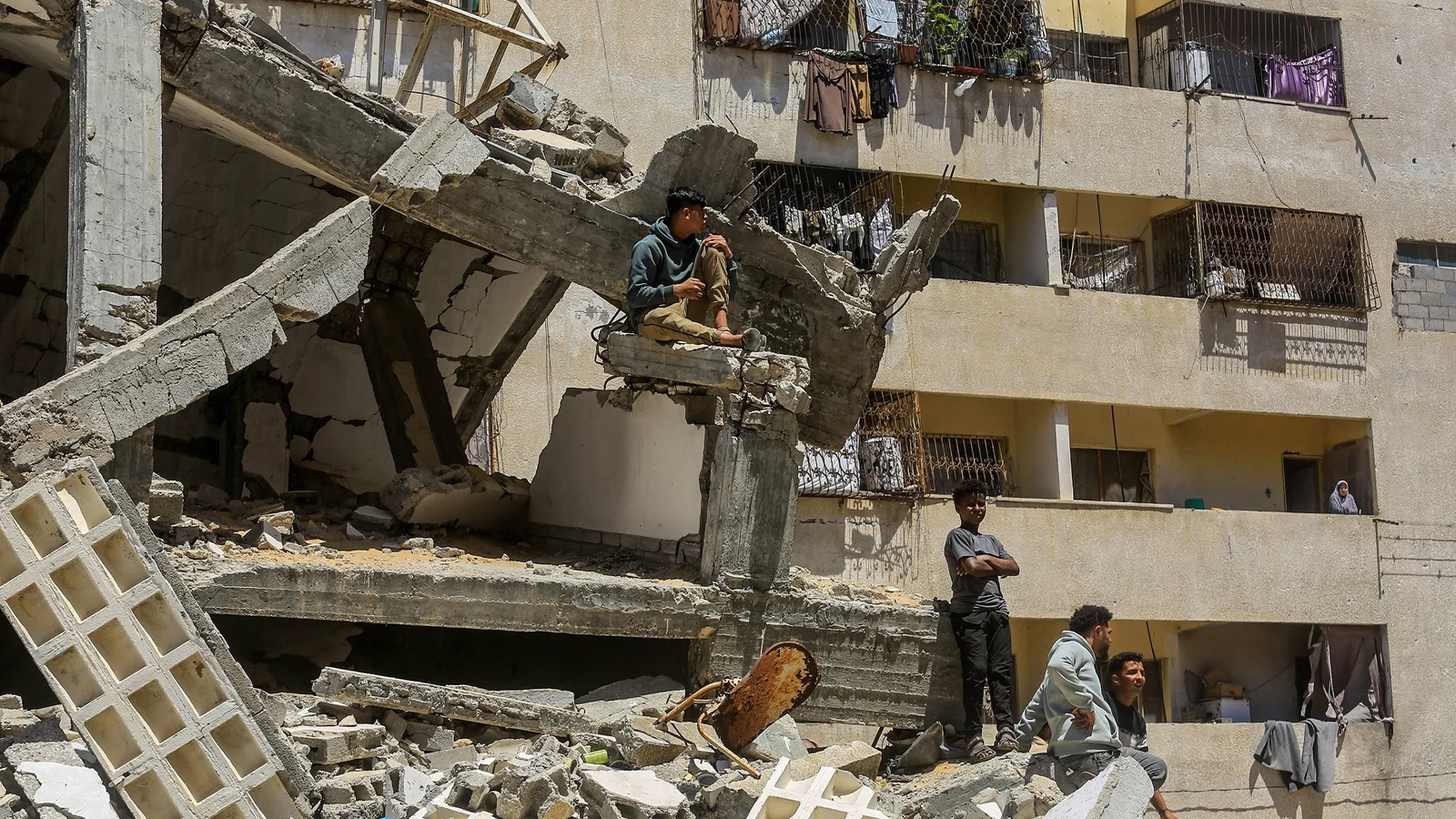
A strike hit a crowded stretch near the local police post that guards a small bank, witnesses and medics said. By late morning, Palestinian health officials reported at least three people had died. The scene, described by those on the ground, was chaotic: broken glass, hurried hands lifting the injured onto makeshift stretchers, the distant wail of sirens that has become all too familiar.
Eyewitnesses and the human detail
“I saw the dust rise like a cloud, then people running,” said a shopkeeper who lives two doors from the bank, speaking under the condition of anonymity. “One moment the street was full of people buying coffee and bread; the next, no one could breathe.”
An emergency nurse at Gaza’s al-Shifa hospital, Amal, 32, described the triage that followed. “We set up an extra table in the courtyard,” she said. “You learn to work with what you have—torn sheets as bandages, flashlights in the dark, and a prayer in the background.” Her voice, even when measured, carried years of exhaustion.
Gaza’s interior ministry issued a statement saying the strike had targeted a police patrol. Medics and eyewitnesses confirmed the blast occurred near where local officers typically gather to guard the bank. Whether any members of the police force were among the dead remained unclear at the time the reports were filed.
Maps of Violence: A Ceasefire, Frayed
When the world celebrated a ceasefire in October 2025, many breathed a cautious sigh of relief. But the fragile calm did not hold. Since that agreement, local medics say Israel has carried out near-daily strikes across Gaza. At least 790 Palestinians have been killed since the ceasefire took effect, health authorities in Gaza report, while Israel says militants have killed four of its soldiers. Both sides continue to trade accusations of violations.
For families who live within walking distance of frontlines that seem to shift like tides, the ceasefire has often felt more like a bookmark between chapters of violence rather than a closing line. “We try to plan for tomorrow,” said Mariam, a seamstress who lives three blocks from the bank. “But every plan is made with the sound of explosions in the back of our heads.”
The bigger ledger
To put the current period in the cold light of statistics: Gaza health authorities report more than 72,000 people have been killed since October 2023, most of them civilians. Hamas’s attacks on Israel on October 7, 2023, killed approximately 1,200 people, according to Israeli tallies. Those numbers—heavy, numeric, impersonal—still struggle to hold the weight of individual lives: mothers, fathers, children, craft shops, schoolbooks, favorite corners of neighborhoods.
Policing in Pieces: Why the Target Matters
For reasons that sit at the intersection of military strategy and political power, Israel has stepped up operations targeting Gaza’s Hamas-run police force. International reporting has outlined how the militant group has used those police structures to rebuild elements of governance in the territory it controls. To Israel, those institutions are not merely bureaucratic—they are part of a system they see as hostile.
“When policing is weaponized, streets become battlegrounds,” said Dr. Rami Haddad, a political analyst who studies governance in conflict zones. “Destroying administrative structures disrupts daily life, undermines trust, and deepens humanitarian crises. But it also leaves a vacuum—one that often worsens suffering for ordinary people.”
What this means on the ground
The area around the bank is practical and mundane: a place people come to cash wages, to send money to relatives, to stand in line and exchange greetings. That ordinariness is part of the violence of attacks that strike those spaces. “They hit where people are hungry for normality,” said a teacher who volunteers with a local aid group. “And every time they do, the idea of normal becomes a memory.”
Stories You Won’t See in the Headlines
Among the rubble of one destroyed kiosk, a man named Youssef sat holding the last fragment of a family photo. “We buried my brother last month,” he told me, voice low. “We have nowhere to put him but our hearts, but how long can a heart hold so many graves?” His question lingered like smoke in a small, devastated courtyard.
Children in Gaza are navigating a landscape where playgrounds can double as lookout points and schools as shelters. A teacher described the new curriculum of survival: “We teach arithmetic by counting generators. We teach history as a map of where not to walk.”
- At least 790 Palestinians killed since the October 2025 ceasefire took effect, according to local medics.
- More than 72,000 Gazans killed since the war began in October 2023, most of them civilians, Gaza health authorities say.
- Israeli officials report about 1,200 Israelis killed in Hamas’s October 7, 2023 attacks.
Questions that Demand a Wider Lens
What does accountability look like when blame is traded like ammunition? How do communities rebuild institutions when those institutions themselves are targets? These questions don’t have tidy answers, but they invite reflection on a deeper trend: the erosion of neutral civic spaces in modern conflict. Banks, hospitals, and schools—places meant to be beyond the battlefield—are increasingly swept into violence, turning everyday life into a ledger of risk.
“You begin to count risks like a shopkeeper counts stock,” said Leila Mansour, who runs a bakery near the southern edge of Gaza City. “Will we open today? Will the supplier deliver? Will there be a strike?” Her flour-streaked hands folded around a cup of coffee like a small, defiant ritual.
What the World Watches—and What It Might Miss
International headlines measure the cadence of conflict in numbers and statements. But the local scene—the faces, the small acts of resilience, the choices families make under duress—is where history is actually lived. A ceasefire can be a political achievement and yet fail to protect the rhythms of life people need. That dissonance fuels a quiet crisis: a generation learning survival earlier than it should.
So what do we do as observers, readers, and global citizens? We can demand clearer reporting, support humanitarian aid that reaches those on the ground, and listen to the people who live with these consequences every day. We can also ask policymakers the hard questions about the downstream effects of targeting civic structures.
Closing: A Call to See, Not Just to Scroll
As the dust settled that morning near the bank, neighbors cleaned, children dared to play in the same street, and a nurse filed injuries into a small notebook. These are the small acts of repair that keep communities breathing.
“We are tired,” said Amal, the nurse. “But tired is not the same as broken. You can see the cracks and still decide to mend them.” Her words are small, human, and stubborn—an insistence that amid statistics and strategy, the people of Gaza continue to choose life.
When you read the next headline from afar, ask yourself: who is counted, and who is seen? What does mourning look like in a neighborhood once, briefly, ordinary? The answers lie not just in casualty tallies, but in the daily decisions of those who choose, again and again, to stay and to care.