Europe’s next squeeze: why Brussels is already drafting package 21 while rockets still fall over Odesa
There is a peculiar tension in the air this spring: in the marble halls of European capitals diplomats speak of leverage, legal drafts and fiscal instruments while, just a few hundred miles to the east, families pick through the rubble of apartment corridors. The two are not separate realities but parts of the same, awkward, urgent conversation about how to wage pressure without turning a continent into a perpetual battlefield.
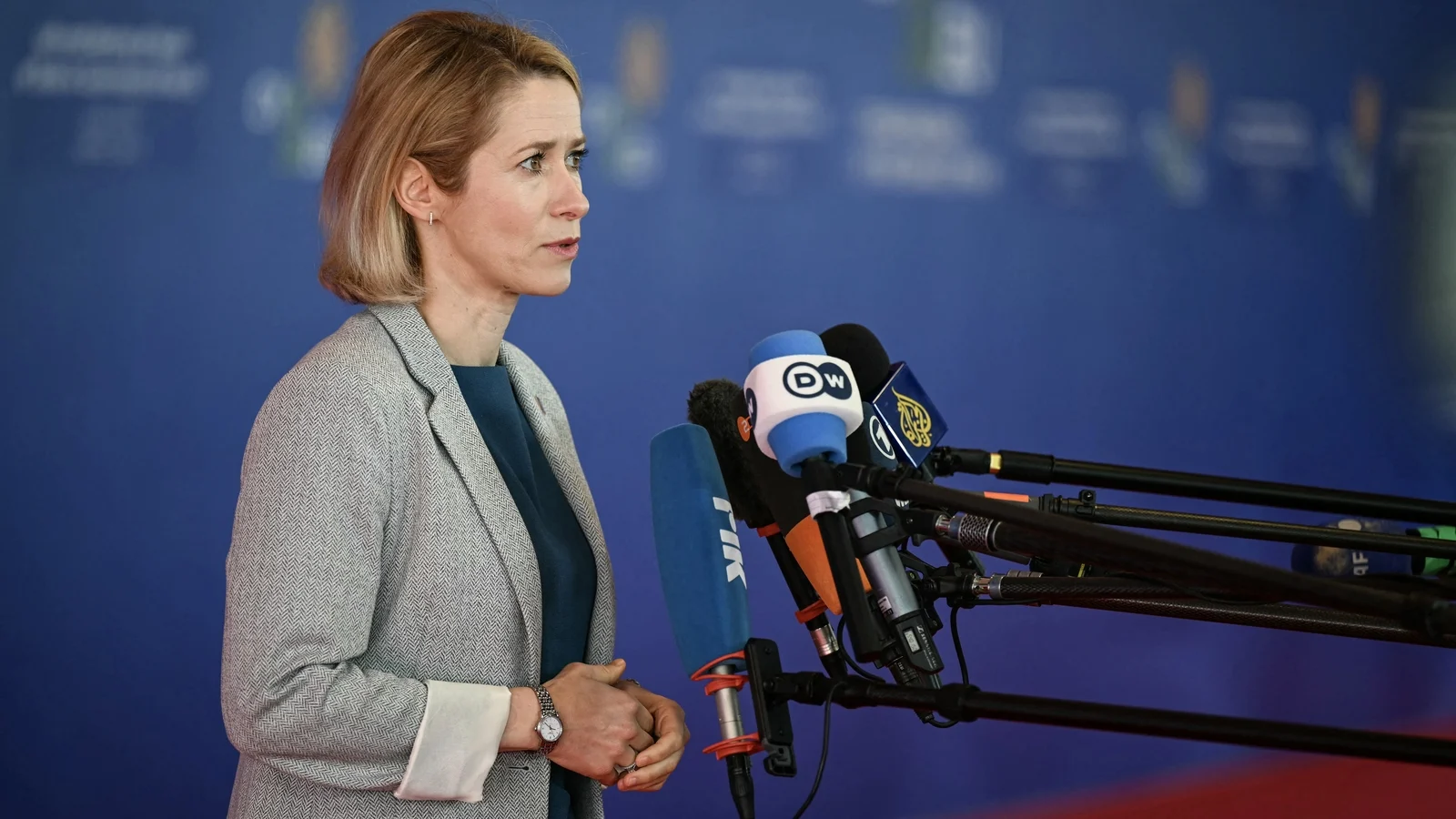
European Union leaders, fresh from approving a sweeping 20th package of sanctions and a €90bn loan lifeline for Ukraine, have quietly begun work on a 21st round. In informal discussions, Brussels officials describe it as an insurance policy — a way to tell Moscow that time is not the ally it hopes for.
“We have to keep the pressure calibrated and continuous,” said a senior EU diplomat, speaking on condition of anonymity to discuss sensitive deliberations. “Sanctions are a dialogue in a different language — they are meant to tell the other side what we will do if the violence keeps going. We cannot let patience be a negotiating chip.”
Money, but not magic: what the €90bn loan actually means
The financial package agreed by EU capitals is large by historical standards: €90 billion to shore up Kyiv’s coffers. The sum was delayed for months, becoming a political chess piece when Hungary’s outgoing prime minister blocked its passage. Now that it has passed, it is being described by economists in blunt, practical terms: necessary but not sufficient.
Officials in Brussels say half of the loan will be disbursed this year, with the remaining tranche due in 2027. Much of the cash—by one tally a majority—will be earmarked for defence, with roughly €17 billion a year set aside to keep hospitals working, schools open and civil servants paid.
- €90bn total loan package
- Half disbursed this year; remainder in 2027
<li≈ €17bn per year designated for general budget needs (health, education)
“This is a two-year stabiliser,” said an economist who specialises in post-conflict reconstruction. “Without it, forecasts had Ukraine running short of funds by June — which would have forced harsh cuts to public services and possibly driven desperate concessions. With it, Kyiv can breathe. But breathing is not winning.”
That last sentence captures a truth many in Kyiv repeat: cash keeps a country standing. It does not, on its own, stop missiles, rebuild shattered communities, or map out a lonely path to peace.
Odesa’s shoreline, scarred
On the southern coast, the elegant city of Odesa — its palms and seafront boulevards instantly recognizable to travelers — was struck this week. Emergency services reported two dead and 14 wounded after strikes tore into residential buildings. A three-storey block was hit; nearby two-storey structures were levelled. More than 140 rescuers were deployed, and 16 people were evacuated from one damaged building.
“I heard the blast and I thought it was a thunderstorm,” said Olena, 47, a baker who runs a small shop near the Primorsky Boulevard. “Then I ran out and there was smoke, and the neighbor’s balcony was gone. We keep telling ourselves we’ll go back to normal, but normal keeps moving away.”
Odesa is a city of contradictions — grand Art Nouveau facades, seaside promenades, and a working port that has been a strategic prize since tsarist times. It is also a place where the daily rhythms of life are punctured by sirens and the pragmatic routines of blackouts and generator schedules.
Officials say Russia has intensified missile and drone barrages in recent months, striking energy infrastructure and plunging regions into darkness. Earlier strikes in the same city killed at least nine people during a particularly lethal night. The pattern is clear: infrastructure hit, civilian hardship follows, and the humanitarian bill rises—in money and in the everyday erosion of hope.
From Kyiv to Riyadh: diplomacy as a forward line
In the diplomatic theatre, President Volodymyr Zelensky was scheduled to visit Saudi Arabia to meet Crown Prince Mohammed bin Salman. This marks a continuation of Kyiv’s steady outreach to the Gulf, where states have been balancing their own regional interests between Washington, Moscow and other powerful neighbours.
Ukraine has sold its story in the Gulf as one of practical expertise. Kyiv’s specialists now train foreign crews in anti-drone techniques; they have deployed personnel and technology to help shoot down Iranian-made drones in recent confrontations. Kyiv calls its systems among the best in the world at detecting and intercepting these cheap, lethal devices.
“What we offer is hard-earned know-how,” said a Ukrainian defence adviser. “Four years of living with mass drone attacks teaches you things textbooks never will. Partners in the Gulf are buying that experience because they need it today.”
Last month’s talks in Riyadh reportedly resulted in an ambitious, decade-long defence cooperation plan that includes potential joint production lines for air-defence systems. For Saudi Arabia, relations with both Moscow and Kyiv—and the capacity to host sensitive talks—signal a foreign policy that is pragmatic, if carefully calibrated.
Why the next sanction package matters — and why it may not be decisive
Sanctions are a blunt instrument that can be refined but rarely deliver instant outcomes. The EU’s 20-plus packages have targeted individuals, energy flows, banks and technology transfers. Each round narrows options for the Russian economy and raises the cost of continued aggression. Yet sanctions also carry costs for those imposing them, from energy prices to supply-chain disruptions.
“Sanctions create a squeeze, but squeezes work over time,” said an international relations scholar. “The challenge for the EU is to keep the squeeze tight enough to signal resolve without creating fissures among member states that would erode credibility.”
That is the political tightrope Brussels is walking. In public, officials speak of unity and determination; in private, they worry about fatigue. Voters across Europe are anxious about inflation, energy bills and domestic priorities. Yet the moral calculus of supporting a sovereign nation under attack keeps many capitals focused.
What does this mean for ordinary people?
For Ukrainians it is a calculus of survival: money keeps schools and hospitals open; air-defence know-how saves lives; sanctions aim to make the cost of war higher for those who pursued it. For Europeans, the choices probe deeper questions: How far should democracies go to support distant struggles? How much pain at home is acceptable in pursuit of a geopolitical goal?
As you read this, imagine your city briefly jolted by a distant blast. Imagine public transport stuck, classrooms dark, a child’s school report in a drawer because there are no more teachers’ wages to pay. These are abstract policy debates until they are intimate personal stories.
Looking ahead
The EU’s push for a 21st sanctions package is not an act of vengeance; it is a tactic in an extended campaign where diplomatic, economic and military levers are all being used. Kyiv’s trips to the Gulf and the flow of cash show a multi-track strategy: buy time, protect civilians, and build partnerships that might matter when the smoke clears.
Will it be enough? That depends on choices yet to be made — by leaders in Brussels, capitals in the Gulf, and ballot boxes across Europe. It also depends, painfully, on the choices of those who hold the levers of force.
So I will ask you, as someone watching from outside the immediate line of fire: what is the right measure of patience for democracies confronting aggression? And how do we balance the hard realities of geopolitics with the human need to relieve suffering now?
These are not questions for press releases. They are questions that will be answered in hospital wards, in the rebuilt shells of apartment buildings, and in the votes and halls of parliaments in the years to come. The EU can draft package 21. But whether it helps end the violence, or merely changes its shape, is a story still being written in the cities like Odesa that refuse to vanish under the rubble.