Justice in the Courtroom, Reckoning in the Streets: The Day Purdue Pharma Was Held to Account
The courtroom smelled of coffee and old wood and the kind of quiet that gathers before a storm. For more than six hours, people who had lost sons, daughters, brothers, neighbors, friends — people who had watched lives hollow out in slow, painful increments — rose and spoke into a microphone while cameras and lawyers listened. Their stories were not case numbers. They arrived as worn photographs, as trembling hands, as names read out loud until the sound of them filled the room.
“These people are not statistics in an epidemiological study,” U.S. Judge Madeline Cox Arleo told the gallery after reading the names of more than 200 victims who submitted written statements. “These testimonies were heartbreaking.” She then did something unusual: she apologized, not only to the victims on behalf of a company, but on behalf of the government itself, admitting that officials had “failed” to shield the public from practices she described as “driven by greed” and likened to a criminal enterprise.
What happened — in plain terms
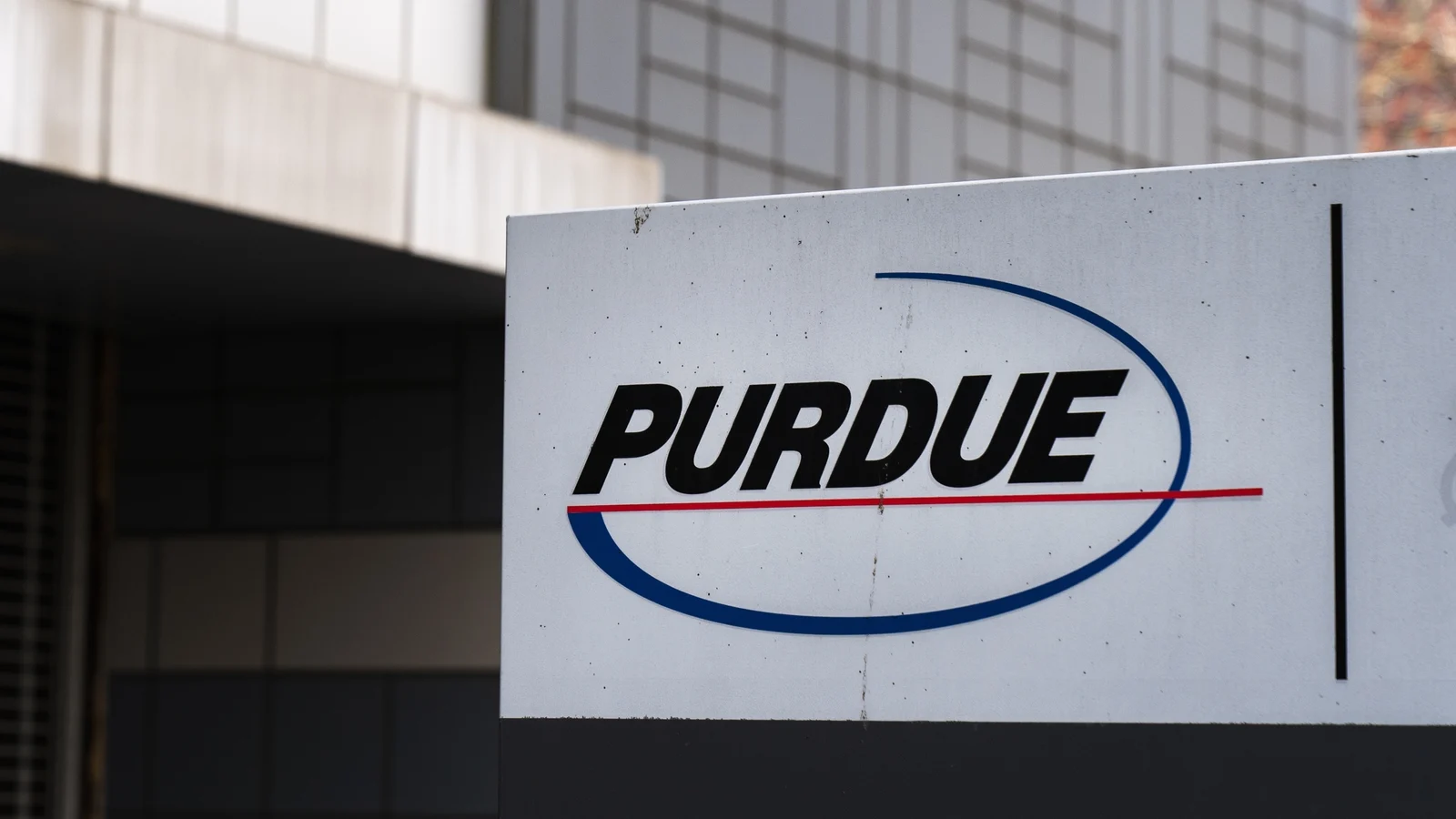
Purdue Pharma, the maker of OxyContin, stood at the center of a decades-long chorus of litigation and grief. Last year, several U.S. states reached a settlement with Purdue and members of the Sackler family — the private owners for many years — that funnels money to communities and individuals harmed by the opioid epidemic. The total penalties, including fines and forfeitures, top $8 billion.
As part of that settlement and the winding down of the company, Purdue is set to be dissolved and reconstituted as Knoa Pharma, a public benefit company tasked with producing treatments for opioid use disorder and medications to reverse overdoses like naloxone. The dissolution is scheduled for May 1.
A court order with teeth — and a sting
Judge Arleo delivered a criminal sentence to the company, listened to testimony, and asked Steve Miller — Purdue’s board chair — to step forward and apologize to the families who had been left to pick up the pieces. Many who spoke in the courtroom urged the judge to reject the settlement entirely, on the grounds that it shields members of the Sackler family from criminal prosecution. Arleo acknowledged that concern, but called this settlement “the best route I see among the options before me,” urging the bankruptcy lawyers to honor their promises to compensate victims and communities.
The human ledger: what was lost
Walk into a small-town diner and ask about OxyContin and you’ll hear the same cadence: a prescription for pain, a neighbor who didn’t come home, a funeral where “accidental overdose” was printed in the obituary as if it were the end of a sentence, not a story. “My son was an honor student,” said Linda H., wiping a paper napkin across her face. “One doctor’s prescription turned into a lifetime of chasing a high he never wanted. I don’t want money — not really. I want the truth and for this never to happen to someone else.”
From 1999 through 2023, roughly 806,000 people in the U.S. died from opioid overdoses, according to the Centers for Disease Control and Prevention — a figure that reads like a national trauma. For many families, addiction begins with prescribed pain pills like OxyContin, then escalates as tolerance builds and access to illicit opioids such as fentanyl becomes more common. The ripple effects include children in foster care, communities stretched thin by public-health burdens, and a wave of small businesses and municipal budgets drained by the cost of emergency responses and treatment programs.
Voices from the front lines
“This wasn’t fate or bad luck,” said Dr. Aisha Rahman, an addiction specialist who runs a clinic in Ohio. “It was a predictable public-health disaster enabled by corporate marketing and careless prescribing practices. We’ve pivoted to treat a flood of patients whose illnesses were, in many cases, seeded by pharmaceutical promotion.”
Marcus Lee, who now works as a peer counselor in an Indianapolis recovery center, remembers the first pill he took after a car accident. “They told me it was safe if I followed the script,” he said. “Two months later, I couldn’t stop. The things I sold, the places I went — it nearly killed me. No one warned my mom that a bottle of 30 pills could steal a life.”
Pharmacists who sat in the hearing testified too. “You could see it in the shifts,” said Ellen Torres, who runs a family pharmacy in rural Pennsylvania. “In 2000, bottles of OxyContin flew off the shelves. We had scripts coming in every day. Patients were scared to ask questions because they trusted the prescribers. When the addiction showed, folks looked to us for answers we didn’t always have.”
What the settlement will and won’t do
The agreement aims to redirect funds — the reported $8 billion-plus — into trauma-laden communities: addiction treatment, overdose-reversal medication, recovery programs, and local health initiatives. But the contours of justice are complicated. Critics say that financial remediation cannot fully substitute for criminal accountability when families seek both truth and responsibility from the people and institutions that profited.
- What the settlement includes: multi-billion-dollar payments, dissolution and reformation of the entity into a public benefit company (Knoa Pharma), and obligations to fund treatment and prevention programs.
- What remains contested: legal protections for members of the Sackler family, and whether civil penalties can answer for lives lost.
Beyond a single courtroom: wider lessons
What happened at Purdue is a case study in how modern medicine, corporate strategy, and consumer trust can collide with devastating force. It raises questions about regulation, the ethics of direct-to-physician marketing, and the long tail of addiction. It asks us to wonder whether our systems of accountability — civil suits, bankruptcy settlements, criminal prosecutions — are fit for the consequences they purport to repair.
“This is about policy as much as punishment,” said Maya Singh, a public-health researcher. “We need stronger oversight on the approval and marketing of pain medications, better training for prescribers, and accessible, high-quality addiction treatment. Otherwise, history will keep repeating itself in new forms.”
Local color: pockets of resilience
Despite the pain, many communities are building new fabrics of resilience. Churches and community centers host naloxone training sessions. Recovery cafés give former users work and dignity. High schools run early-education programs about pain, medication safety, and the social pressures that can lead to substance misuse.
“We learned how to watch for each other,” said Pastor Luis Martel of a small church in West Virginia. “If someone stopped coming to pick up their grandchild from school, neighbors called. If someone was trembling, people offered naloxone. That’s how you stitch back a community — with small acts.”
Questions for the reader — and for our institutions
As we close this chapter, what do we expect from accountability? Is monetary compensation enough? How do we restructure a healthcare system where profit motives can clash with patient safety? And, finally, how do we ensure that the next generation has the tools and protections to avoid repeating these mistakes?
There is no tidy ending here. The court’s decision is a major waypoint — a moment when law, suffering, and policy intersect. But the work that follows will be quieter and harder: transforming money into services, remorse into prevention, and apology into change. The families who testified did not come for a headline. They came for recognition. For many, the greatest hope now is that recognition leads to action.
“We want them to remember the names,” Linda H. said, clutching a photograph. “Not as numbers, but as people who mattered.” Will the system listen? That remains to be seen. Will we, as a society, do better? The answer is in our hands.