A quiet town on edge: what 5,000 soldiers mean to a place and a partnership
On a damp morning in a German town that has long lived in the shadow of an American flag, the scent of fresh bread mixed with diesel from an early delivery truck. A playground swings empty. Behind a row of neat houses, the shuttered windows of a barracks tell a story most mornings do not: the slow recalibration of a continent’s security.
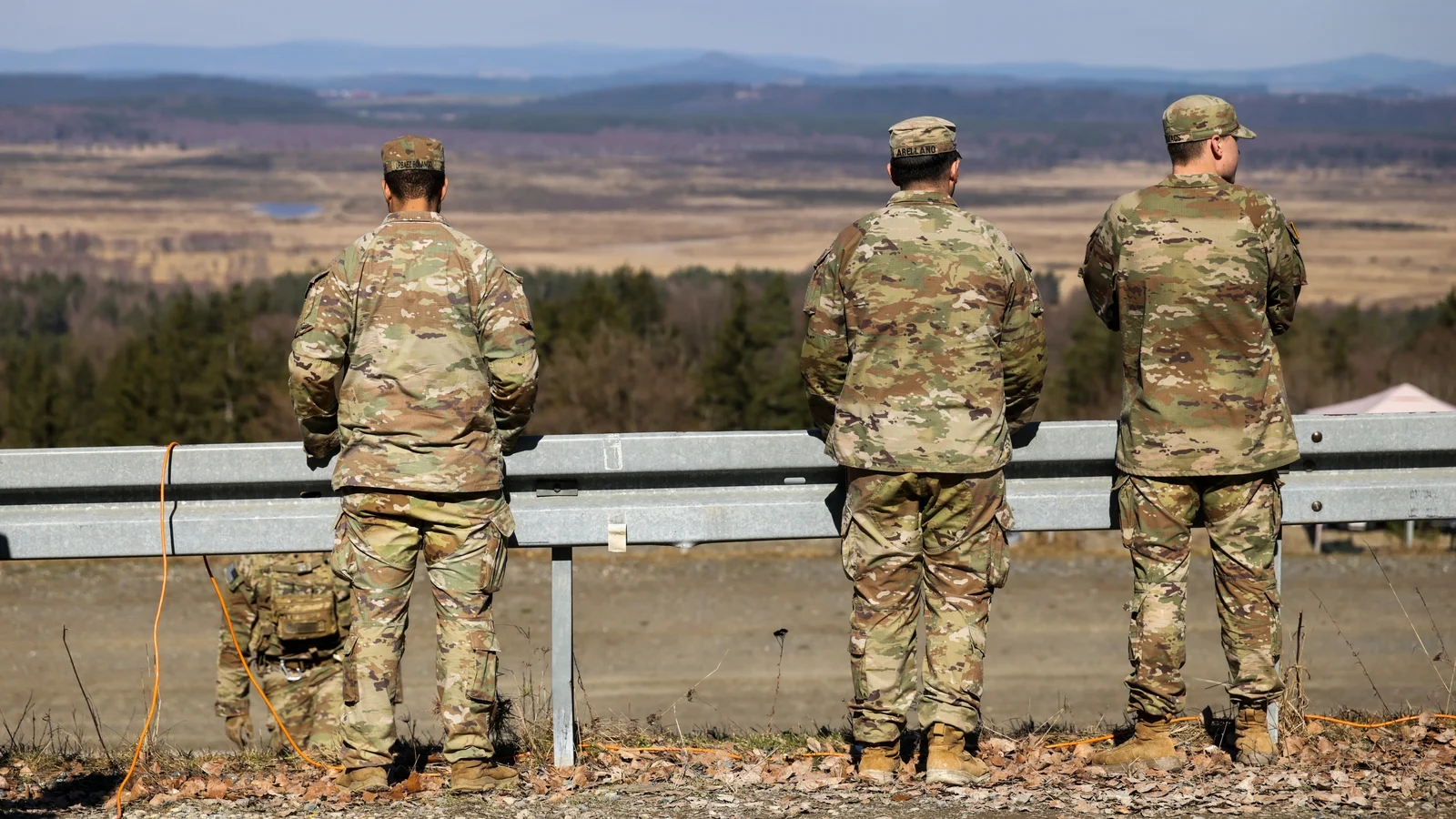
The United States has ordered a reduction of roughly 5,000 troops from Germany over the coming six to twelve months. On paper it reads like a logistics puzzle — units, timelines, transport manifests. Up close, it reads like quieter cafés, fewer international school buses and an economic tremor for communities that have relied on US presence for decades.
“You notice it everywhere,” said Lena Bauer, who runs a bakery near a small base town. “There used to be soldiers coming here for coffee every morning. Their children played in the square after school. If they go, that’s more than uniforms leaving — it’s families, jobs, routines.”
What Washington says — and what it implies
The Pentagon’s review, officials say, is framed as a response to “theater requirements and conditions on the ground.” A senior US official, speaking on background, described the pullback as part of a broader force posture reassessment in Europe — a trimming of some deployments while holding others deemed critical.
Those critical points remain visible: major air hubs like Ramstein, which German officials insist are not “up for discussion,” and logistical networks that move materiel across continents. Yet this announcement follows a bitter public spat between Washington and Berlin, and it has arrived amid wider tensions over the Middle East and transatlantic burden-sharing.
“We are working closely with our US counterparts to understand the precise scope and timing,” said a NATO diplomat. “But make no mistake: this moment underscores the need for Europe to shoulder more of its own defense — something leaders have pledged to do.”
Numbers that matter
- Planned withdrawal: about 5,000 troops over 6–12 months
- US troops deployed as of 31 December 2025: Germany — 36,436; Italy — 12,662; Spain — 3,814
- Estimated immediate cost of 60 days of recent conflict (US figure cited in congressional testimony): under $25 billion
Politics, personality and the pressure valve of foreign policy
This is not merely a military decision — it is also a political one. In Washington, domestic frustrations about a costly and unpopular Middle Eastern conflict have pushed leaders to reconsider long-standing overseas commitments. President Donald Trump and his advisers have publicly linked troop posture to political demands: allies’ stances on Iran, contributions to collective defense, and cooperation in contested waterways such as the Strait of Hormuz.
“We’re asking our partners to do more,” a White House adviser told reporters. “If countries don’t pull their weight, we have to prioritize what we can sustain.”
Across the Atlantic, Berlin has not been a neutral actor in this argument. German Chancellor Friedrich Merz’s recent comments about negotiations with Iran drew a furious reaction in Washington and unleashed a chain of public barbs. The friction is emblematic of a larger trend: alliances strained by personality, domestic politics and competing priorities.
In the towns and at the front lines: local reactions
For some Germans, a reduction of troops is merely the next chapter in a long story about national responsibility. “We cannot expect America to be the world’s policeman forever,” said Mayor Anja Köhler of a small Rhine town that hosts several US families. “If the troops leave, we will adapt — but Europe must be ready to invest more in its security.”
Others worry about the immediate consequences. Marcus Vogel, who served with the Bundeswehr and now works in logistics for contractors serving US facilities, worries about livelihoods. “Even if this is a strategic rebalancing, supply chains are built around those bases. Canteens, schools, builders — many will feel this,” he said.
Within the military community, there is also a pragmatic calculus. A US soldier who requested anonymity described the mood as “unsettled but professional,” noting that units have moved before and will move again. “We train for mobility. Families, though — that is the harder part,” he added. “Kids change schools; spouses look for new jobs. That doesn’t show up on the deployment sheet.”
Allies, NATO and the long arc of burden-sharing
NATO has reacted with measured language. “We’re clarifying the details with the US,” a NATO spokesperson said. “This development reinforces why our Allies agreed to increase defense investment.” That reference points to a recent pledge — cited by officials — for significantly higher defense spending among European members.
But promises and realities sometimes drift apart. For years, Washington has pressed European partners to meet spending targets and to modernize capabilities. The debate is not only about money; it’s about industrial capacity, rapid reinforcement, cross-border logistics and political willingness to act in crisis.
“If Europe wants to be a full security actor, it will need more than words,” said Dr. Isabel Moreno, a defense analyst. “Investment in equipment is one thing. Developing command structures, airlift capacity and a political appetite to act independently are another.”
Questions for the reader — and a wider reflection
What does a reduced American footprint mean for the average European citizen? For an American taxpayer? For the families who split their lives between bases and hometowns? These are not rhetorical flourishes. They are the human dimensions of geopolitics.
As alliances evolve, so do expectations. Is a Europe that provides more for its own security necessarily a stronger, more sovereign Europe — or might it fragment into competing national strategies? Can NATO survive the strain of political crosswinds while staying cohesive against shared threats?
Those questions do not have tidy answers. They will be debated in capital city conference rooms, in brigade kitchens, and in small bakeries whose morning customers no longer gather as they once did.
Beyond the immediate: the shape of a new era
What is clear is that this withdrawal is a marker. It signals a recalibration of American priorities at a time of global friction — from Iran’s actions in the Gulf to enduring worries about Russia’s posture in Europe. It also puts pressure on European governments to convert pledges into capabilities and to knit political will into concrete steps.
“History teaches us that alliances must adapt,” Dr. Moreno said. “This moment could be a painful spur to innovation, or a crack that widens into something more serious. It depends on choices, investments, and leadership — on both sides of the Atlantic.”
So as buses roll past the gray gates of bases and as diplomats in Brussels and Washington trade terse lines and careful courtesies, ordinary people rearrange their lives. They will, as they always do, find ways to adapt. But the question lingers: who will stand with whom when the next crisis knocks? And at what cost?