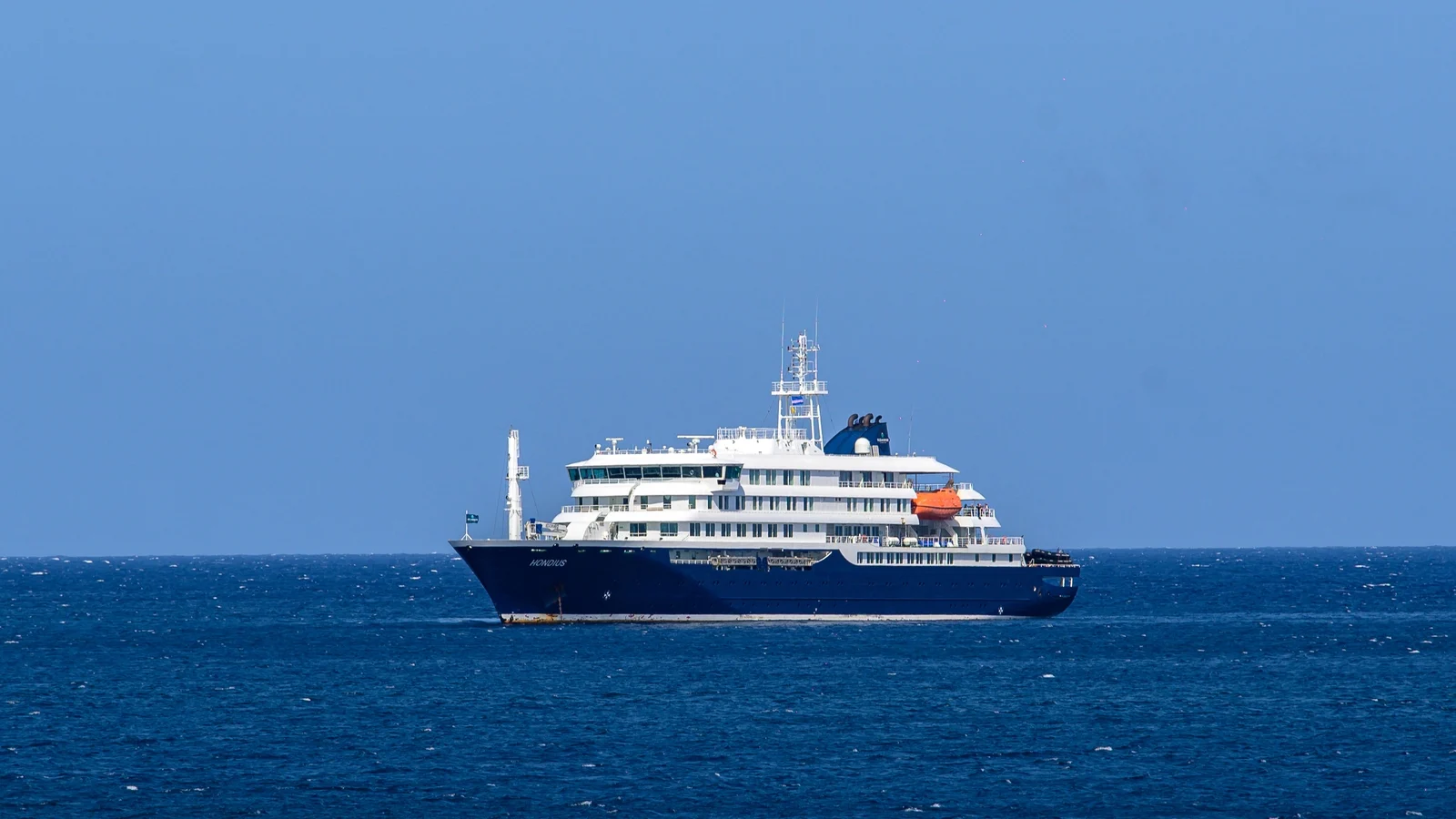
Aboard the Hondius: A Quiet Cruise That Turned Into a Medical Mystery at Sea
When the MV Hondius slipped away from Ushuaia, Argentina — the weather-beaten gateway to the Antarctic — most people on board expected a voyage of isolated beauty: long horizons, seals on black rocks, and the hush of polar nights. Instead, somewhere in the wide Atlantic, an invisible guest walked through the corridors. What began as a slow-burn medical worry has become a tense diplomatic and public-health puzzle played out against the salt-scrubbed backdrop of Cape Verde’s coast.
Oceanwide Expeditions, the company operating the Hondius, now reports 149 people aboard, from 23 different countries. Two of those are Irish citizens, the Irish Department of Foreign Affairs confirmed; several others are British, Dutch, German and more — a floating, international snapshot of modern travel. On paper the voyage looked routine. In practice it has been anything but.
What happened — a timeline of concern
On 11 April a Dutch passenger died on the ship. His death could not be fully explained on board, so on 24 April his body was taken ashore to St Helena, accompanied by his wife. When she too fell ill and later died, alarms began to ring louder.
Three days after the transfers, a British passenger’s condition deteriorated sharply and he was medically evacuated to Johannesburg. Tests there identified a variant of hantavirus. Since then, the World Health Organization has publicly confirmed one laboratory-confirmed case and warned of five additional suspected cases. The Hondius has reported another passenger death on 2 May, a German national, and two crew members — a British seafarer and a Dutch seafarer — are ill with acute respiratory symptoms.
“We are dealing with a serious medical situation on board,” an Oceanwide Expeditions spokesperson said in a statement. “Strict isolation, hygiene protocols and medical monitoring are in place. We are coordinating closely with local and international health authorities.”
Why the ship can’t simply pull into port
The vessel currently lies off the coast of Cape Verde. Officials there have conducted assessments, but disembarkation and medical evacuation depend on permission from local health authorities — permission that has not yet been granted for most passengers. The Dutch foreign ministry has said it is exploring options to medically evacuate symptomatic individuals and will coordinate repatriation efforts.
“We are doing everything we can to get people the care they need while respecting local public-health procedures,” said a spokesperson for the Dutch ministry. “These are complicated, sensitive operations that involve the ship operator, port authorities, and medical teams on both sides.”
Hantavirus: what it is, and why it matters here
Hantaviruses are a family of viruses carried by rodents, often spread to humans through contact with rodent droppings, urine, or saliva. In the Americas some hantaviruses can cause Hantavirus Pulmonary Syndrome (HPS), a severe respiratory illness. In other parts of the world, hantavirus infections may target the kidneys or present milder symptoms.
- How it spreads: Most commonly through inhalation of aerosolized rodent excreta; in rare cases certain strains (notably the Andes virus in South America) have been linked to human-to-human transmission.
- Symptoms: fever, muscle aches, fatigue, and in severe cases shortness of breath and respiratory failure.
- Severity: Hantavirus infections range from asymptomatic to life-threatening; in HPS the historical case-fatality rate has been high, sometimes reported in the tens of percent.
“The risk to the wider public remains low,” Hans Kluge, WHO regional director for Europe, said, urging against panic. “Most hantavirus infections are uncommon and linked to exposure to infected rodents.”
Still, even a low-probability event becomes urgent on a ship where hundreds live cheek-by-jowl and where access to advanced intensive care is limited. “Any time you have respiratory illness and unexplained deaths, especially in an enclosed environment, public-health thresholds for action rise,” said Dr. Miriam Alvarez, an infectious-disease physician who has advised maritime response teams. “You can’t treat this like a standard port-call medical case.”
Voices from the voyage — fear, fatigue and patience
Passengers aboard the Hondius describe a mix of anxiety and stoicism. “We were supposed to see penguins at dawn,” said Mark, a British passenger who agreed to speak on condition his surname be withheld. “Instead we’re told to stay in our cabins and not to open the doors. They are doing everything they can, but when you’re surrounded by the unknown, that’s when your imagination goes wild.”
Other travelers conveyed a quieter resolve. “We chose this trip to meet strangers and to be alone at the same time,” said Ana, a Portuguese tourist. “Now we sit with our own thoughts — and each other — through the cabin door.”
On shore, healthcare workers in Cape Verde, used to welcoming cruise passengers for excursions, are balancing compassion with caution. “Our teams are trained for outbreaks, but each case is unique,” said Dr. José Pereira, a public-health physician in Mindelo. “We want to protect our community first.”
Broader questions: travel, zoonoses and the future
Beyond the immediate human drama, the Hondius incident is a microcosm of a larger global tension: as travel stitches the world closer, it also reconnects humans with animal reservoirs of disease along unpredictable pathways. Tourism to remote ecosystems brings people into contact with unfamiliar fauna and creates logistical fallouts when rare diseases appear far from diagnostic centers.
“This is a reminder that in an interconnected world, local ecology has global consequences,” said Professor Adam Taylor, an anatomist and infectious-disease commentator. “Estimates of hantavirus infections vary. Many are mild or go undiagnosed, but the serious cases we remember can be devastating.”
Are we prepared? The Hondius shows both strengths — rapid testing, cross-border coordination — and vulnerabilities: limited port capacity for medical evacuations, complexities of repatriation, and the human toll of isolation.
What happens next — and what you should take from it
Investigations into whether the confirmed hantavirus infection is linked to the onboard deaths continue. Authorities have not established causation, and thorough post-mortems and laboratory work are underway. Meanwhile, repatriation and medical evacuation plans are being negotiated, and health surveillance of passengers and crew is ongoing.
For readers watching from afar: this is a story about people in a small, crowded community facing an invisible threat. It is also about how governments, private operators and health agencies navigate the legal, medical and ethical waters when illness appears at sea.
What would you do if you were on that ship? How much risk is acceptable when traveling in the era of emerging infections? These are not academic questions; they are personal ones, and the Hondius is forcing them into the open.
The ship moves slowly through blue water, its engines a steady hum as coordinators on land and at sea try to find safe ground — both literally and morally — for those aboard. The next days will reveal more about the virus, the victims, and the lessons we must carry forward.