Across the Table in Yerevan: When a Withdrawal Echoes Around the World
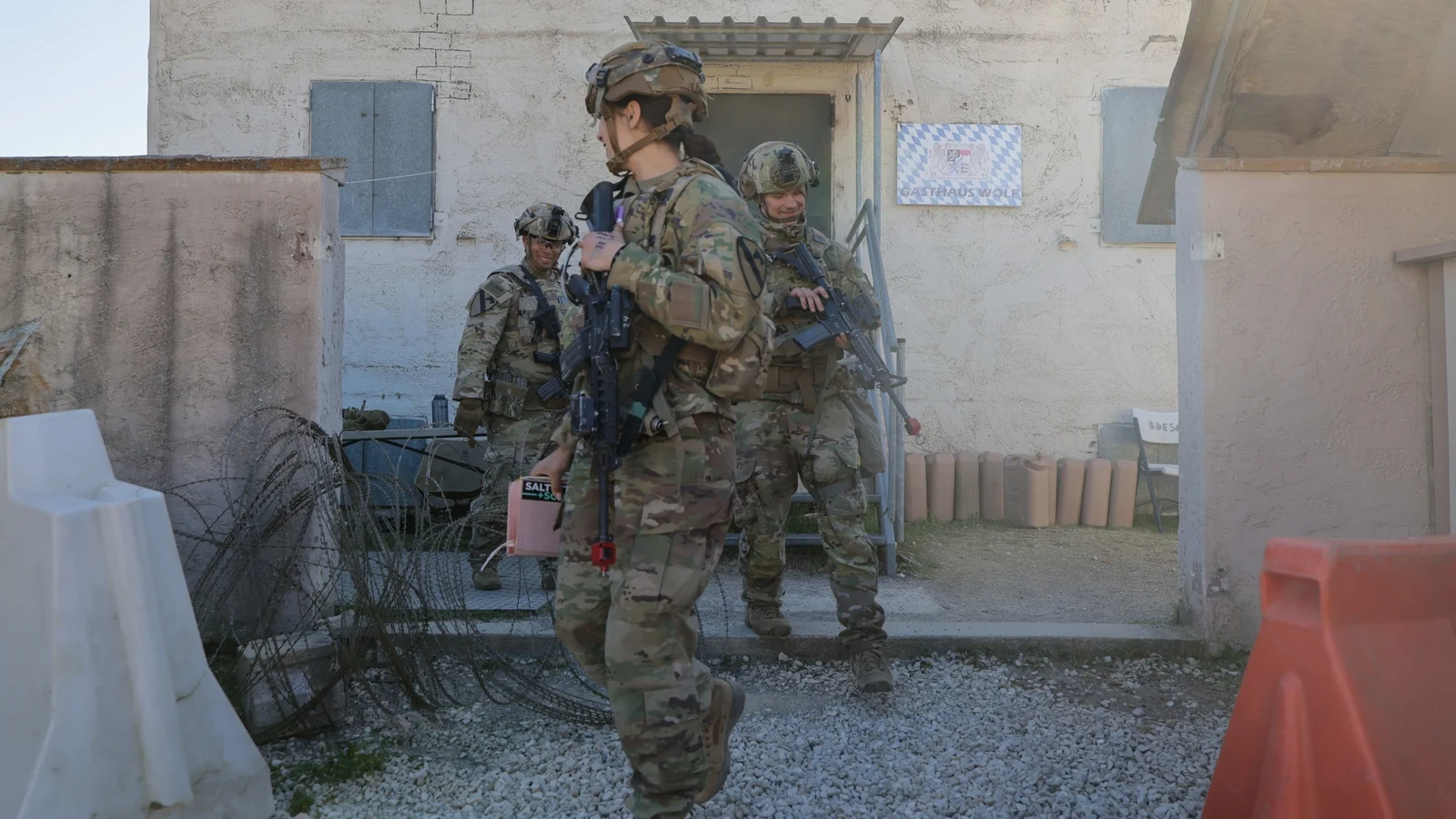
The sun was a slow, copper coin settling behind Mount Ararat as leaders gathered in Yerevan this week — a city of pink tufa and loud market vendors, where every conversation tends to return to history. The meetings were meant to be about European politics, but a decision thousands of kilometers away — a surprise announcement that the United States would pull 5,000 troops out of Germany — has rippled through that marble-floored hall and down into family cafés across the continent.
“It landed like a cold draft,” said Elena, who runs a small bookshop-café near Republic Square and overheard passing delegations. “People here aren’t thinking only of banners and speeches. They’re thinking of who shows up when trouble comes.”
“You heard the message” — Or Did You?
Dutch Prime Minister Mark Rutte, standing amid a swirl of diplomatic aides, put the development bluntly: European capitals “heard the message.” He meant the White House’s impatience with some allies who have been reluctant to get involved in the intensifying conflict with Iran. But that is only one way to parse what happened.
“There is disappointment on the U.S. side,” Rutte told reporters, “but we must also accept that this moment is pushing Europe to take more responsibility.”
Those words were part warning, part rallying cry. And they reveal a deeper tug-of-war: a shifting transatlantic relationship in which Washington’s occasional unilateral decisions are prompting European capitals to rethink their role — not just as recipients of protection, but as providers of security in their own right.
What Europe Is Offering — And Withholding
Not everyone in Europe rushed to open their hangars. Spain, a NATO member, drew a line and said military bases on its soil would not be used for operations tied to the Iran conflict. “Our sovereignty includes our decisions about hosting foreign missions,” a Spanish official told me in a quiet corridor after the statement was made public.
At the same time, other governments have signaled a willingness to assist differently. Governments from Croatia to Romania, Portugal to Greece, and from Italy to France and the United Kingdom, have quietly said they can help with basing requests, logistical corridors and naval assets. Some are even pre-positioning minehunters and minesweepers near the Gulf — a precaution that speaks to a very specific fear: the elevation of maritime mines in narrow chokepoints like the Strait of Hormuz.
Why does that matter? The Strait of Hormuz is a global artery: roughly one-fifth of the world’s seaborne crude oil and liquefied natural gas shipments pass through it. A disruption there would ricochet through fuel markets, shipping costs, and household bills from Lisbon to Lagos.
Beyond Bases: The New Grammar of Security
“This is not simply a question of where boots are stationed,” said Dr. Sofia Petrov, a security analyst at the European Institute for Strategic Studies. “We’re witnessing the gradual maturation of a European security identity — one that must balance deterrence, logistics, and political cohesion.”
Sofia’s point is critical. The withdrawal news was not only about troop numbers. It was also a test of whether European countries can coordinate their own responses and whether existing alliances are flexible enough to absorb unilateral shifts in U.S. policy without descending into strategic drift.
Several small but significant gestures have already happened. Naval mine-countermeasure vessels are being pre-positioned; plans are being drawn for protecting shipping lanes after the immediate flare-ups subside; and some governments have expressed readiness to participate in freedom-of-navigation missions in the Strait of Hormuz, once hostilities ease.
Voices from the Ground
“We’re not eager for confrontation,” said Captain Miguel Santos of a Portuguese naval logistics unit, sipping strong coffee in a Yerevan hotel lobby. “But if threats to commerce grow, you don’t fix it with words. You fix it with presence, discipline, and cooperation.”
Across the marble courtyard, a young Estonian diplomat with a copy of policy papers tucked under her arm — Kaja Kallas, in fact, who has become an outspoken advocate for strengthening Europe’s role in security matters — struck a similar tone. “The timing of the U.S. announcement surprised many here,” she told a small group. “It shows we must build a stronger European pillar within NATO — and perhaps stand more firmly on our own.”
What This Means for Ordinary People
For citizens, the ramifications feel personal and immediate. If maritime corridors are threatened, gas and oil markets will react — and those reactions filter down to heating bills, the price of buses, the cost of food. Tourists in Dubrovnik, farmers in the Po Valley, ferry workers in Piraeus — each has a stake in whether trade can move freely.
“I’m not thinking geopolitics,” said Leyla, a ferry worker on Greece’s east coast, as she laced up her boots. “I’m thinking about my sister’s heating bill next winter and whether the ferry schedule will be cut.”
Wider Themes: Autonomy, Alliances, and the Economics of Security
The Yerevan conversations are a chapter in a larger book about how regions respond when global power centers make abrupt policy decisions. The U.S. decision to pull forces from Germany — whether framed as strategic recalibration or a rebuke to hesitant allies — accelerates questions about burden-sharing and European strategic autonomy.
It also intersects with an increasingly complex global picture: competition with China, an emboldened Russia on its borders, climate-driven resource pressures, and the fragility of supply chains. Security is no longer just about bases and battle plans; it is about economic resilience, cyber defense, and the readiness of civilian systems to absorb shocks.
Questions to Carry Home
So what should we watch for next? Will Europe turn rhetoric into durable capability? Can NATO remain a viable, adaptable partnership when one of its largest members chooses unilateral moves? And perhaps most poignantly: who do citizens want to feel secure by — distant friends, regional coalitions, or their own governments?
“Security is trust made visible,” Dr. Petrov said. “Right now, Europe is being asked to visualize that trust without always knowing which hands will hold the rope.”
The Long View
As the summit ended and bodyguards shuffled luggage into black SUVs, Yerevan returned to its quieter rhythms — children chasing pigeons in the square, vendors wrapping up their day’s stalls. But the debates born inside those conference rooms will not fade with the afternoon light.
They will ripple outward into new planning documents, defence budgets, and the nightly conversations in cafés like Elena’s. They will shape the posture of navies in the Gulf, the legal arguments in foreign ministries, and the price of a barrel of oil. They will test alliances and, quietly, nudge Europe toward a version of itself that might sometimes lead rather than follow.
Would that make the world safer? Or simply more complicated? The answer will depend on leadership — and on how much ordinary people, from ferry workers to shopkeepers, are included in that conversation. After all, security is not just the business of capitals. It is the quiet expectation that each morning will bring the same light over the rooftops — and that someone, somewhere, is watching the horizon.