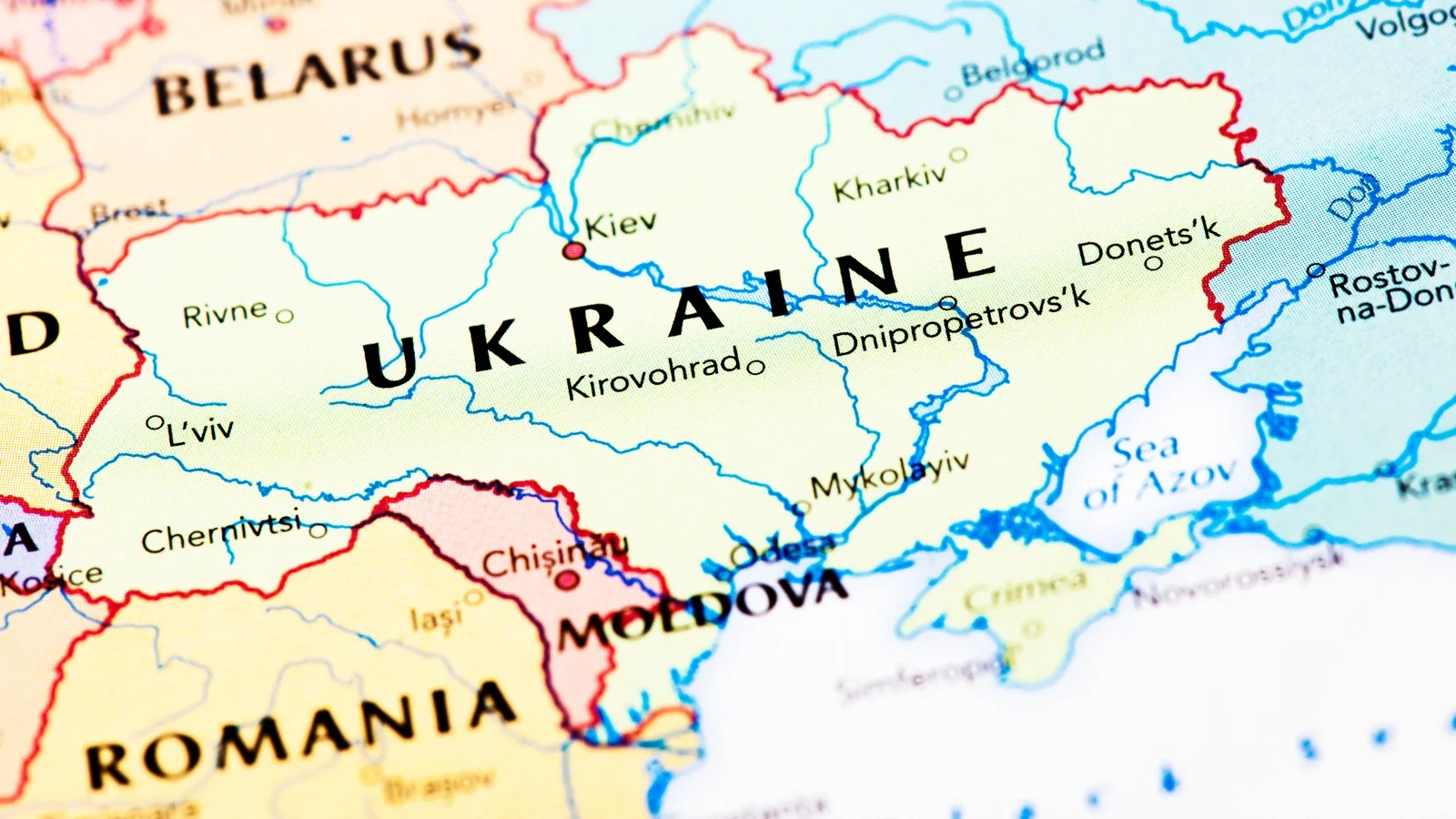
After months of political deadlock, the European Union is set to take a first, formal step toward bringing Ukraine and Moldova into the bloc, after Hungary lifted its veto on opening accession talks with Ukraine.
The opening phase of the process will be launched this evening at an intergovernmental conference, scheduled to take place after EU foreign ministers meet in Luxembourg.
Dublin has greeted the move with enthusiasm, with the Irish Government noting that EU enlargement will be a central priority during Ireland’s upcoming EU presidency.
Joining the European Union is a long, technical undertaking. Candidate countries must negotiate around 33 “chapters” aimed at aligning national laws, where relevant, with the EU’s body of law.
Those chapters are grouped into six thematic clusters.
For Ukraine and Moldova, negotiations will begin with the first cluster, known as the fundamentals.
It covers core requirements such as economic criteria, the functioning of democratic institutions, and reform of public administration.
At every stage of the accession track, progress depends on unanimous agreement from all member states.
That reality underlines how the start of negotiations is, for now, largely symbolic.
Even with talks under way, Ukraine’s path to membership could stretch over many years.
Moldova, which has a vastly smaller population and a smaller public administration, is widely expected to reach the finish line sooner.
Still, EU officials have been struck by the scope of reforms Ukraine has advanced despite fighting Russia in a war now in its fifth year.
For Kyiv, anchoring the country’s future in Europe is presented as a national goal—one its leaders say people are literally dying for.
Hungary’s pro-Russian former prime minister, Viktor Orbán, had repeatedly blocked the opening of negotiations.
That obstacle was removed when his successor, Péter Magyar, lifted the veto.