Donald Trump marked his 80th birthday with what he has wanted most: a sign that the war with Iran may finally be nearing its end, after the United States, Iran and mediator Pakistan said both sides are closer than ever to a peace agreement.
Officials on all sides struck an optimistic tone, signalling that a deal could be signed on Friday to formally close the conflict—an outcome that would also ease pressure on the global energy market, which has been rattled by months of fighting.
Mr Trump has pushed hard for an accord with Tehran, but his efforts have repeatedly been derailed by flare-ups involving Israel and Hezbollah in Lebanon, along with a series of what were described as “self-defence” challenges to the ceasefire between Washington and Tehran.
“What the f*** are you doing?” Mr Trump said he told the Israeli Prime Minister at the weekend.
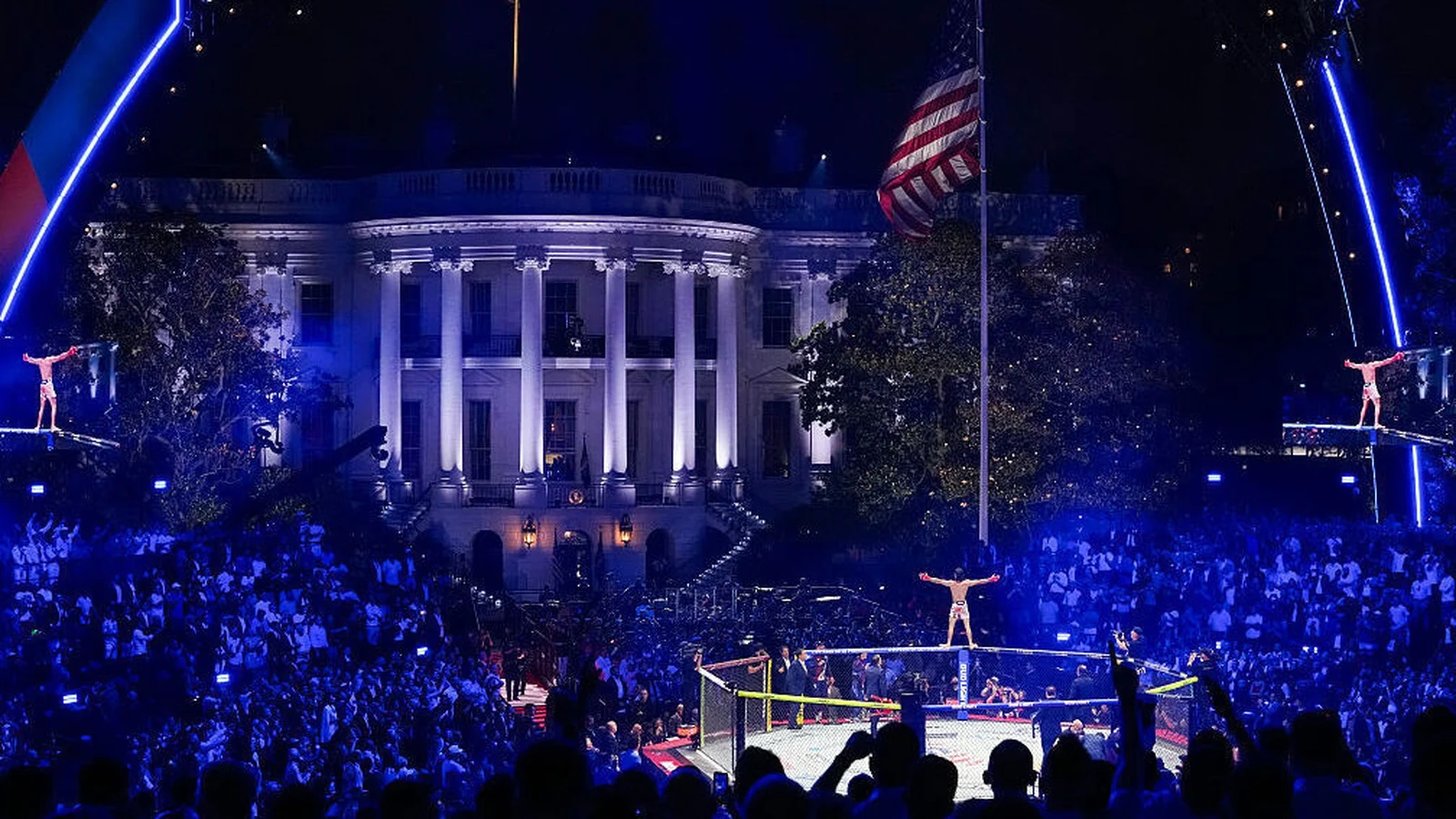
The breakthrough narrative landed at a politically convenient moment for Mr Trump, who last night hosted major UFC bouts at the White House as part of celebrations for America’s 250th birthday—on the same evening as his own milestone.
Leaning into spectacle and showmanship, the President aimed to present himself as a winner, playing to both the broader national audience and the 85,000 people who gathered in the park in front of the White House for an elaborate watch party of the nearby events.
All evening, a lighting structure known as “the Claw” bathed the scene in red, white and blue as 4,300 people—including the US president—watched multiple fights inside an octagon built on the White House’s South Lawn.
On the Ellipse, the crowd was dominated by young men, many of them dedicated UFC fans.
Donald Trump brought UFC to the White House lawn
The crowd, there to see the MMA fights, were non-committal on the peace deal
Many observers have credited this demographic with helping Mr Trump get over the line in the 2024 presidential election.
Yet conversations on the ground suggested that, when it comes to Mr Trump and an Iran deal, the mood was guarded—far from the unqualified victory lap the President appears to envision.
One attendee said they would only believe it once an agreement is actually signed.
“If it’s real, I just hope that everything works out, but I feel like they’ve said it’s a deal multiple times now, so it just makes you wonder, is it real?,” said another man.
That caution is hardly surprising. The scepticism and hesitation to accept the President’s assurances points to a lasting effect of the war: trust has eroded.
After months of uneven messaging, repeated pledges that the fighting would end soon, and several false dawns, Mr Trump’s declarations have carried less weight.
The currency of his words has been badly diminished.
Even Iranian state media noted this week that Mr Trump had said more than 38 times he was close to ending the war—only for nothing to materialise.
With Friday’s planned signing in Switzerland still days away, significant obstacles remain and the path to a final agreement is not yet guaranteed.
For now, many hope the latest announcement reflects real progress toward peace, but doubt continues to hang over the moment—fuel for a broader and growing distrust of what political leaders say and do in the years ahead.