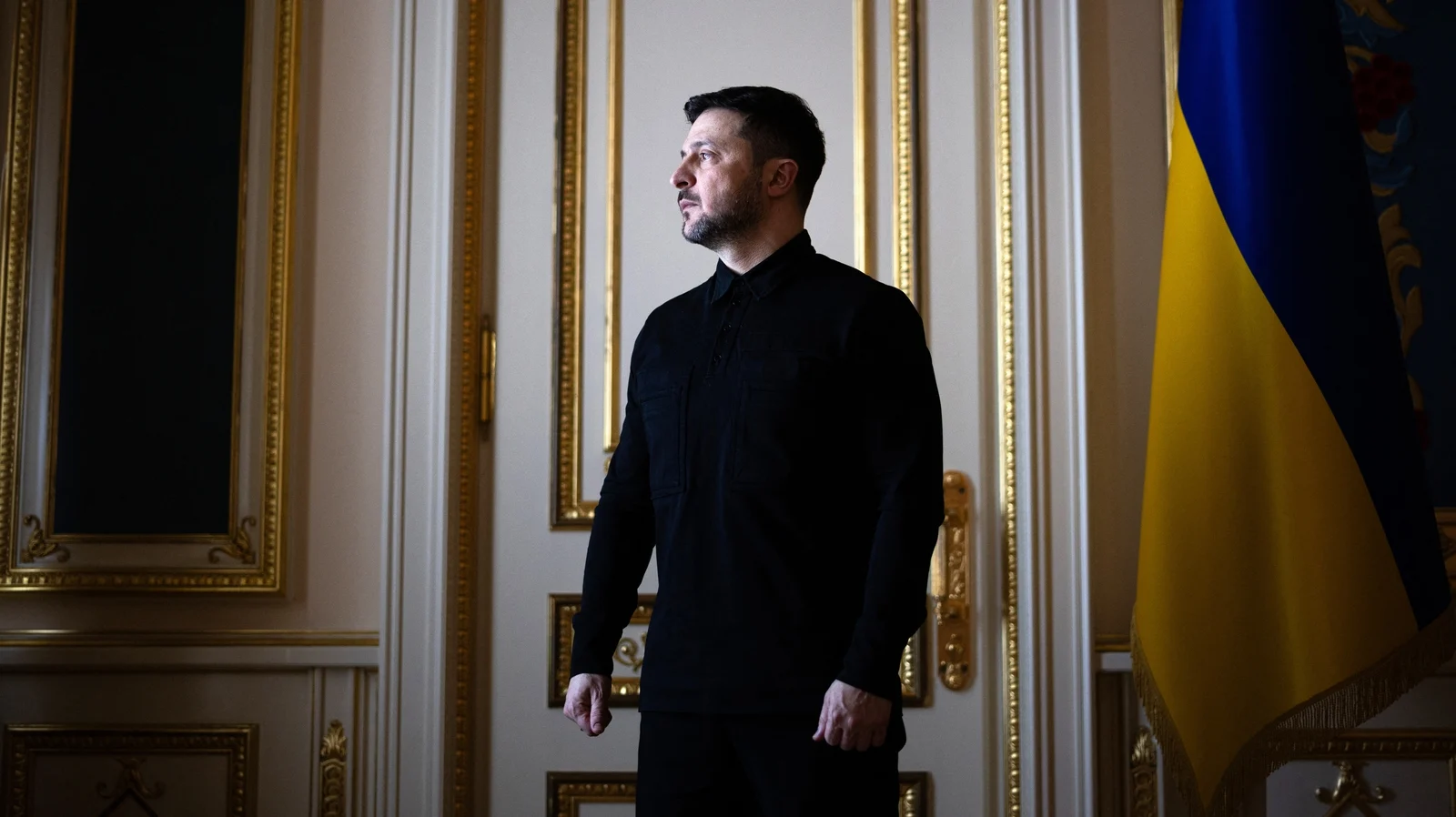
Ukraine’s wartime leadership has been thrust into fresh turmoil after President Volodymyr Zelensky dismissed commander-in-chief Oleksandr Syrsky, a Soviet-trained veteran officer, in the wake of a political crisis sparked by the removal of a widely popular, younger defence minister known for pushing tech-driven reforms.
Mr Zelensky said he will replace Mr Syrsky with joint forces commander Mykhailo Drapaty.
Mr Syrsky, 60, had held the top military post since 2024 and ranked among Kyiv’s most seasoned commanders. He played a central role in the defence of the capital during the opening phase of Russia’s full-scale invasion in 2022.
The decision followed days of demonstrations backing the ousted defence minister, Mykhailo Fedorov, who said Mr Syrsky pushed him out and obstructed efforts to overhaul the armed forces.
“I have decided that the new Commander-in-Chief of the Armed Forces of Ukraine will be Mykhailo Drapaty,” Mr Zelensky said in a post on Telegram.
“I am grateful to Oleksandr Syrsky and to each of our warriors for Ukraine’s strong frontline positions.”
Oleksandr Syrsky
Speculation about Mr Syrsky’s position intensified last week after Mr Zelensky removed the highly popular Mr Fedorov just six months into the job.
Mr Fedorov, 35, had sought to modernise the military an agenda that put him at odds with senior command. He accused Mr Syrsky of blocking his proposals and pressuring Mr Zelensky to dismiss him, an allegation Mr Syrsky denied.
The clash laid bare unusually public rifts inside Ukraine’s political and military leadership at a moment when Kyiv had appeared to be enjoying its strongest position in the war for months.
In recent months, Ukrainian forces have slowed Russia’s advances to a crawl, while long-range Ukrainian strikes have hit Russian oil refineries that Kyiv says help power the invasion.
Fresh hope
Mr Drapaty, now tapped as commander-in-chief, is a decorated major general who previously led Ukraine’s ground army and fought Moscow-backed separatists during the Donbas war.
He is well known in Ukraine for a video that purports to show him driving an armoured vehicle through a separatist checkpoint in Mariupol, during skirmishes between pro-Russian militias and government troops in 2014.
The 43-year-old responded to the appointment with a message of thanks to Mr Zelensky on Facebook.
“Serving Ukraine has always been an honour for me, and during the war for independence it means absolute responsibility,” he said.
“Glory to the nation. Death to the enemies,” he said.
Mr Fedorov endorsed Mr Drapaty’s promotion, arguing it brought “new hope” to the fight against Russia.
“This is a breath of fresh air and a new hope in the struggle of free people for freedom and justice,” he said on social media.
Mr Fedorov’s dismissal last Wednesday drew thousands into protests across Ukraine, with many demonstrators voicing anger over what they described as stalled military reforms and urging Mr Syrsky’s removal.
For a time, Mr Zelensky—seen as wary of figures with political ambitions—had resisted calls to fire Mr Syrsky, a career soldier.
Analysts told AFP that Mr Syrsky posed no political challenge to Mr Zelensky, unlike his predecessor, the ultra-popular Valery Zaluzhny, who was also removed.
Even so, Mr Syrsky faced criticism over what opponents described as disregard for the scale of human losses and for delaying reforms to procurement, equipment and mobilisation.
Mr Drapaty becomes Ukraine’s third commander-in-chief since Russia invaded in February 2022.
Russia and Ukraine have both intensified aerial attacks in recent months, and the United Nations has reported a surge in civilian deaths in Ukraine in recent months.