With southern Lebanon still scarred by months of fighting, Prime Minister Nawaf Salam used a visit to a newly deployed army position to renew Beirut’s demand for a full Israeli pullout from occupied areas.
“We will continue mobilising our political and diplomatic efforts to secure a complete Israeli withdrawal from the south,” he said in Zawtar al-Gharbiya.
Israeli forces had been stationed on the outskirts of the village following the war with Iran-backed Hezbollah.
Salam’s trip came a day after Lebanese President Joseph Aoun met US President Donald Trump at the White House, where he “stressed the urgent need for a full Israeli withdrawal from Lebanese territory”.
Lebanese PM Nawaf Salam plants the Lebanese flag (Credit: Lebanese prime minister’s office/handout)
The visit unfolded against the backdrop of a US-sponsored agreement signed last month. Under its terms, Lebanon’s army is meant to disarm Hezbollah, while the Israeli military is to withdraw from designated “pilot zones” where Lebanese forces will then deploy.
Hezbollah has repeatedly rejected the agreement and refuses to lay down its weapons.
On the ground, tensions flared as the military said yesterday that Israeli forces “opened fire” near troops deploying at Zawtar al-Gharbiya.
The Israeli military offered a different account, saying it had fired only “warning shots into the air” after Lebanese soldiers entered an area that was “not part of the pilot area”.
Hezbollah drew Lebanon into the Middle East war by attacking Israel in support of Tehran on 2 March, prompting major Israeli airstrikes and a ground invasion.
After planting a Lebanese flag in Zawtar al-Gharbiya, Mr Salam said “in parallel with the army’s deployment, we will continue opening roads, removing rubble, and securing essential services, enabling our people to return safely and with dignity to their homes and villages”.
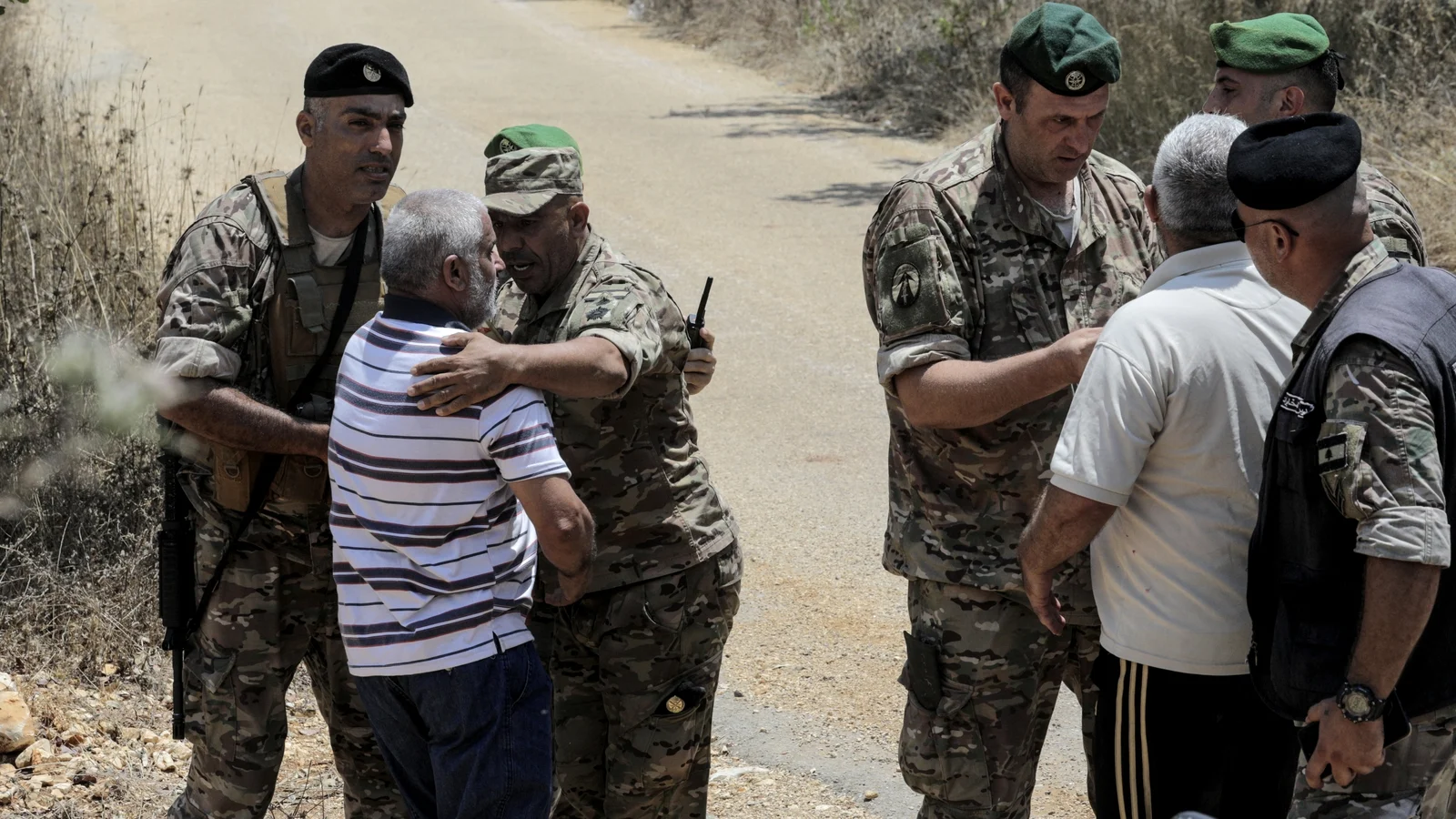
Lebanese soldiers patrol the entrance to Zawtar al-Gharbiya after the army deployed to the village
‘Heads held high’
The war left widespread damage, especially across the south. Violence has eased in recent weeks following a framework agreement between the United States and Iran last month, alongside the Lebanon-Israel deal.
More than 700,000 people have returned to their homes over the past few weeks, according to the United Nations.
In Zawtar al-Gharbiya, dozens of residents gathered at the village entrance, waiting for clearance to go and assess their properties.
“We will enter the town with our heads held high, thanks to the presence of the Lebanese army,” Abbas Yaghi, 73, told AFP.
The military had told residents on Tuesday to avoid entering the village “until the security situation stabilises”.
For now, the army is sweeping the town, which lies directly alongside its Israeli-occupied neighbour, Zawtar al-Shariqya.
Even as troops moved in, Israeli forces continued intermittent strikes on nearby areas, with the latest reported on Nabatieh al-Fawqa.
“We will follow the army if it gives us permission to enter,” said Mostapha Ammar, a 60-year-old resident of Zawtar al-Sharqiya, adding that he hoped Israel would withdraw from other areas.
Wafaa Ismail, 64, also from Zawtar al-Sharqiya, was not allowed to enter the neighbouring village as Salam visited.
Watching the prime minister go in under army escort, she voiced her anger: “He should have brought the people in with him so he could claim victory.”