U.S. forces struck Iranian military targets again overnight, extending a punishing campaign into its 13th straight night and deepening fears that the region’s conflict is spiralling toward a broader energy crisis.
The latest attacks came a night after Iran-backed Houthi rebels in Yemen widened the confrontation by targeting oil tankers in the Red Sea’s busy shipping lanes. US Central Command (CENTCOM), in announcing the new operation, did not specifically cite the Houthi blockade.
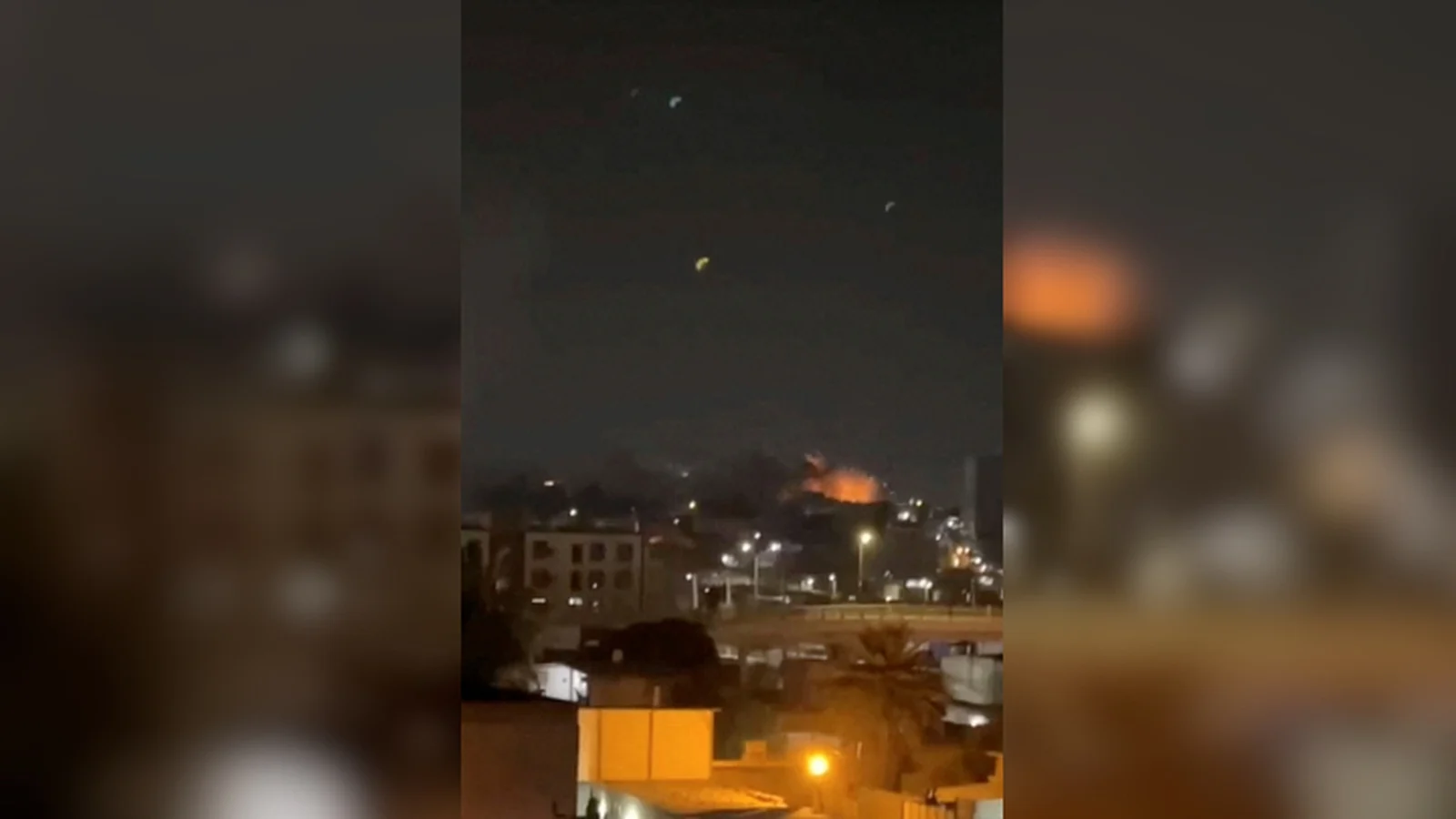
Iranian state media said U.S. missiles hit the southwestern city of Ahvaz, with explosions also reported in nearby Omidiyeh. Blasts were also heard in the port city of Bandar Abbas and on the island of Qeshm, positioned along the Strait of Hormuz.
CENTCOM said the strikes “aimed to hold Iran accountable and diminish threats from the Islamic Revolutionary Guard Corps to commercial shipping”.
Oil markets reacted swiftly as the threat to global energy trade mounted.
US President Donald Trump said Washington would hold Iran responsible for the Houthis’ actions and warned that both would face a “major military punishment”.
Mr Trump also promised to use frozen Iranian assets to cover any losses linked to shipping. Tehran condemned the warning as an “incendiary precedent”.
“Seizing another nation’s assets to pay for unrelated future claims is an incendiary precedent,” Iranian Foreign Minister Abbas Araghchi posted on X.
Brent crude, the international benchmark, surged above $100 a barrel for the first time since May, rising 7%, as world leaders voiced alarm over the Red Sea attacks.
“The situation is getting out of control. It is teetering on the edge of the unimaginable,” United Nations Secretary-General Antonio Guterres warned.
“One crisis feeds another. One escalation triggers the next,” he told a meeting of the UN Security Council.
United Nations Secretary-General Antonio Guterres
European Central Bank President Christine Lagarde cautioned that “the energy shock could intensify further”, potentially stoking inflation and fuelling talk of a September eurozone interest rate hike.
German Defence Minister Boris Pistorius, pointing to the stakes for energy importers, warned of “dire consequences” and said “nothing – absolutely nothing – suggests that a ceasefire, let alone peace, could be reached”.
Fighting flared again this month after a ceasefire that lasted only a few weeks, plunging the region back into turmoil as Iran and the United States battled over the strategically vital Strait of Hormuz.
“The armed forces’ retaliatory attacks will continue as long as the US attacks on the country’s infrastructure and coastal areas continue,” Iran’s army spokesperson Mohammad Akraminia said, according to state television.
The Houthis entered the conflict this week, announcing a blockade of Saudi ports and claiming attacks on tankers.
Jordan and Kuwait both said they intercepted strikes as Iran’s military and Revolutionary Guards claimed they were targeting U.S. assets in both countries.
In a late-night social media post, Mr Trump said the United States would begin using frozen Iranian assets “that the United States has in its possession, and controls” to pay for “any and all damages done to Ships, Cargo or anything related” in the region.
Conflict proving unpopular in US
Even as Mr Trump intensifies the war effort and sharpens his rhetoric, the fighting is drawing growing opposition at home.
With November’s midterm elections approaching, the US House of Representatives approved a symbolic measure — supported by opposition Democrats and a small number of Republicans — urging the president to end the war.
Kuwait, meanwhile, reported a drone strike on one of its border posts with Iraq and said there were no casualties.
The emirate later said its air defences were “intercepting hostile missile and drone attacks following the wrongful Iranian aggression”.
The Houthis said they launched missile and drone attacks on two Saudi tankers in the Red Sea — the Encelia and the Layla — after declaring their blockade of Saudi ports.
Houthi rebels have threatened to blockade Saudi ports (File image)
UKMTO, the British naval security monitor, said the master of a tanker reported being hit by an unknown projectile about 70 nautical miles southwest of Al Shuqaiq, sparking a fire.
Saudi Arabia confirmed that the Encelia was hit, but did not comment on the other tanker.
The fresh threat in the Red Sea could deepen the disruption created by the Hormuz closure, potentially undermining Riyadh’s ability to route some oil exports around the strait.
Iran’s Revolutionary Guards said they halted three oil tankers attempting to transit Hormuz, as they compete with the U.S. Navy for control of a passage that once carried about one fifth of the world’s oil.
According to shiptracking data, the number of tankers crossing the Strait of Hormuz fell to just one yesterday — the lowest since 7 May. The very large crude carrier New Giant, carrying 2 million barrels of Iraqi Basrah crude, exited the strait and is expected to reach China’s Rizhao port by mid-August.
On the sidelines of a Southeast Asian summit in Manila, US Secretary of State Marco Rubio said Iran had “suckered” the Houthis into striking Red Sea shipping.
“The Houthis largely were smart and stayed out of all this throughout the conflict, but they now apparently have gotten themselves suckered into this, going after Saudi Arabia and their ships,” Rubio said.
Oman, which has played a mediating role in the long-running conflict between the Houthis and Saudi Arabia, said it was working to restart talks between the two parties while expressing “great concern” about developments in the Red Sea.