What began as a family holiday in southern France turned into what author and food advocate Sophie Morris called a “terrifying” fight to get out as a fast-moving wildfire swept near the town of Biscarrosse, forcing 23,000 people to evacuate.
Speaking on RTÉ’s News at One, Ms Morris said she was staying at the Mayotte Vacances campsite with her husband, her mother and her two young sons when the fire broke out.
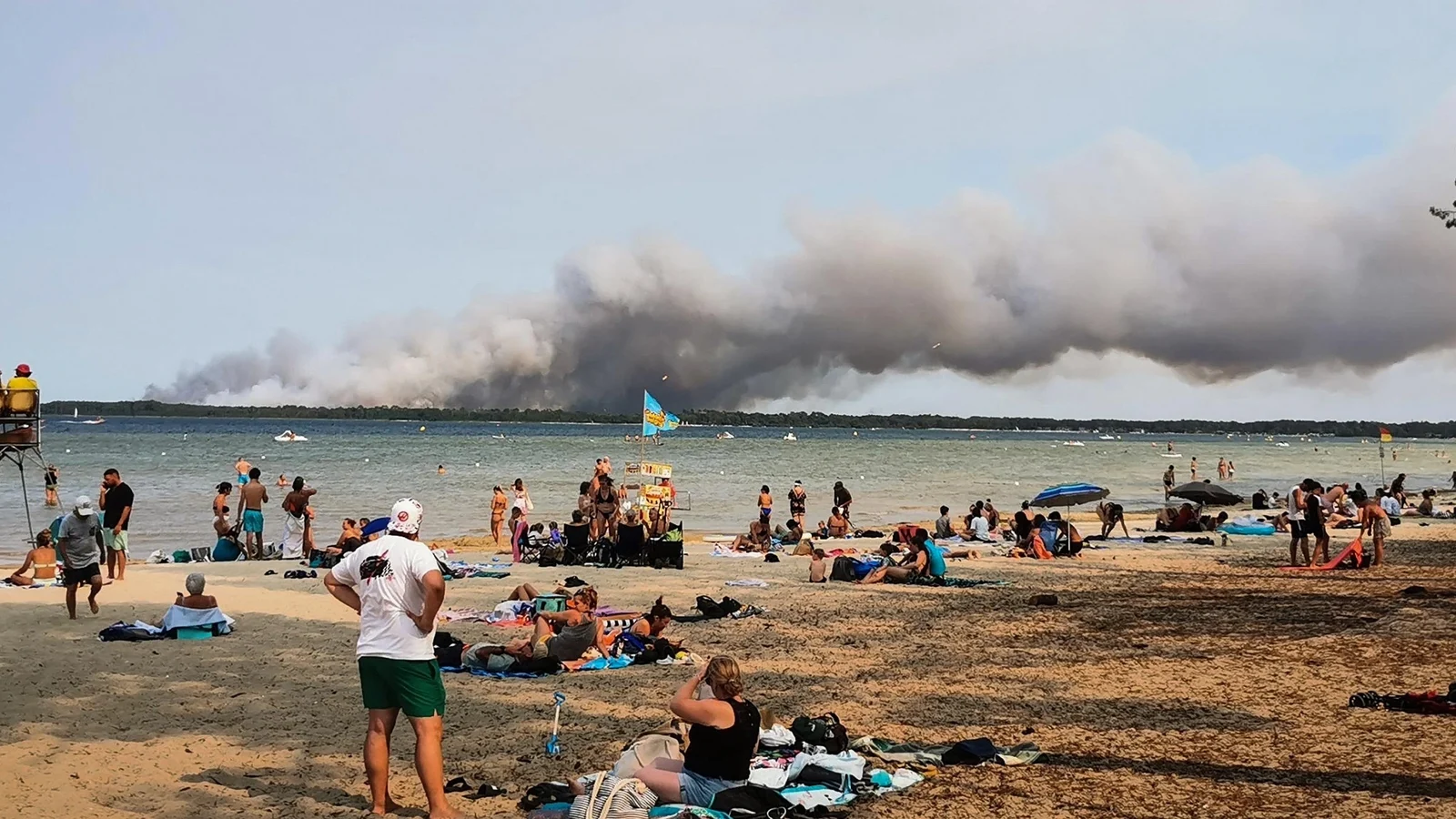
The family had only just arrived and were spending time on a nearby lake beach when she spotted what immediately looked wrong — a thick plume of smoke rising in the distance.
“I just looked up from the water and you could just see a big black smoke – that was at about 3pm so clearly it was a fire.”
At first, Ms Morris said, campsite staff tried to calm worried guests, telling them it was a small vehicle blaze that would soon be dealt with.
As the afternoon wore on, that reassurance faded. The smoke intensified, and the fire pushed into the surrounding forest, spreading rapidly.
“It was originally a van that went on fire on the side of the road … so I guess it just got the ground and then just spread into the forest and it just spread so quickly.”
By evening, the scale of the emergency was unmistakable, with firefighting aircraft repeatedly passing overhead and dumping water in an effort to slow the blaze.
Smoke rising from the wildfire near Biscarrosse (Pic: Sophie Morris)
“There were planes flying really low to the ground… and they were just dropping water, so we were watching all this.”
Guests were instructed to stay put and avoid clogging roads needed by emergency responders, but Ms Morris said the proximity of the smoke made the wait agonising.
“It was very scary because it seemed so close with the amount of smoke.”
They went to bed, hoping the worst would pass. Instead, Ms Morris said, alarms sounded across the campsite at about 3am, jolting families awake and signalling it was time to move.
“I’ll never forget that noise … just the sirens; it was just like: ‘I can’t believe this is actually happening’.”
Residents look at smoke rising behind houses during a wildfire near Lege-Cap-Ferret yesterday, which is located across the Arcachon Bay from Bicarosse in southwestern France
Her seven-year-old son, she said, was “absolutely terrified” as they hurried to evacuate.
Initially, guests were told to leave on foot and make for a nearby lake. But watching others start to depart by car, Ms Morris said her family weighed up the options in the dark and chose to drive.
“There was like lines of cars and we were thinking ‘what do we do? Do we go on our cars? Do we go on foot?’, so we just decided ‘let’s get in the car’.”
That choice brought some reassurance, she said, as people without vehicles were left waiting by the lake.
Even in the car, there was no quick escape. Traffic crawled and then stalled, and Ms Morris said they could see flames through the trees as ash drifted down around them.
“You could see the flames, we were literally sitting in standstill traffic looking at the flames through the forest and you could actually see ash falling around the car, it looked like snow in the headlights.”
A drive that would typically take 10 minutes stretched to almost two hours before they finally reached the beach.
Sophie Morris won Book of the Year at the Book Awards last year
There, Ms Morris said, locals stepped in to help those arriving shaken and exhausted, with one café offering free tea, coffee, breakfast and fire blankets.
“They were amazing … there were people there from 4am and they were giving out free teas and coffees, fire blankets for people if they needed them and breakfast if we needed it.”
As the morning unfolded, she said it became increasingly clear returning to the campsite would not be possible.
“I literally had three hours sleep, so it was very hard to think straight and you’re running on adrenaline.”
Ms Morris said the campsite company then assisted the family in securing alternative accommodation further south.
“They were really amazing. I just told them the situation and they found us a place about 90 minutes south, which we were able to access.”