In the latest sign that the world’s most sensitive oil chokepoint could be edging toward a managed reopening, Iran says it has agreed with Oman on a shipping route through the Strait of Hormuz and is close to finalising a joint framework for overseeing traffic — even as new explosions and missile strikes underscored how perilous regional waters remain.
Tehran described the deal as a practical step toward restoring movement along a passage vital to global energy flows. But officials briefing Iranian media cautioned that any easing would still depend on Washington ending what they called a US naval blockade of Iran’s ports.
Since the United States and Israel launched their war against Iran on 28 February, Iran has exerted de facto control over the strait and warned it would challenge any ships using routes it considers unauthorised.
US President Donald Trump has repeatedly argued that Tehran wants an agreement to reopen Hormuz. Iran has rejected that claim, saying it will instead coordinate with Oman, its neighbour across the narrow waterway.
“The geographical coordinates of the route envisaged by the two sides have been agreed upon and, if certain third parties do not obstruct the process, the joint statement of the two countries, containing the main considerations and points of agreement, is also in the final review and drafting stage,” Iran foreign ministry spokesman Esmaeil Baqaei said, according to state news agency IRNA.
US Vice President JD Vance blamed Iran for the impasse
Mr Baqaei told journalists that discussions with Oman were progressing, the report said, but he stressed that even a formal understanding would not automatically make the strait safe for every vessel passing through.
“The factors making the Strait of Hormuz insecure still exist on the part of the United States, particularly the naval blockade and other aggressive and threatening actions against Iran and its interests,” he said.
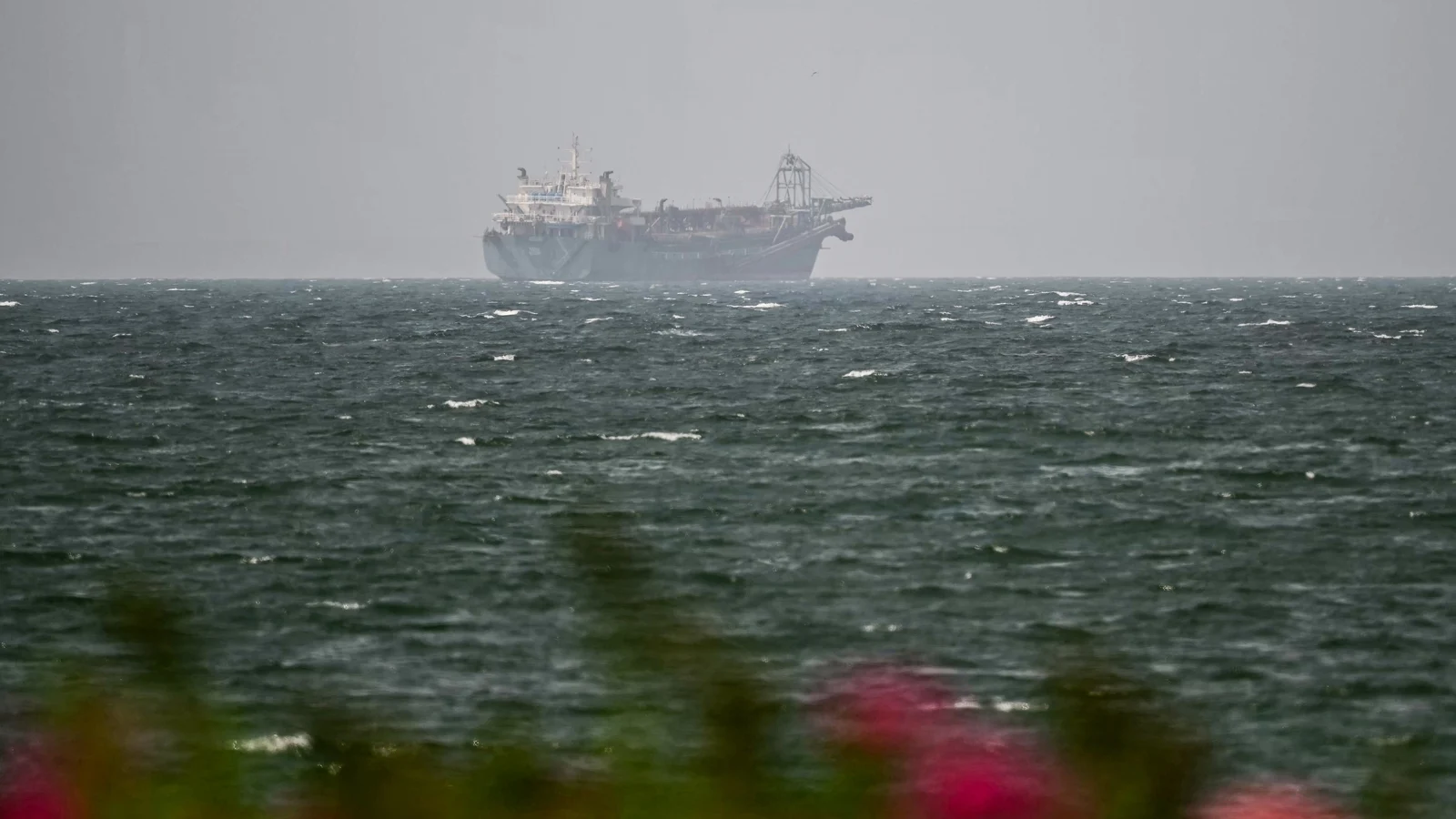
The dangers were again evident on the water. The captain of an oil tanker reported hearing two explosions while transiting the strait, 17km southeast of Kumzar, Oman, Britain’s maritime security agency UKMTO said yesterday. The crew and vessel were safe.
Separately, Yemen’s Iran-backed Houthis said they had struck two Saudi oil tankers, bringing to nine the number hit since the group launched a blockade of the kingdom last month.
Military spokesman Yahya Saree said missiles hit the tanker Wafa off Yanbu in the northern Red Sea and the tanker Daisy in the Gulf of Aden.
Houthis kill 38 government troops in Yemen
The Houthis today said they had attacked government positions in response to what they described as a military buildup by neighbouring Saudi Arabia, while medical sources said at least 38 Yemeni troops were killed.
Houthi military spokesman Yahya Saree accused the kingdom of a “large Saudi military buildup” to prepare for attacks.
“Therefore, our armed forces conducted a large-scale and precise military operation targeting Saudi enemy troop concentrations,” he added, referring to the Saudi-backed government’s forces.
We need your consent to load this rte-player contentWe use rte-player to manage extra content that can set cookies on your device and collect data about your activity. Please review their details and accept them to load the content.Manage Preferences
‘Fractured system’
Before the war, Hormuz handled around a fifth of the world’s oil and LNG exports. Since the confrontation over access erupted, prices have repeatedly jumped, sharpening the economic — and political — stakes for Washington.
US Vice President JD Vance said the United States was frustrated by slow-moving diplomacy with Iran, arguing that talks would take time because of splits within the Iranian leadership.
“It’s going to be messy and it’s going to take some time to get there,” Mr Vance told Fox News in an interview broadcast yesterday.
“The reality… is that number one, the Iranians are extraordinarily difficult people. Number two, they have a fractured system,” he said.
Entrances to both the Persian Gulf and Red Sea, key energy routes, have been disrupted by the war
Iran, after imposing what amounts to an effective blockade on the strait, has insisted that ships use a route running close along Iran’s coastline.
Many vessels have instead opted for a southern track near Oman on the opposite side of the strait — a choice that has at times drawn fire.
Iran has sought to assert control over Hormuz and impose tolls, powers it did not exercise before the war — a shift that the United States would fiercely oppose.
In a familiar cycle, Mr Trump last week threatened to hit Iran “very hard”, including potentially with strikes on civilian infrastructure, before stepping back and suggesting a deal was close.
Iran’s foreign ministry, however, said no negotiations were under way with Washington.