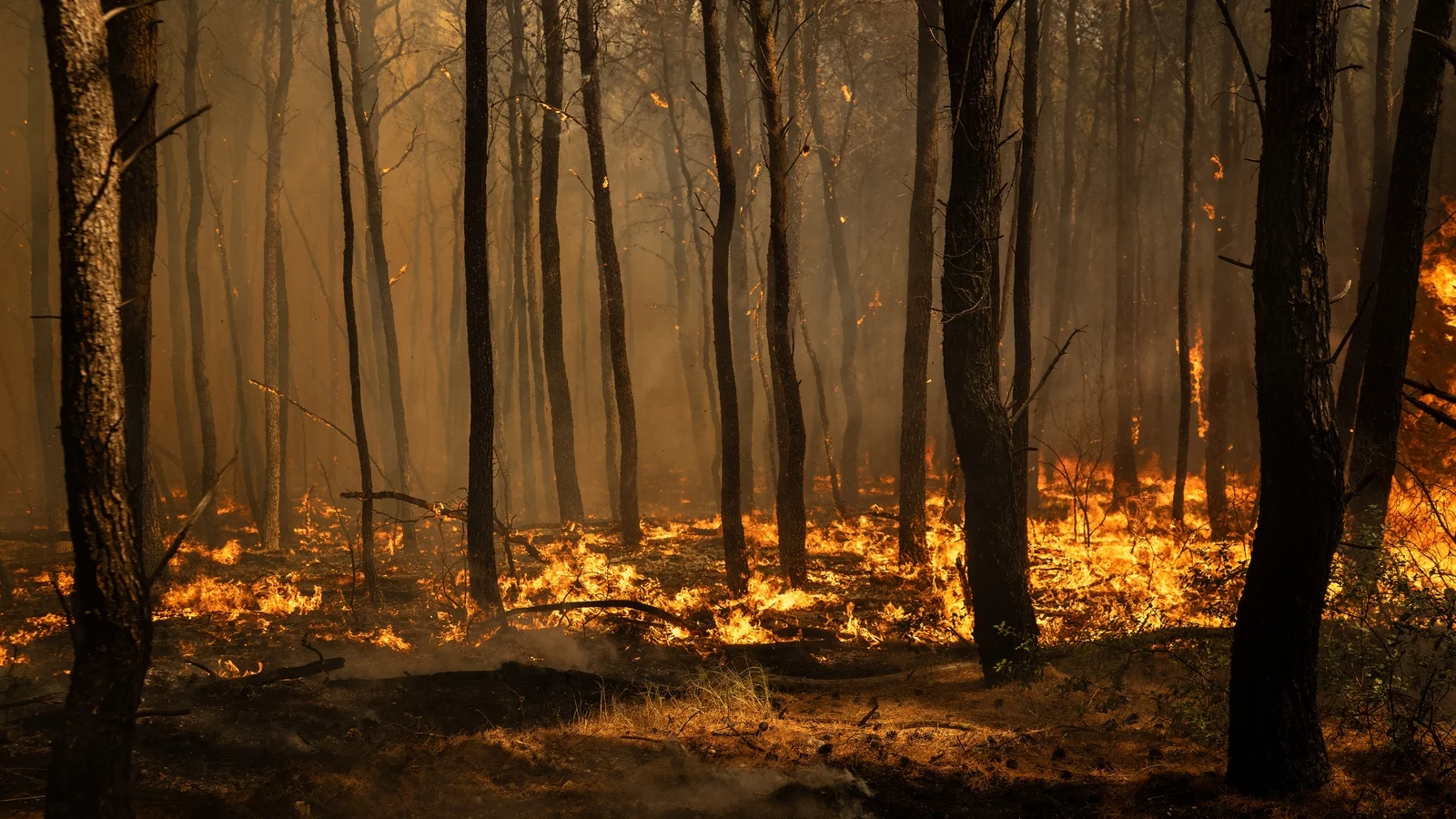
As Greece reels from a string of deadly summer wildfires, prosecutors have ordered a town mayor and two other men held in pre-trial detention after charging them with arson over a blaze that tore through areas near Athens last week.
Investigators say the fire began on 31 July, apparently ignited by a spark from power cables at a wind farm near Agios Vasileios, a seaside village at the foot of a mountain some 85km (50 miles) northwest of the capital.
Among those detained is Giannis Apostolou, the mayor of the small town of Stylida about 140km northwest of Athens, who owns an electrical installation company connected to the wind farm.
Greek media reported that authorities have accused Apostolou, a contractor working for his company and the wind farm’s owner of arson and of damaging public utilities.
If convicted, all three could be sentenced to more than 10 years in prison.
Greece’s ANA news agency said on today that officials had also decided to suspend the wind farm’s operations. The site lies along the border between the regions of Boeotia and Attica.
With wind gusts reaching up to 130km/h, the fire is believed to have raced from an overhead medium-voltage power line, swept toward the southern slopes of Mount Kithairon and ultimately reached a town around 40km from Athens.
ANA reported that the wind turbine owner is accused of failing to clear vegetation. According to the agency, a separate fire had already erupted on the same power line on 27 June.
Local opposition to the project dates back to its installation more than a decade ago, when residents tried—without success—to halt the development through legal challenges.
The damage extended well beyond the burned forest, scrubland and olive groves. In Porto Germeno, a seaside resort on the Gulf of Corinth, more than 120 buildings and homes were damaged.
The latest case unfolds against a grim national backdrop. Since the end of July, Greece has battled dozens of blazes that have killed five people, including three firefighters.
Two helicopter crew members assigned to fight the flames also died after their aircraft collided with another plane.
Scientists have for years warned that human-made climate change is stretching periods of extreme heat and drought—making them longer, more frequent and more intense—and turning landscapes into tinderbox-like conditions in which wildfires can spread rapidly.