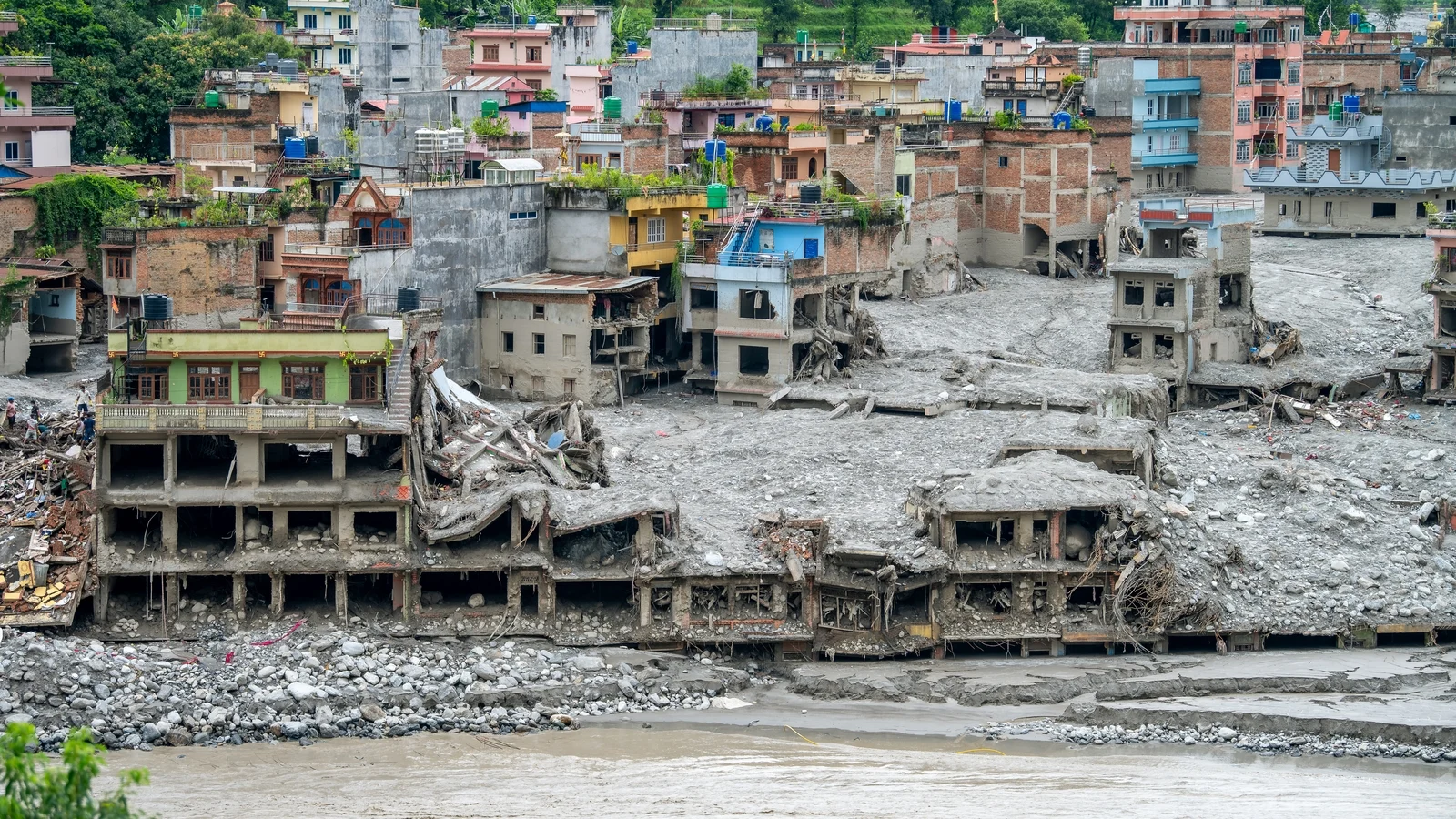
Raging floods along the China-Nepal border have turned mountain valleys into disaster zones, with Nepal now reporting at least 1,252 deaths and the overall death toll from the catastrophe climbing above 1,270.
Chinese state media earlier said 21 people were killed in Tibet, putting the combined toll from the floods that struck on 26 August at 1,273.
Nepal’s disaster authority said 4,216 people were still missing, as rescue efforts pressed ahead on what officials described as a war footing.
In China, state media reported 541 people missing, taking the overall number of unaccounted for people to 4,757.
Nearly 600 foreigners from more than 30 nationalities are also missing, with Indians accounting for one of the largest shares.
The US State Department said about 75 Americans remain unaccounted for.
Aid agencies said they were considering deploying porters to deliver aid to hard-hit districts close to the border with China
In Kathmandu, relatives of missing foreign nationals described a frantic search for answers, moving from hospitals to morgues in the hope of finding any trace of loved ones.
“I feel desperate, it’s been so many days,” said 53-year-old American Sanjeev Rai, who travelled to Nepal after learning his wife could not be reached.
The floodwaters tore through remote mountain districts, wiping out roads, bridges and other key infrastructure — damage that has slowed access for rescuers and relief convoys.
With major routes severed, aid groups said they were weighing the use of porters to move supplies into the worst-hit districts near the border with China.
“We’ve been discussing with the government how also to use helicopters, cargo drones to be able to deliver aid,” Lila Pieters Yahia, the UN resident coordinator for Nepal, told reporters in Kathmandu.
“The beauty of your country (is) you have porters. So we have to go back into also those very simple means to bring the aid as soon as possible,” Ms Pieters Yahia said.
Porters — long seen as essential to Nepal’s trekking and mountaineering industry — are renowned for hauling heavy loads for days along steep, rugged trails, often in punishing weather.
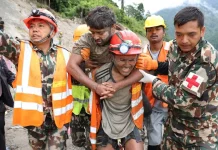
Meanwhile, Nepali army personnel and rescue teams, assisted by foreign experts, continued searching for survivors believed to be trapped inside several hydropower tunnels.
The army said crews are still working with excavators and other heavy machinery to scour the tunnels for any signs of life.