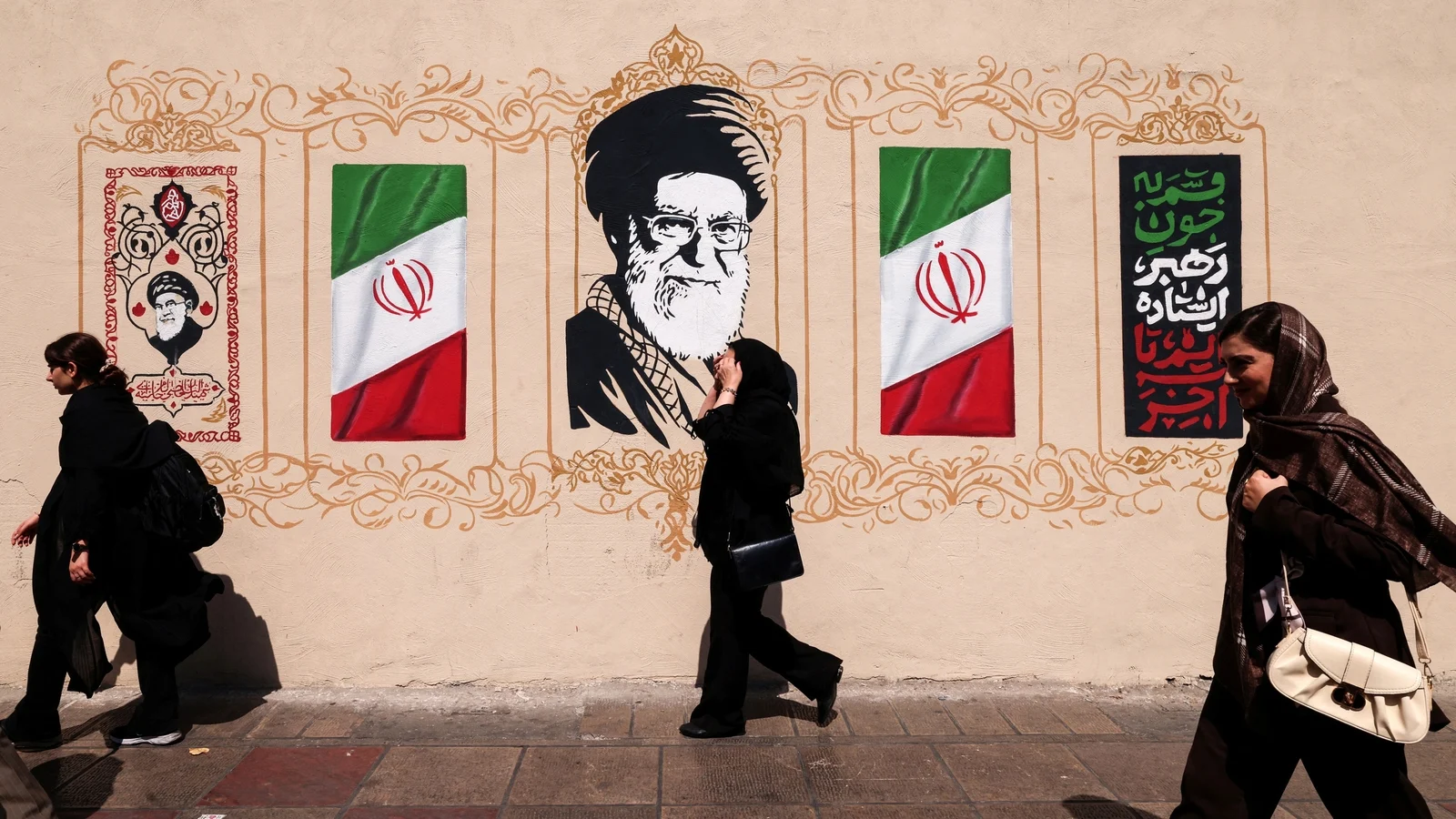
The war of words between Tehran and Washington sharpened again, as US President Donald Trump warned Iran it must strike a deal or face economic collapse — and, he suggested, the possible destruction of its leadership — while Iran’s military promised forceful retaliation if it is attacked anew.
For months, the confrontation has appeared stuck in place, with neither side showing willingness to back down even as the fallout has intensified a global energy crunch, carved deep holes in Iran’s economy and spilled into fresh flashpoints across the region.
During a phone call with a Fox News reporter, Mr Trump said Iran’s leaders should make a deal or “rot economically” or be “wiped out,” according to the reporter.
At the same time, with Iran’s President Masoud Pezeshkian expected in New York this week for the United Nations General Assembly, Mr Trump said he would be open to meeting him, the Fox reporter added.
Iran’s military conduct parades and provide training to supporters in preparation for potential conflict
Mr Trump has repeatedly issued broad warnings of major military escalation during the conflict that began with US and Israeli strikes on 28 February, but he has not carried them out.
Earlier, Iran’s military central command said any fresh attack would set off sustained retaliation against US bases and interests, adding that Washington’s regional allies would be treated as parties to the conflict.
The Iranian military also said it had information indicating an attack was being prepared, without explaining what that information was.
Houthis target Riyadh
US Gulf allies have already been left badly shaken by a war the US and Israel launched without warning — a campaign that brought their cities under Iranian fire and battered their economies as the vital Strait of Hormuz was blockaded.
Yemen’s Houthi group, which made major advances along Yemen’s Red Sea coast after the country’s civil war reignited this month, said yesterday it carried out strikes in the Saudi capital Riyadh and on a major oil facility in the kingdom’s Red Sea port of Yanbu.
Reuters video showed a huge plume of black smoke rising near Riyadh’s main international airport after booms were heard overnight.
The US State Department issued a security alert citing the Houthi hostilities.
It said there was potential for unforeseen escalation in the Middle East, and that Americans should be more vigilant and remain aware of possible flight cancellations and airspace closures.
Saudi Arabia did not comment on the incident, although a Saudi-led coalition fighting the Houthis said it had foiled other attacks on the kingdom.
The Houthis’ latest escalation has pushed Riyadh into a stark choice: keep up airstrikes to prevent the group from taking more Yemeni territory, or pull back in the hope of avoiding drone attacks on critical infrastructure.
Energy exports blockaded
The Houthi advances along the coast mean the group’s forces now sit on the Bab Al-Mandab Strait, giving them easier leverage over shipping moving between the Red Sea and Asia and the capacity to blockade the strategic passage.
With Iran already blockading most shipping in the Strait of Hormuz, energy exports from the oil-rich Gulf are now almost entirely shut out from global markets, adding pressure to oil prices.
A US blockade of Iranian ports is also preventing Iran from selling its own oil, worsening major strains in the Islamic Republic’s economy.
Even with the economic toll mounting, there is little indication the sides are moving back toward the interim ceasefire deal reached in June, which collapsed in July amid disputes over its terms.
Iran repeated that it would not reopen the Strait of Hormuz until what it said were the June agreement’s conditions — as Tehran interpreted them — were fulfilled.
Iranian Parliament Speaker Mohammad Bagher Ghalibaf said Iran would need to keep fighting even as it negotiates, both to push back its enemies and to lock in any gains through diplomacy.