German Chancellor Friedrich Merz began the week on shakier ground after his centre-right CDU was hit with two punishing regional election defeats, ceding territory to parties on both the far-right and far-left.
Only 16 months into his tenure, Mr Merz is contending with sliding approval ratings and a run of regional setbacks as the anti-immigration Alternative for Germany (AfD) continues to gain strength — and now sits atop nationwide polling.
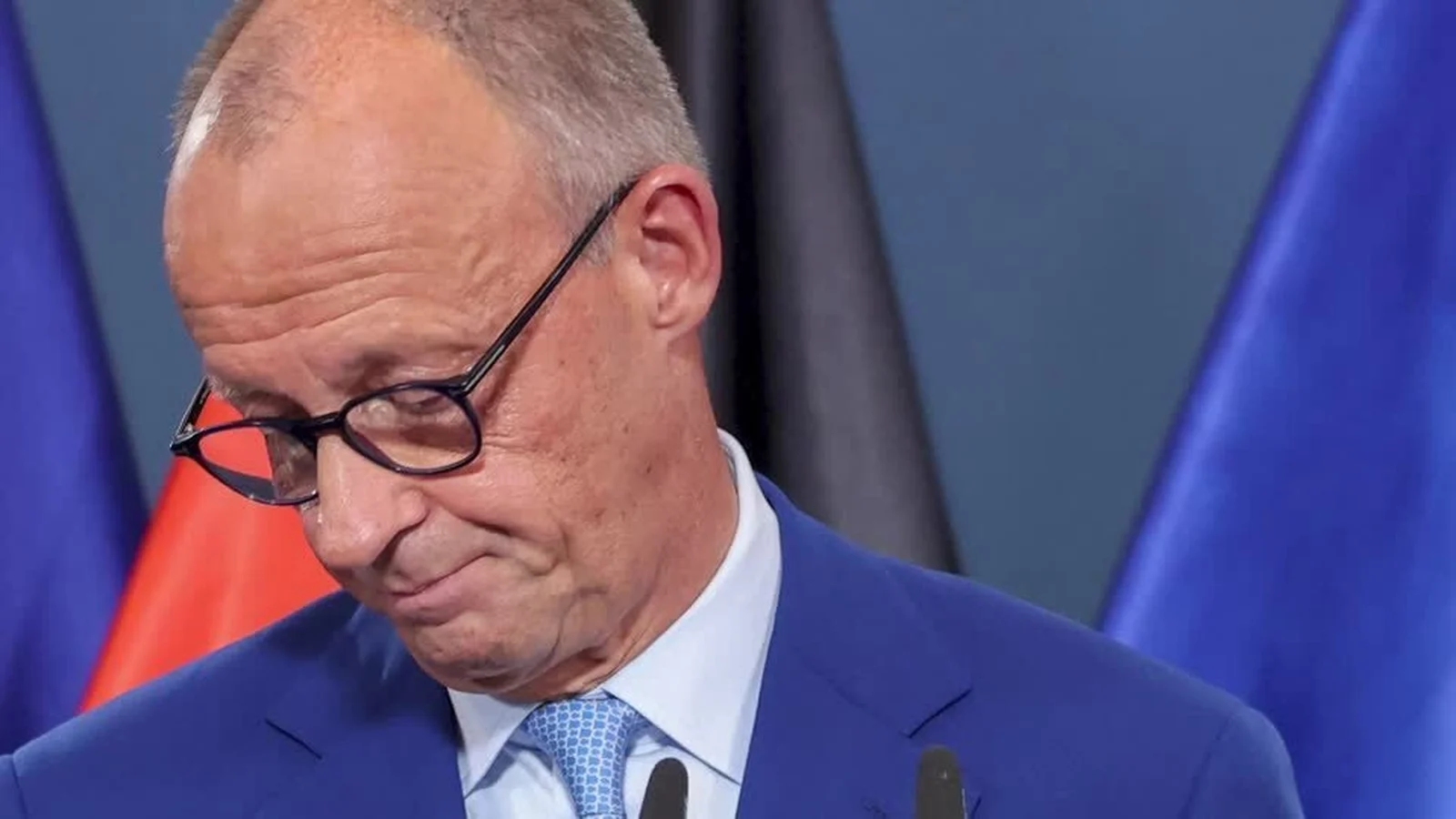
With talk swirling that his own CDU/CSU bloc could move against him, Mr Merz took the rare step of speaking directly to the country on television last night, going on air just minutes after the first exit polls were released.
In his remarks, Mr Merz acknowledged the CDU had suffered what he called a “disaster” in the state of Mecklenburg-Western Pomerania. As counting continued, the result worsened: the CDU fell below 5%, a threshold that means it will be ejected from the state parliament entirely.
The AfD finished first in Mecklenburg-Western Pomerania, but the centre-left SPD is expected to remain in power by assembling a coalition with left-wing partners.
In Berlin, the CDU was also decisively beaten — this time by the far-left Die Linke — prompting Mr Merz to argue that “trust in our country’s institutions is waning” and is being “actively undermined by radical parties on both the left and the right”.
“What needs to be done now requires backbone, steadfastness and patience,” Mr Merz said. “I will demonstrate this as CDU party chairman and, above all, as chancellor of our country.”
Observers read the timing as an effort to seize control of the political storyline before critics could frame the defeats as a verdict on his leadership.
“His extremely early move shows that Merz is staking a claim to define the narrative,” said Oliver Lembcke, a political scientist at Ruhr University Bochum.
Mr Lembcke described it as “leadership from a defensive position – and an attempt to prevent a personnel debate with an uncertain outcome from gathering steam”.
ING bank economist Carsten Brzeski offered a similar assessment of the broadcast, saying: “Read the appearance for what it was, an attempt to choke off the speculation about his possible resignation that has been building in recent weeks.”
German Chancellor Friedrich Merz appeared on TV after exit polls were released for the elections in the state of Mecklenburg-Western Pomerania
Tough week ahead
Following a CDU crisis meeting yesterday, the chancellor has cleared his schedule for the coming days and has also dropped plans to travel to New York for the UN General Assembly, preparing instead for political aftershocks from the results.
For weeks, Mr Merz has tried to beat back rumours that the centre-right CDU/CSU bloc could force him out.
Among the names circulating as possible successors are Hendrik Wuest, the state premier of heavily populated North Rhine-Westphalia, and Markus Soeder, the Bavarian state premier and leader of the CSU, the CDU’s regional sister party.
Still, no would-be challenger has made a public bid — a restraint that may reflect fears of a backlash for disloyalty or the sheer difficulty of restoring the party’s standing during what is shaping up as one of its worst-ever crisis.
When Mr Merz entered office in May last year, he promised to kick-start a struggling economy, strengthen the military as a deterrent to Russia, and curb irregular immigration — policies aimed at reassuring anxious voters and drawing support away from the AfD.
Instead, the AfD has moved into the lead in nationwide polls, while Mr Merz’s personal approval rating sits just above 10%, a figure he has struggled to lift amid criticism of his sometimes blunt and abrasive style.
The latest results landed just two weeks after the far-right, pro-Trump and Moscow-friendly AfD delivered another jolt by handing the CDU a striking defeat in Saxony-Anhalt.
This cascade of electoral setbacks has unfolded as Mr Merz has also found it difficult to advance long-promised economic and social welfare reforms with coalition partner SPD.
Under mounting pressure, Mr Merz drew some needed backing last week when eight CDU state premiers issued a joint statement saying Germany needs “stability now more than ever” rather than “discussions about personnel”.
They stopped short, however, of offering Mr Merz a direct personal endorsement.
We need your consent to load this rte-player contentWe use rte-player to manage extra content that can set cookies on your device and collect data about your activity. Please review their details and accept them to load the content.Manage Preferences