Sri Lanka is poised to bring to a close the landmark trial of 24 men accused of involvement in the 2019 Easter Sunday bombings, the deadliest assault on civilians in the island’s history.
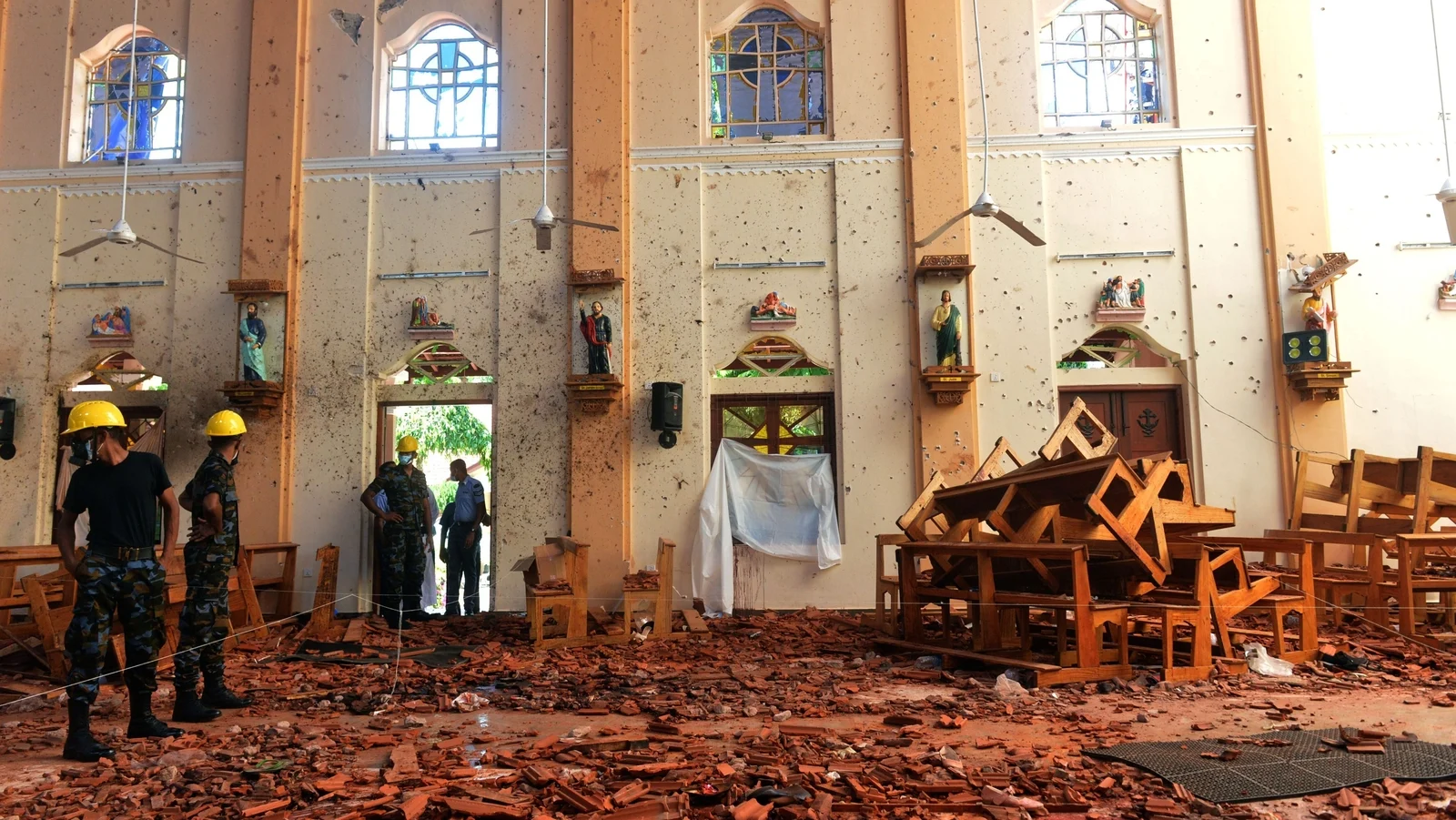
On 21 April 2019, suicide attackers hit three luxury hotels and three churches in coordinated strikes that left 279 people dead, including 45 foreigners. Investigators have attributed the atrocity to a homegrown Islamist extremist group.
Originally, 25 men were indicted over alleged roles in the plot — all from Sri Lanka’s Muslim minority — but one has since died in custody, leaving 24 defendants before the court.
The hearing is scheduled to begin at 9.30am local time (5am Irish time) at the High Court of Colombo.
Police said they would deploy extraordinary security around the court complex as the country awaits a verdict, marking the first time anyone is to be sentenced for direct involvement in the attacks.
People take part in a silent march marking the seventh anniversary of the 2019 bombings
The proceedings have already set a legal record in Sri Lanka, with prosecutors lodging 23,270 charges — the most ever filed in a single case.
Counts before the court include murder, conspiracy to commit terrorism and the possession of firearms and explosives under the Prevention of Terrorism Act.
Prosecutors have named Mohamed Naufar as the alleged ringleader, accusing him of providing support to the eight-member team that carried out the bombings.
All defendants have denied any involvement.
Local media have reported that convictions could expose some of the accused to the death penalty, although Sri Lanka has not conducted an execution since 1976 and death sentences are typically commuted to life imprisonment.
The possibility of capital punishment returned to prominence in July, when two security officials were sentenced to death in a separate case over accusations that they failed to prevent the attacks despite intelligence warnings.
‘Mastermind’ spy boss
Three of the men now in Sri Lankan custody were also charged by US authorities in December 2020 with terrorism-related offences linked to the bombings.
Security personnel stand guard outside the St Anthony’s church in Colombo
Five Americans were among those killed, including a US Commerce Department employee who was in Colombo on official business.
Victims also included nationals of Australia, Bangladesh, China, Denmark, India, Japan, the Netherlands, Portugal, Spain, Sweden, Switzerland, Turkey and Britain.
The trial has played out alongside a separate, politically sensitive inquiry into claims that figures within the Sri Lankan state may have had ties to those behind the attacks.
Former intelligence chief Suresh Sallay is being held in custody over allegations that he orchestrated the bombings — accusations he has denied.
Public Security Minister Ananda Wijepala told parliament in June that investigators believed Mr Sallay was the “mastermind” of the attacks and that he had worked with Islamist extremists before the bombings were carried out.
Investigators allege the network was cultivated to manufacture a security threat that would, in turn, strengthen political backing for the Rajapaksa family, which returned to power months after the attacks with Gotabaya Rajapaksa’s election as president.
According to court filings, investigators believe the aim was to sow chaos and cast Mr Rajapaksa — a former defence chief credited by supporters with defeating Tamil separatist rebels in 2009 — as the leader best positioned to restore security.
The Rajapaksa camp, backing a once powerful family that dominated Sri Lankan politics for nearly two decades, has rejected claims of state involvement.
Successive Mr Rajapaksa administrations have acknowledged using Islamist militants as intelligence assets during the decades-long civil war that ended in 2009.
Supporters, however, insist the militants later double-crossed their handlers and carried out the 2019 bombings independently.