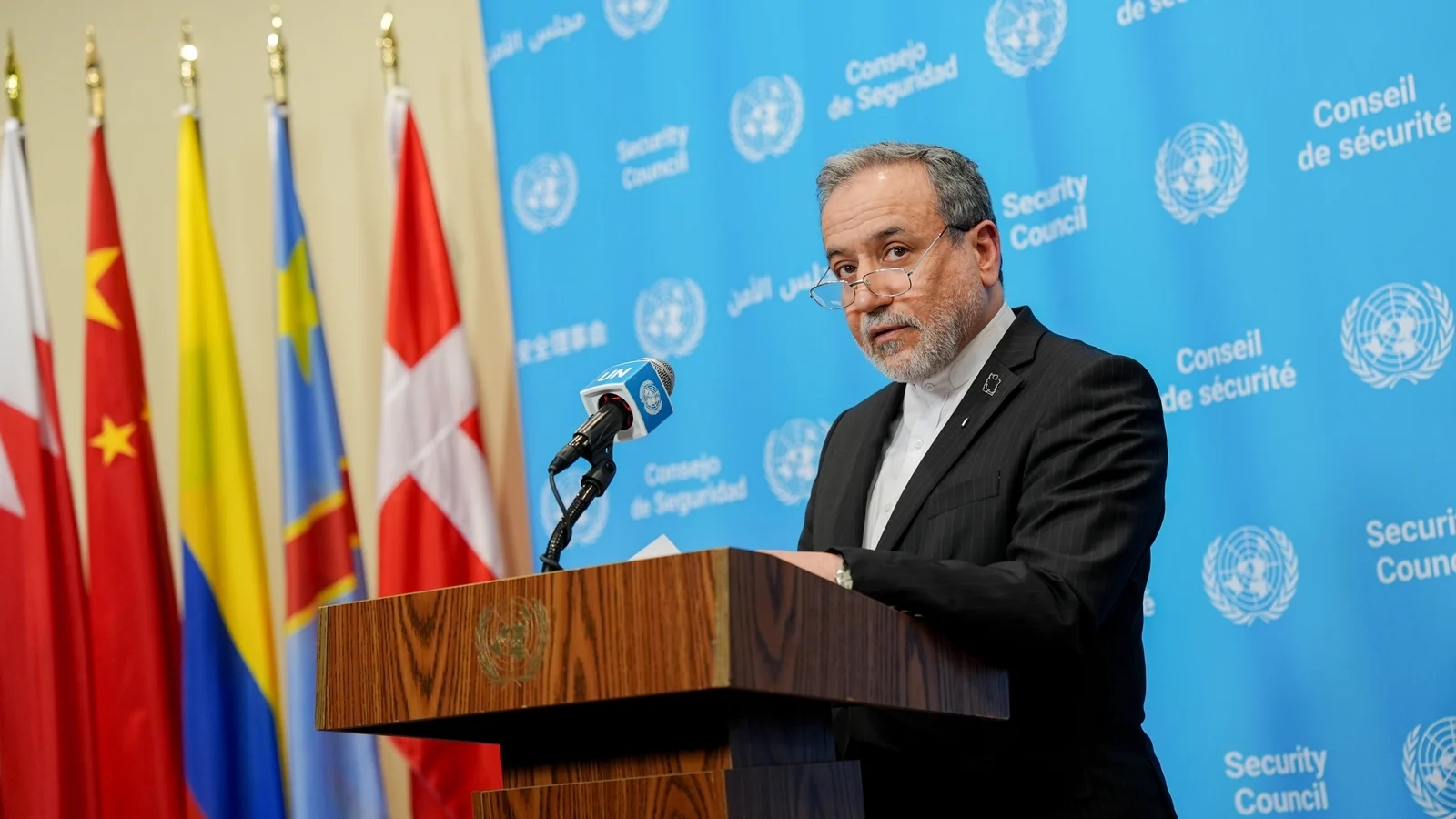
Iran has told the United States it can restore shipping through the Strait of Hormuz within a week—if Washington agrees to a tightly defined set of conditions—according to Iran’s foreign minister, Abbas Araghchi.
The Wall Street Journal reported that US President Donald Trump dismissed the proposal within hours.
“Iran has conveyed to the United States, through Qatar, a concrete seven-day plan. If the necessary conditions are met, the strait can be reopened, and normal maritime passage restored within seven days,” Mr Araghchi said at the UN yesterday.
He said the next move lies with Washington and insisted Tehran would not negotiate under duress.
“The choice now rests with the United States. Iran does not accept coercion, threats, or intimidation, and Iran will not surrender its sovereign rights under pressure.
“I can tell you if there is seriousness in the US side to come to a deal and reopen the Strait of Hormuz, everything is now prepared,” he added.
Washington has yet to publicly respond to the offer.
Earlier reports indicated the plan would begin with a seven-day halt to hostilities across the Middle East, including in Lebanon.
It would also require the release of frozen Iranian assets—estimated at at least $12 billion (€10.5bn)—alongside lifting sanctions on Iranian oil and ending the US naval blockade of Iran.
Under the proposal, Iran would reopen the Strait of Hormuz on the seventh day of the truce.
Previous diplomatic efforts to reopen the Strait of Hormuz have broken down
Hossein Mohebi, a spokesman for the Revolutionary Guards, the ideological arm of Iran’s military, said earlier in the week that Tehran’s demands also include an end to hostilities in Yemen.
In a separate warning, a senior Iranian official said Iran would not soften its stance on its nuclear programme even if the United States accepts the peace deal.
The official said Tehran would make no concessions on what it described as its rights, including enriching uranium or sending its highly enriched uranium out of the country.
President Trump has vowed that Iran will never develop nuclear weapons.
The seven-day proposal comes after earlier diplomatic tracks failed to stop a war that began on 28 February.
Since then, the conflict has swung between pauses and renewed strikes, killing thousands, weakening Iran’s military forces and inflicting damage on its economy.
In June, the United States and Iran signed a memorandum of understanding intended to end the war, reopen the strait and begin talks on Iran’s nuclear programme.
That arrangement soon unravelled after Iran fired on commercial ships in Hormuz that it said had strayed from an approved route through the waterway.
Iran requires ships to obtain authorisation before passage, citing security and sovereignty reasons.
Ships that refuse to comply are regularly targeted, while the United States sporadically bombs Iranian coastal areas in retaliation.
Xi and Trump discuss Middle East
The war in Iran featured in talks between President Trump and Chinese President Xi Jinping at their summit yesterday.
President Xi Jinping’s visit coincided with the United Nations General Assembly
China relies heavily on Middle Eastern oil supplies, flows that have been shaken by Iranian threats against tankers departing the Strait of Hormuz.
According to China’s state news agency Xinhua, Mr Xi urged the United States and Iran to return to the June framework agreement that produced a brief ceasefire and to keep negotiating toward a wider settlement.
Mr Trump, for his part, cautioned Mr Xi against offering support to Iran and received assurances that China would not do so, the US ambassador to China said yesterday, the final day of Mr Xi’s three-day state visit.
Iran welcomed Mr Xi’s call to revive the June framework, while again underscoring its own peace proposal.