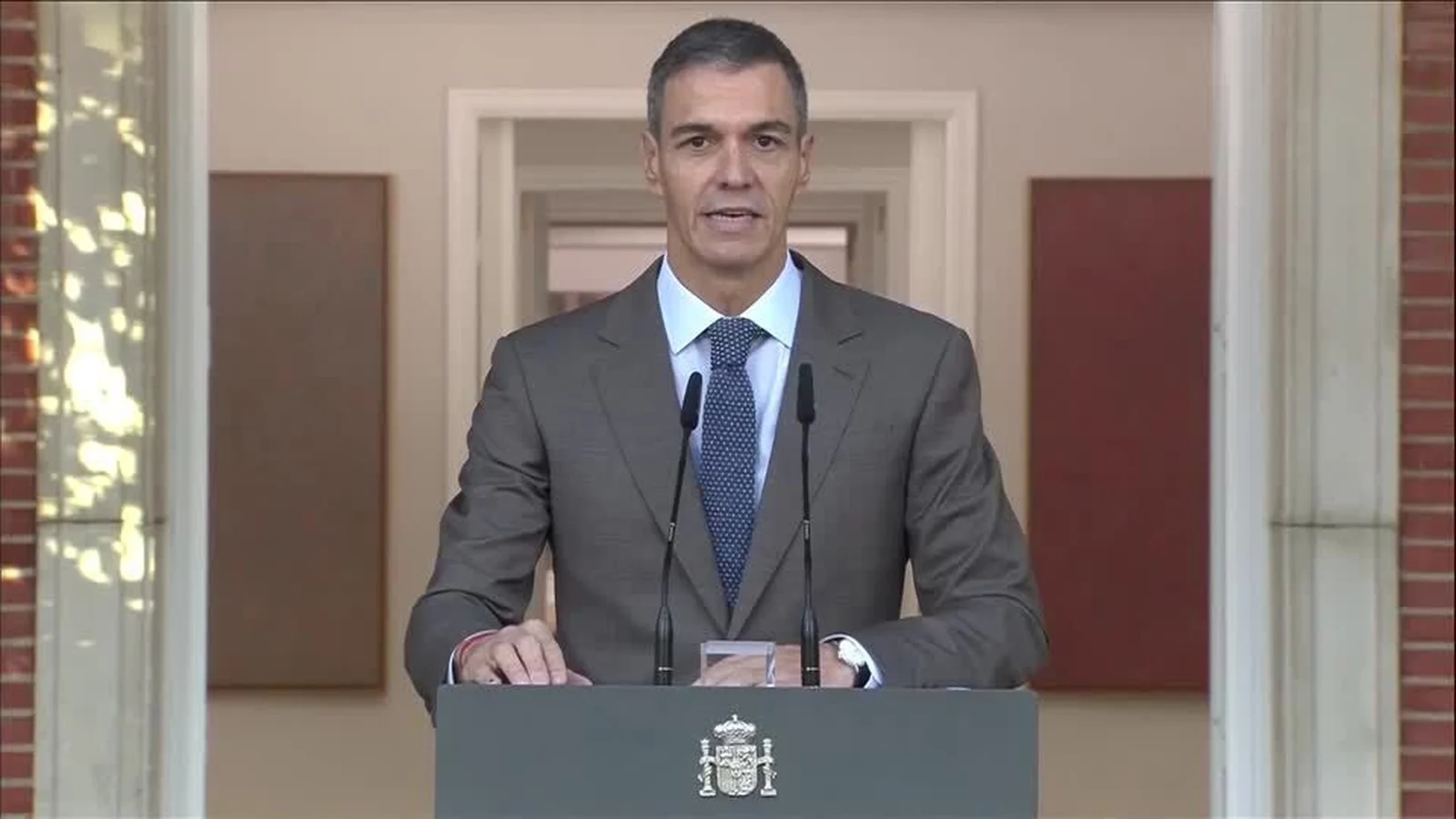
Spain is heading back to the polls months ahead of schedule after Prime Minister Pedro Sanchez, reeling from a stinging parliamentary defeat over housing and swelling street protests, announced a snap election for 29 November.
“We need to renew people’s support,” Mr Sanchez said in a televised address.
He said the objective was to rebuild momentum for his agenda by expanding the government’s backing in parliament. “We need to mobilise and win a much larger progressive majority in parliament, one that will allow us to overcome vested interests, deliver new social advances and continue transforming Spain.”
Mr Sanchez also conceded he had not always met expectations, acknowledging errors and unfulfilled pledges.
“I also know that part of that social majority is dissatisfied today,” he said.
The decision follows Friday’s vote in which a fragmented parliament rejected the government’s flagship housing decrees—another blow for the Socialist leader and a fresh test of whether his minority administration could have lasted until the next scheduled general election in 2027.
Internationally, Mr Sanchez has drawn attention for outspoken positions on progressive causes, from Palestinian statehood to defending multilateral institutions and pursuing action against “tech oligarchs”. At home, however, his standing has been eroded by repeated setbacks and scandals.
Calling voters to the ballot box now carries political danger: opinion polls show Mr Sanchez’s Socialist Party trailing.
Even so, the prime minister has been energised by his government’s proposals to confront Spain’s deepening housing crisis—measures that won praise from supporters but were struck down on Friday by right-wing MPs, a result that has helped drive plans for further protests.
Were the election to end in defeat for Mr Sanchez, it would close the chapter on one of Europe’s dwindling left-leaning governments at a moment when the far-right is posting unprecedented gains across the continent and more voters abandon traditional centrist parties.
Large crowds have gathered in Madrid and across Spain calling for a reduction in housing rents
Surveys suggest the most likely scenario is a government led by the conservative People’s Party (PP), with support from Vox—an arrangement that would bring a far-right party into central government for the first time since Spain returned to democracy following the death of dictator Francisco Franco.
Yet Mr Sanchez has repeatedly shown an ability to defy political expectations.
Although he has never secured enough votes to govern with an outright majority, he has stitched together a succession of precarious coalitions—uniting factions ranging from the far-left to the separatist right—and in doing so has stayed in power for three consecutive terms spanning eight years.
That balancing act has grown harder. With partners increasingly divided, the government has enacted little legislation during its third term and has not passed a budget since 2023, even as Spain’s economy has remained among the strongest performers in the developed world.
Thousands protest over housing
On Saturday, tens of thousands of protesters marched in Madrid and other cities in Spain to demand affordable housing.
The government’s proposed steps—among them automatic renewal of tenancy contracts and tighter limits on evicting vulnerable tenants—were defeated in Spain’s parliament by opposition parties.
More than 1,000 tents have been set up in Puerta del Sol in Madrid as part of the ongoing protests
The vote angered demonstrators furious over the country’s escalating housing costs and highlighted the obstacles facing a minority coalition trying to push laws through a divided chamber.
Spain has been operating under its 2023 budget, the most recent national spending plan approved under Mr Sanchez’s government, for several years.
Saturday’s rallies added to a crisis that has persisted for more than a week, sparked by the eviction last month of an 87-year-old pensioner, Maricarmen Abascal, from her Madrid flat where she had lived for decades.
In central Madrid, hundreds of protesters have been living in a tent city established a week ago to keep pressure on the government for reforms.
Recent polling has generally put the main opposition conservative Popular Party (PP) ahead of the Socialists.
House prices soar
Housing has long ranked among Spaniards’ top worries, with supply failing to keep pace with demand and rents and prices climbing much as they have elsewhere in the European Union.
Average rents in Spain have almost doubled over the past decade, while asking prices for homes have increased by about 90%, according to real estate website Idealista.
Campaigners say Ms Abascal’s eviction crystallised years of frustration over soaring costs.
They say she was forced out of the flat she had called home for more than seven decades after an investment company bought the property and attempted to raise her rent by 275%.
Public outrage ultimately pushed the new owners into an agreement allowing her to return to the flat at a low rent.
The housing bills put forward by Mr Sanchez’s leftist coalition collapsed in parliament after Junts—the Catalan separatist party whose backing the government depends on—voted against them, arguing the proposals lacked rigour.