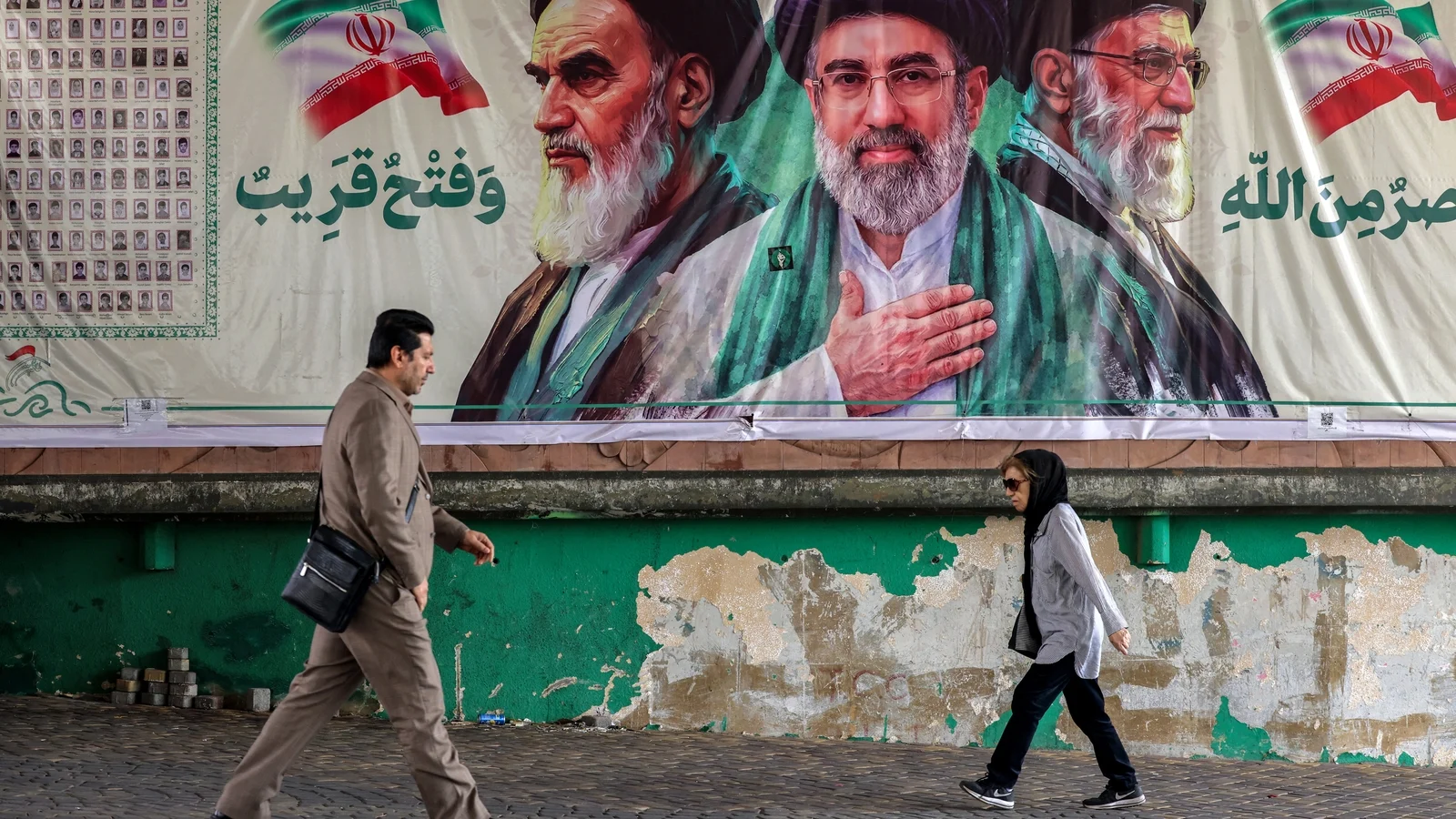
With tensions simmering after months of conflict, senior security figures from Saudi Arabia, Turkey and Pakistan are due in Tehran today for talks with Iranian officials on regional stability, Iranian and Saudi authorities said.
The meeting comes after eight months of war in the Middle East and in the shadow of recent US and Israeli threats of renewed attacks against Iran.
“As agreed, Saudi Defence Minister Khalid bin Salman, Pakistani army chief General Asim Munir and Turkish intelligence chief Ibrahim Kalin will participate in this meeting,” said Ali Bagheri Kani, deputy secretary of Iran’s Supreme National Security Council.
Speaking in an interview with state television, Mr Kani said Iran’s security chief Mohsen Rezaei will also take part.
Saudi Deputy Minister for Public Diplomacy Dr Rayed Krimly confirmed that the kingdom’s defence minister would lead a delegation to Tehran today.
“The visit comes as part of the continued efforts by the Makkah Joint Defence Agreement countries for de-escalation between parties involved in the ongoing crisis,” Dr Krimly said in a post on X.
He said the trip is intended to “promoting dialogue and diplomatic solutions, in support of the mediation efforts carried out by the State of Qatar and the Islamic Republic of Pakistan”.
War has gripped the Middle East since late February, when the United States and Israel launched a wave of surprise attacks on Iran, coinciding with negotiations between Washington and Tehran over Iran’s nuclear programme.
An April ceasefire halted the initial, intense bombardment, but the confrontation has continued in another critical arena: the Strait of Hormuz, through which around a fifth of the world’s oil and liquefied natural gas used to travel.
Iran says it controls the strait and has repeatedly targeted vessels attempting to cross without its authorisation, while the United States has responded by imposing a naval counter-blockade on Iranian ports.
Efforts to end the crisis diplomatically have faltered, particularly after the collapse of a June deal that set out a pathway to a permanent settlement.
The conflict has also widened, with fighting now including clashes between Saudi Arabia and the Iran-backed Houthis in Yemen.
Against that backdrop, Iran’s foreign ministry said the outcome of Israel’s elections — where Prime Minister Benjamin Netanyahu is facing a tight race — would change nothing for Tehran.
“It makes no difference to us who, in these elections, takes the helm of a regime that has brought nothing but violence and massacres to our region,” ministry spokesman Esmaeil Baqaei said at a weekly press briefing, a day before the Israeli legislative polls.
Saudi coalition says struck Houthi missile facilities
Elsewhere, the Saudi-led military coalition battling Yemen’s Houthis said it hit several missile launchers and storage sites, while the Iran-backed group reported a fresh attack on Riyadh’s international airport.
The announcement followed a night of alarm in the Saudi capital, a day after explosions shook Riyadh and officials sent text alerts warning residents of a “hostile aerial threat” to the city, which has been heavily targeted by the Houthis in recent weeks.
CCTV footage shows what the coalition says was a Houthi attack on Abha International Airport
Coalition spokesman Turki al-Maliki wrote on X today that the operation destroyed four ballistic missile launchers, as well as a missile depot and tunnels used by the Houthis, who control a large part of Yemen.
He said the strikes “focused on cutting off Houthi militia supply lines between areas under their control”.
The Houthis have mounted waves of attacks on the King Khalid International Airport in Riyadh, including a strike this month that killed 13 people and wounded more than 300 — the deadliest in the kingdom in more than a decade.
“Air defences intercepted and destroyed a ballistic missile launched by the terrorist Houthi militia toward Riyadh,” al-Maliki also said.
The airport re-opened and flights resumed on Sunday, though the Houthis warned travellers to avoid the facility, calling it a “military target.”
On Monday, the Houthis again claimed they had struck the airport “with a ballistic missile, striking the target with precision”, according to a social media post by Houthi military spokesman Yahya Saree.
He said the group also targeted oil pumping stations using drones.
A day earlier, the Houthis said they had launched an attack on Riyadh’s airport shortly after the kingdom announced flights would resume.
The closure had dealt a significant blow to Saudi Arabia, forcing the postponement of the kingdom’s flagship investment conference until 2027 and throwing travel plans into disarray for thousands of passengers.
The Dakar Rally was also added to a growing list of events cancelled, postponed or relocated amid the wider fallout from the war.
Saree repeated his warning that Riyadh airport remained “unsafe” and a “military target”.
“The Saudi regime shall bear the consequences of any operations at the airport,” he said.
Saudi Arabia and the government it supports in Yemen have faced sustained Houthi attacks in recent weeks after a years-long truce unravelled over the summer, shifting the focus of the broader US-Iran war that erupted in February.
As operations resumed at Riyadh airport, Greek Prime Minister Kyriakos Mitsotakis met Saudi de facto ruler Crown Prince Mohammed bin Salman to discuss a key air defence system.
Mr Mitsotakis “responded favourably to the kingdom’s request to keep the Patriot system in Saudi Arabia, given the current challenging circumstances”, his office said.
Greece has deployed a battery to operate the US-made Patriot air defence system in Yanbu, a major oil export hub on the Red Sea coast.
Yesterday, the Saudi-led military coalition said its air defences intercepted at least 10 ballistic missiles.
“The bombardment has been very heavy since this morning – may God keep us safe. Everything is shaking because of the explosions,” a resident of Khamis Mushait in Saudi Arabia told AFP yesterday, speaking on condition of anonymity.
Saudi civil defence later reported that two people were injured in the south by falling debris, and said several buildings and vehicles were damaged.
Photos distributed by the kingdom’s official press agency showed a building with part of its upper facade torn away, exposing metal rods. Another image showed large windows blown out, with broken glass scattered across the pavement and part of the road.