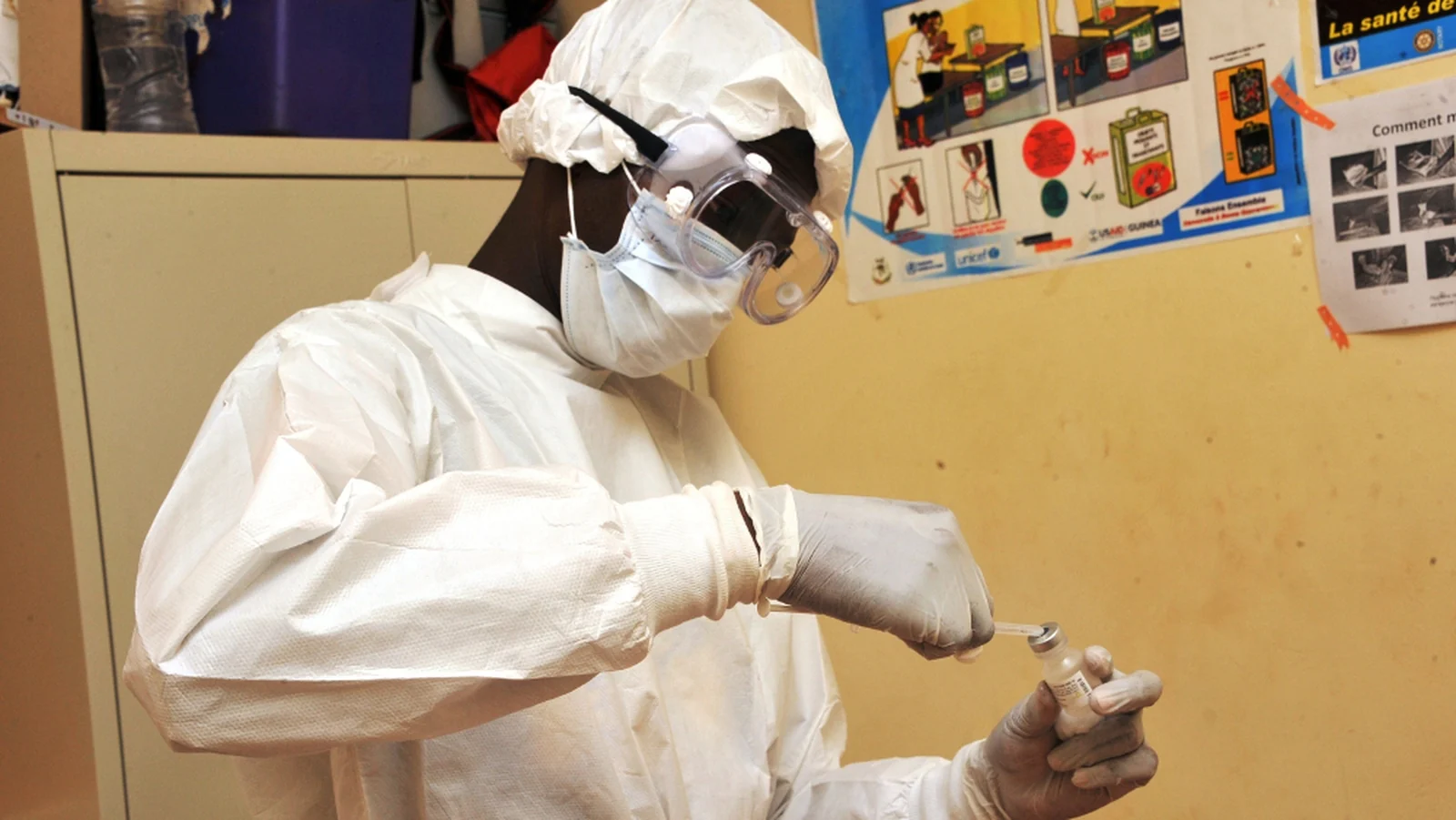
Ebola’s latest surge in Africa has pushed past a grim threshold: more than 10,000 confirmed infections, with nearly 5,000 deaths, most of them in the Democratic Republic of Congo (DRC), Congolese health authorities reported.
Official figures from the DRC put the tally at 10,060 people infected and 4,887 fatalities since the virus was first identified in May, marking the deadliest Ebola outbreak in the vast central African nation’s history.
Health officials have also recorded cases in Kenya, Nigeria and Uganda, prompting the World Health Organization (WHO) to warn that containing an epidemic stretching across east, west and central Africa presents a “complex” challenge.
In the DRC, 2,684 people have recovered, but the Congolese National Institute of Public Health estimates the fatality rate at close to 50%.
In the DRC several hundred Ebola orphans are being taken in at emergency nurseries
Responders face another major obstacle: the outbreak is being driven by the rare Bundibugyo species of Ebola, for which there are no approved vaccines or treatments.
Investigators say the virus circulated undetected for weeks before it was confirmed in Ituri, a northeastern province of the DRC, triggering what is now the country’s 17th recorded Ebola outbreak.
From there, it spread through wide areas of the north and east—regions battered by violence from multiple armed groups and where confidence in a distant and often absent state remains low.
Ituri and neighbouring North Kivu, which is partly controlled by the Rwanda-backed M23 militia, account for most of the reported infections.
Swiss woman evacuated
Uganda, which recorded 20 cases and two deaths, was declared Ebola-free by the WHO in late August.
Kenya, which had gone without a single case until 6 October, has reported nine infections and two deaths. Authorities said most of those who fell ill had recently travelled to the DRC.
Nigeria’s only confirmed case involves a 42-year-old Swiss woman who became infected after travelling to Uganda with her husband. She was later evacuated to a hospital in Geneva.
Dr Jide Idris general director of the Nigeria Centre for Disease Control and Prevention addressing the press in the wake of a confirmed Ebola case in the west African country
Nigerian health officials have identified 53 contacts linked to the patient as they work to prevent transmission in Africa’s most populous nation.
Some experts have expressed concern that the virus—typically contracted through contact with bodily fluids—may have spread after the couple returned to Nigeria on 3 October.
The WHO said the woman, who is married to an employee of the Swiss embassy in Abuja, began showing symptoms on 7 October.
She sought medical attention in the capital on 11 October and tested positive for Bundibugyo on 20 October.
A Ugandan government spokesperson rejected suggestions that she could have contracted Ebola while in the African Great Lakes nation.
Nurse killed
Mistrust in parts of the DRC has continued to undermine the outbreak response, complicating efforts to trace contacts and treat patients.
The WHO said a nurse was killed and a health worker seriously injured on Saturday in the northeastern province of Tshopo.
Doctor Marcel Likolo, chief medical officer for the Bafwasende health district, told AFP that local youths accused the two victims of attempting to infect residents with tablets before attacking them.
The Ebola treatment centre where the assault occurred has since been closed, he said.
Since Ebola was first identified about 50 years ago, the virus has claimed more than 15,000 lives across Africa.
In recent weeks, testing has begun on the Ervebo vaccine—already shown to work against the more common Zaire strain—to assess whether it might also protect against the Bundibugyo variant.