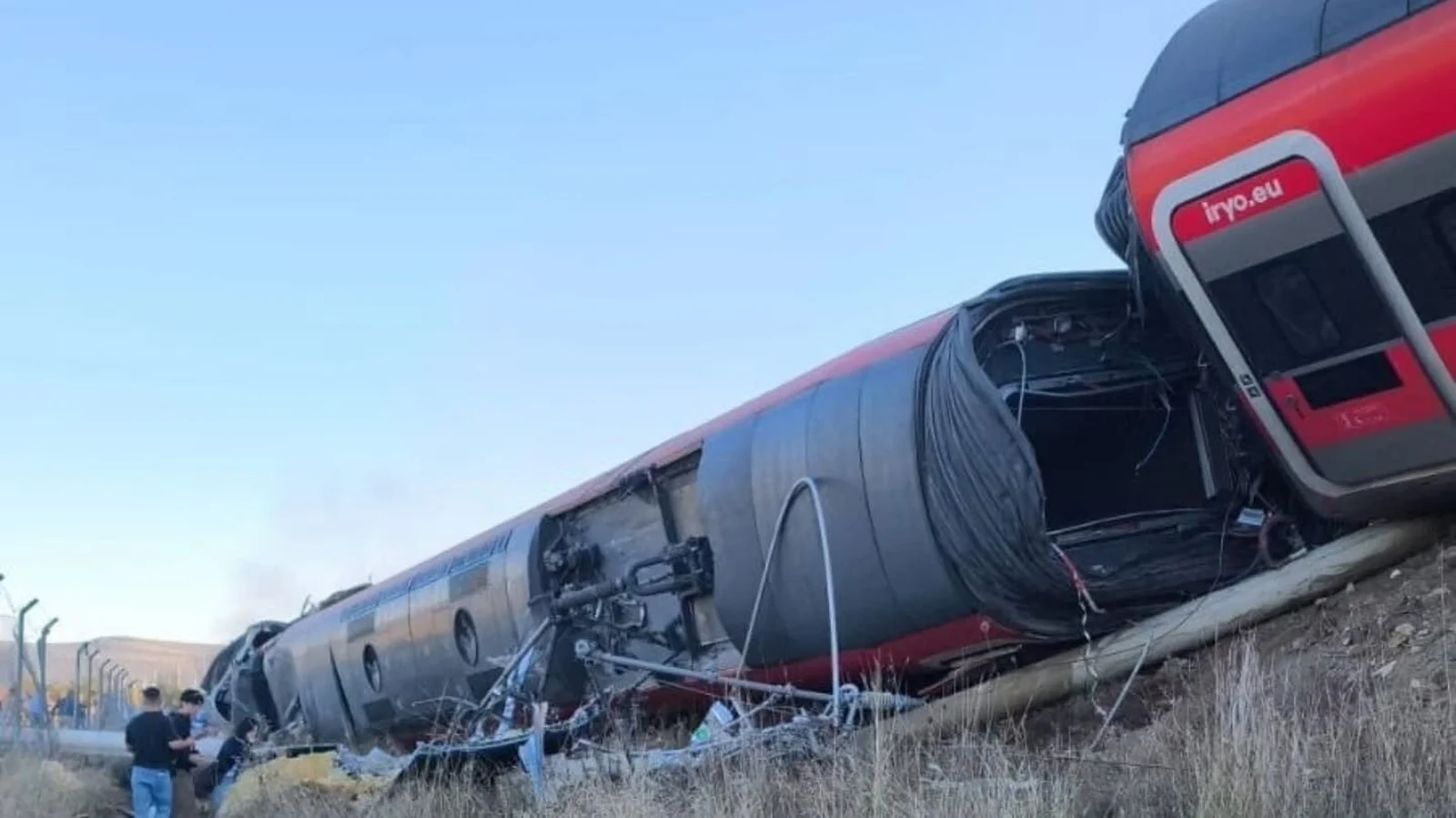
Spain’s rail network has been rocked by tragedy twice in a single year — and now the political fallout has reached the top. Transport Minister Oscar Puente said he will resign, announcing his decision hours after presenting an emergency aid package for victims and a new slate of rail-safety measures following last week’s deadly crash.
“A transport minister in a country like Spain cannot continue in office with two accidents of this severity in less than a year,” he told lawmakers of the Permanent Deputation, a standing committee that sits when parliament is dissolved.
Puente spoke nearly a week after the 28 October crash that killed 69 people near the town of Urda in central Spain.
His departure comes less than four weeks before an early parliamentary election that Prime Minister Pedro Sanchez calledfor 29 November, and after two deadly crashes on the same line this year.
Mr Sanchez praised Mr Puente in a post on X, thanking him for his work and saying the minister had put victims first and acted out of a sense of political responsibility.
Mr Puente, who had previously ruled out resigning, said he decided to step down within minutes of learning about the crash. He stayed on, he said, so the immediate emergency response could get under way, preliminary investigations could begin, and initial steps to compensate victims and tighten rail safety could be put in place.
Spain’s Transport Minister Oscar Puente has not specified when he will leave post
The October disaster was not the first this year. Another train accident in January, involving the same companies on the same line, killed 46 people.
Puente described how, last Wednesday, several trains were automatically stopped after a signalling system failed on the Madrid-Seville line, prompting central controllers in Madrid to take over operations.
According to Puente, those controllers cleared a state-owned Renfe train to continue even though a privately operated Iryo train was stationary ahead.
Investigators estimated an impact speed of 160 to 200km/h.
Emergency aid package for victims
Under measures Mr Puente outlined earlier today, service on the Madrid-Seville rail line will be reduced until the Railway Safety Agency reviews the line’s safety system and the government completes the delayed rollout of the European RailTraffic Management System (ERTMS).
The safety steps also include imposing a 40km/h speed limit in situations where drivers must rely on sight to spot obstacles if signalling fails, hiring additional staff, and improving conditions in rail control centres.
The government further pledged to double compulsory passenger insurance payouts for crash victims, accelerate compensation payments, and strengthen temporary incapacity cover.
In addition, in what Mr Puente said would be a world first, the railway system will introduce an AI agent to “detect anomalies and monitor conversations” between train drivers and controllers to minimise the likelihood of human error.
“We are not aware of any other railway system that uses this type of mechanism or technology. We will be the first to go down this path,” Mr Puente said, adding that Spain would also create a real-time digital model of the network.
As investigators work, arguments over responsibility have sharpened, with unions in Spain warning against an immediate rush to blame human error.
Last Friday, Raquel Ayllon, a union leader at state-owned infrastructure operator Adif, said controllers were being asked to do their jobs under punishing conditions.
“Human error is being criticized and questioned very quickly, while people are not really focusing on the central issue: the failure of the safety system,” Ms Ayllon said on TVE.