With Israel headed for another tense coalition scramble, a leading Arab-Israeli party said it will back opposition bloc leader Gadi Eisenkot to try to form the next government after last week’s election produced no clear winner.
“The parliamentary group of the United Arab List has decided to recommend Eisenkot to form the next government,” the party known by its Hebrew acronym Raam said in a statement.
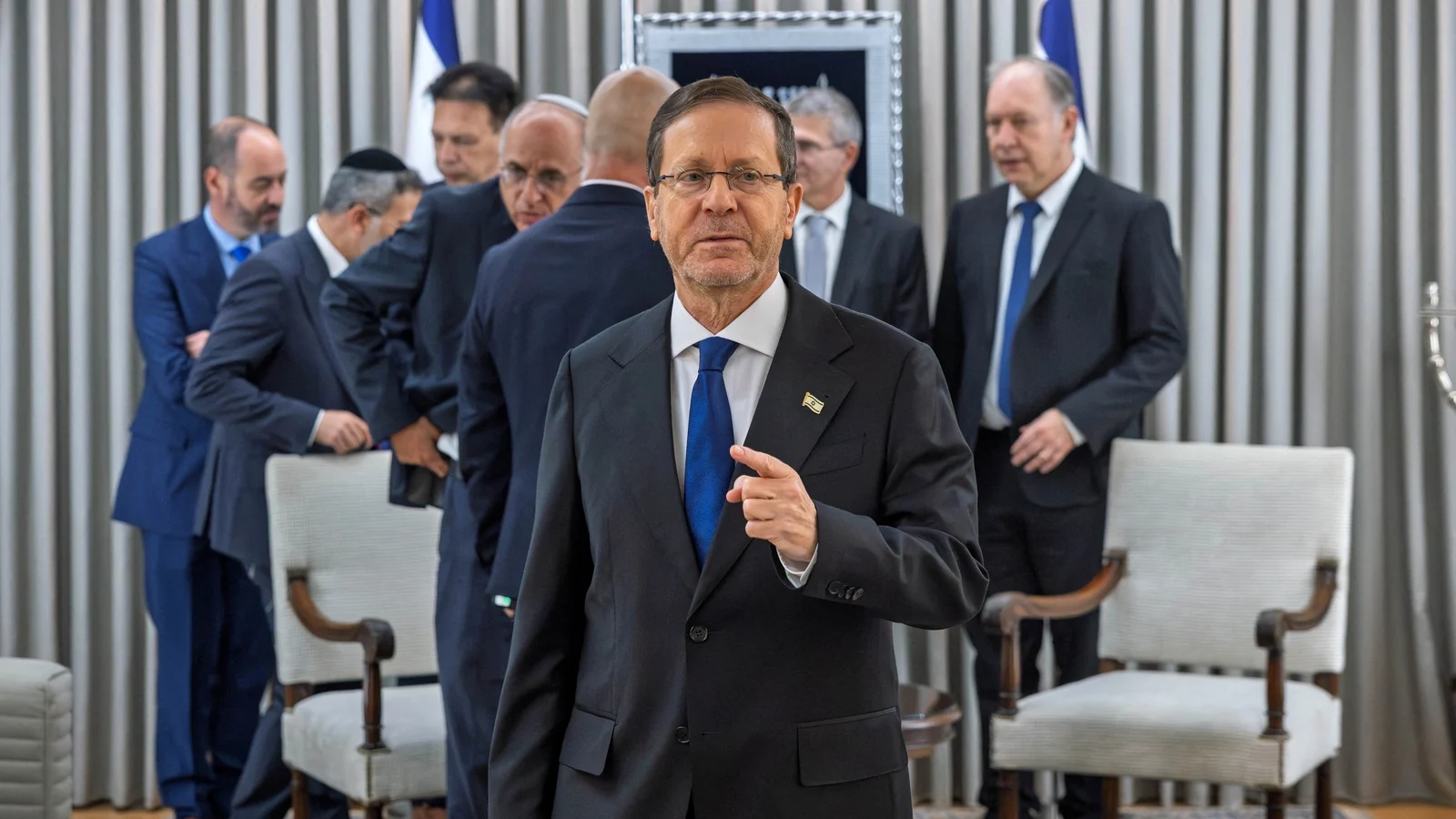
The announcement came just before consultations with President Isaac Herzog, who is meeting political factions as he weighs whom to give the first mandate to build a governing coalition after neither of the main camps secured a majority.
In remarks earlier, Mr Herzog urged party leaders to recognise the limits of campaign pledges in a fractured parliament.
“I am not asking anyone to give up their core values. But in the current reality, in which there is no clear winner after the elections, I ask for originality and creativity, courage and goodwill, so that the State of Israel emerges the winner,” the president said upon receiving the official results.
While the presidency is largely ceremonial, Mr Herzog’s decision on who gets the first attempt at assembling a coalition can shape weeks — or even months — of negotiations, and in the worst case could end with another trip to the polls.
Mr Herzog begins two days of consultations with parties today, starting with the ultranationalist Religious Zionism.
The president’s office said that he was deliberately starting with the smaller parties, hoping to hear all views, and he would wait until late tomorrow to meet the biggest – Prime Ministerr Benjamin Netanyahu’s right-wing Likud and Yashar, a broad centre to centre-right opposition party launched by Mr Eisenkot, a former military chief.
Demonstrations against Israeli Prime Minister Benjamin Netanyahu in West Jerusalem
On the numbers, neither Mr Netanyahu nor Mr Eisenkot commands the 61 seats required for a majority in the 120-member parliament.
Mr Netanyahu’s bloc has an edge, with 53 seats as opposed to Mr Eisenkot’s 48.
Raam’s support matters because Mr Eisenkot could cross the threshold by partnering with parties representing Israel’s Arab minority, whose representation climbed to 19 seats amid anger at Mr Netanyahu’s hard-right government.
Even so, parts of the opposition have hesitated at the prospect of depending on non-Jewish lawmakers to govern.
Mr Netanyahu has called for a broad coalition government without Arab lists, after accusing Arab groupings of having “stolen” the vote.
Israel’s attorney general called yesterday on intelligence agency Shin Bet to share the progress of its investigation into claims of electoral fraud by Arab Israeli parties, stating that no evidence had yet been submitted.
Arab-Israeli leaders have strongly rejected the claims, while Mr Eisenkot accused Mr Netanyahu and his Likud party of trying to stage a “pogrom against democracy”.
Opposition leader Gadi Eisenkot has pledged to form a government quickly
Mr Herzog, a mild-mannered lawyer whose political career was in the defunct left-wing Labour Party but is now officially nonpartisan, has said he wants to encourage “fresh thinking” and avoid a new election.
“It is important to exhaust every option, broaden the dialogue and explore every path that may advance the process,” his office said in a statement, adding that he could hold additional rounds of consultations before his decision.
Under Israel’s rules, once Mr Herzog assigns the task, the nominee has 28 days to form a government, with a possible 14-day extension.
If no one succeeds, Mr Herzog will give the mandate to someone else. If that too fails, a majority of politicians could come together to nominate someone within 21 days – or else Israel heads to new elections.
Coalition-building can be drawn out: after the November 2022 election, it took Mr Netanyahu — whose Likud performed better then — 58 days to put together a government.
Israel held five elections between 2019 and 2022 after deadlocks.
Mr Netanyahu, Israel’s longest-serving leader, has been in power on and off for nearly two decades.
The Israeli Prime Minister faces corruption charges and the risk of jail if he loses power and, with it, immunity.
In the final days of the campaign, he repeatedly warned he would order a resumption of full-scale war on Iran alongside US President Donald Trump.
Mr Eisenkot on election night warned the military not to take orders to suit Mr Netanyahu’s “political needs”, saying he has no mandate – even if he remains prime minister in a caretaker role.
Benjamin Netanyahu has called for a ‘broad national government’
Mr Netanyahu has called for a “broad national government” – with himself at top.
Opposition leaders have insisted that is not on the cards, pointing to Mr Netanyahu’s character and his failure to prevent the 7 October 2023 attack, the deadliest day in Israel’s history.
At a strategy session yesterday, Mr Eisenkot and other opposition leaders pledged to act quickly to assemble a government and push Mr Netanyahu from office, though they did not spell out a path to do it.
Yousef Jabareen, the head of the largest Arab-majority party in the next parliament, said that the opposition needed to accept “political reality” and team up to remove Mr Netanyahu.
Mr Netanyahu has persistently warned Jewish Israelis that the opposition will work with Arab parties, which he accuses of backing Hamas.
Leaders of Arab-Israeli parties have unanimously condemned the 7 October attack by Hamas without describing the Palestinian Islamist movement as a terror group.