Electrification Key to Plan for Shifting Away From Fossil Fuels
 Caalamka
Ireland is putting electrification at the heart of its plan to break with fossil fuels — a strategy the Government says is essential if the country is to reach climate neutrality by 2050.
The Transition Away from Fossil Fuels (TAFF) roadmap was unveiled by Minister for Climate, Environment and Energy (DCEE) Darragh O’Brien at the COP31 climate change conference in Antalya, Turkey.
Designed as a single reference point, the roadmap consolidates a range of existing and developing commitments at both national and European Union level.
Mr O’Brien said Ireland’s heavy reliance on fossil fuels remains a major vulnerability, warning it undermines the country’s energy sovereignty while leaving households exposed to volatile costs.
“Ireland’s continued over-dependence on fossil fuels is a distinct weakness, not only a weakness from an energy sovereignty perspective but also a big risk in relation to price for people,” Mr O’Brien said.
He described the move away from fossil fuels as foundational to climate policy, arguing it cuts across every sector where oil, gas and other carbon-intensive fuels still dominate.
“Transitioning away from fossil fuel is critical to Ireland’s climate action, it is central to everything we do to remove and reduce our dependence on fossil fuel across all sectors.”
No overall price tag for the roadmap has been provided. However, Budget 2027 allocated €1.28 billion to the Department of Climate Change, Energy and the Environment for climate, energy and environmental measures.
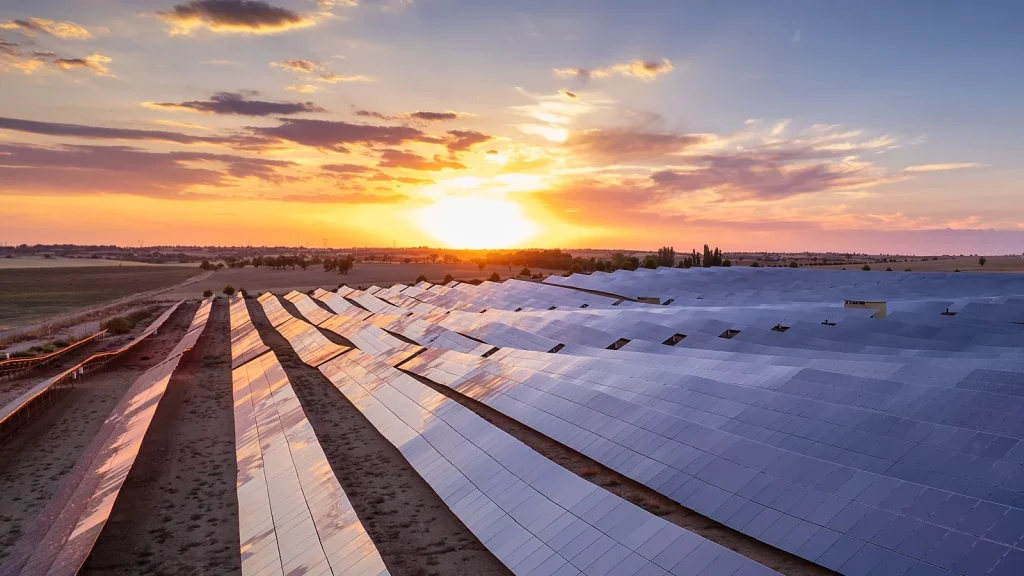
For households, the roadmap points to a sustained shift away from oil, natural gas, coal and peat used for heating, alongside a greater rollout of heat pumps and rooftop solar panels as renewables take a larger share.
The Government also plans to press ahead with the National Residential Retrofit Plan, aimed at helping people upgrade insulation and improve home energy performance — a step the department says is central to meeting its targets.
Mr O’Brien said the direction of travel must be unmistakable, not only because of climate obligations but because of long-term economic reality.
“We’ve got to ensure a clear message is sent out that fossil fuels are not our future, from a climate perspective, and they’re certainly not our future from an economic perspective,” Mr O’Brien said.
He added that the work already underway will need to speed up in the period ahead.
“It is now up to us to continue and to accelerate the work we’re doing in that space and we will.”
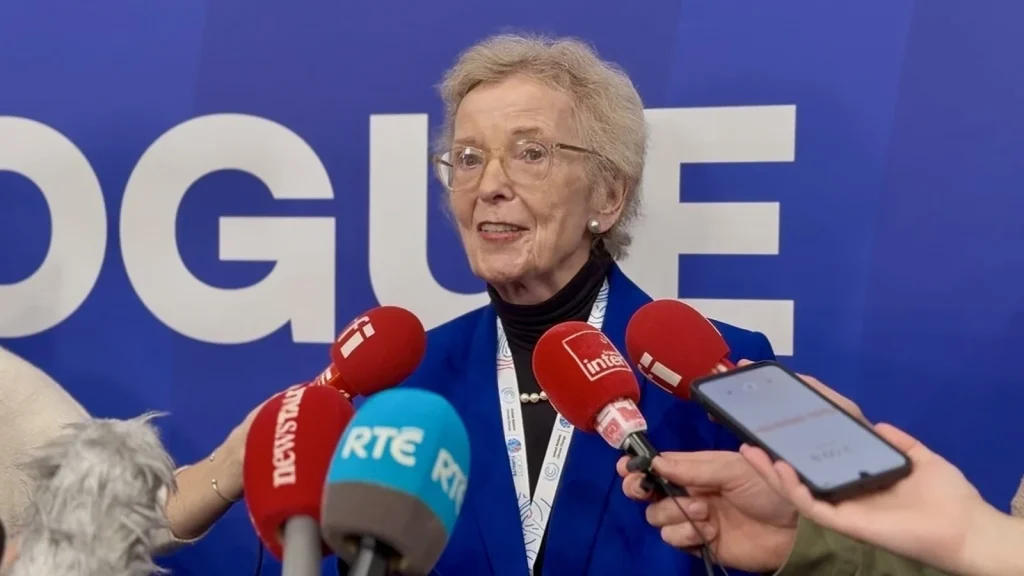
Minister O’Brien launches Transition Away from Fossil Fuels roadmap
In transport, the TAFF roadmap sets out plans to expand electric vehicle charging infrastructure, increase the number of electric vehicles through targeted supports and market development, invest in public transport, and build out walking and cycling infrastructure.
For freight, it says decarbonisation efforts will extend beyond electrification and fleet renewal to include greater use of rail freight where possible, improved route planning, and stronger efficiency across operations and supply chains.
The roadmap notes the “distinct challenges” posed by aviation and maritime transport, pointing to long asset lifetimes and the need to preserve international connectivity.
Alongside infrastructure and technology, the plan also emphasises investment in education — including apprenticeships, upskilling and training — as new employment opportunities are expected across the renewable energy sector.
“Electrification is the future. Europe wants to be the first electro-continent and Ireland will play its part in that and that will secure jobs into the future in new technologies and new energies into the future,” the minister said.
Even as Ireland increases electricity generation from solar, offshore wind and onshore wind, the roadmap states that gas will continue to be used as a transition fuel to safeguard supply.
EU wants ‘focus on clean electrification’ in COP31 text
Pressed on what wording the EU wants in the final COP31 agreement on fossil fuel phase-out, European Commissioner for Climate, Net Zero and Clean Growth, Wopke Hoekstra said: “We will be very satisfied if we manage to focus on clean electrification and have that in an ambitious way in the text, because that’s to say the same thing with different words.”
The EU is backing the ’35 by 35′ global electrification pledge at COP31, which seeks to raise electricity’s share of total consumption from 23% to 35% by 2035.
Mr O’Brien said earlier this week that Ireland will not reach that target.
Mr Hoekstra said it matters less if individual member states fall short than whether countries demonstrate ambition on clean electrification.
“All 27 leaders, all 27 governments, have actually signed up to this. It is so important to have this as a result, even though it might not be exactly 35 by 35, the text might look slightly different.
“But delivering on solar, delivering on wind, delivering on batteries, delivering for those countries who embrace nuclear. That is extremely important, not just for us as Europeans, but for the world at large.
Ireland is leading push for transition from fossil fuels – Hoekstra
“The name of the game here is to deliver on the things we have already agreed on before,” Mr Hoekstra added.
“It is simply not helpful to have yet another conversation on new finance, or on the domain of trade, or other things that are peripheral to implementation.”
Ireland has been helping to lead negotiations on behalf of the European Union at COP31 as part of its EU Presidency.
Mr Hoekstra said the Irish delegation has been doing a “phenomenal job” and that he has been working closely with Minister O’Brien “to deliver on implementation”.