ICJ to Decide Whether Myanmar’s Rohingya Crackdown Constituted Genocide
 Caalamka
A long-running legal battle over Myanmar’s 2017 assault on the mostly Muslim Rohingya minority is approaching a pivotal moment, as the United Nations’ highest court prepares to rule on whether the campaign amounted to genocide.
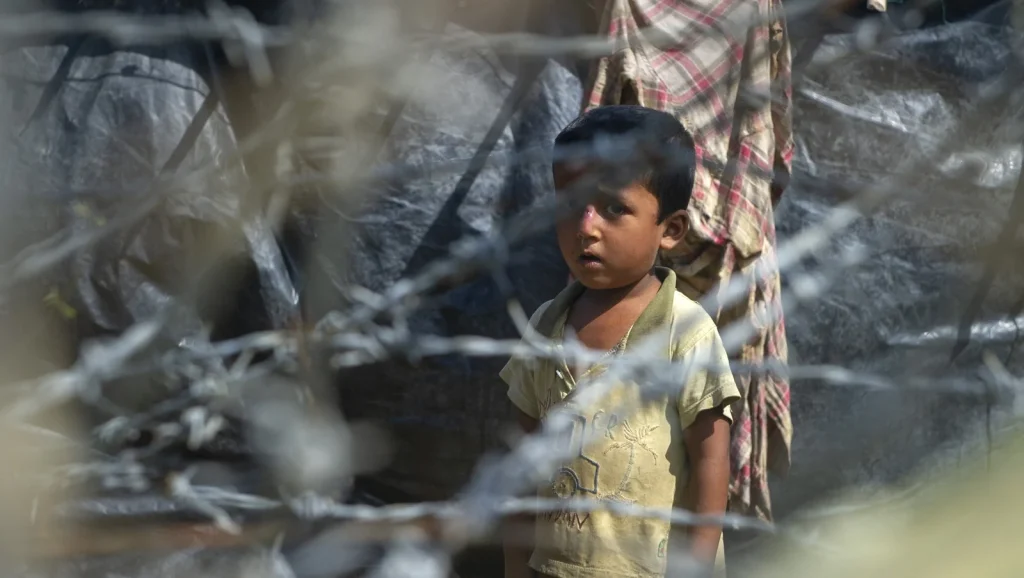
For more than one million Rohingya who have since taken refuge in Bangladesh — many in what is widely described as the world’s largest refugee camp — a decision from the International Court of Justice (ICJ) represents a rare chance at accountability after years of waiting.
Those who escaped the violence have recounted traumatic experiences, including allegations of gang rapes, mass executions and extreme cruelty directed at families and children.
In The Hague, a 15-judge panel has spent seven years considering whether Myanmar’s conduct meets the legal threshold for genocide.
The proceedings were launched by The Gambia under the 1948 UN Genocide Convention, which obliges states to bring cases when they believe another country is violating the pact created in the aftermath of World War II.
Although the ICJ cannot directly enforce its judgments, a finding that genocide occurred would intensify international pressure on Myanmar’s leader, Min Aung Hlaing.
The case has been brought by The Gambia under the 1948 UN Genocide Convention
Min Aung Hlaing led the military during the Rohingya crackdown and later seized power in a 2021 coup that toppled the elected government of Aung San Suu Kyi.
He was installed this year as civilian president after heavily restricted elections and has been seeking diplomatic legitimacy — an effort that could be further complicated by the court’s ruling.
Myanmar has consistently rejected the genocide allegation, insisting its operations were aimed at an armed insurgency that erupted after attacks in which a dozen security personnel were killed.
“Myanmar was not obliged to remain idle and allow terrorists to have free rein,” the country’s representative, Ko Ko Hlaing, told the judges during hearings in January.
‘Targeted for destruction’
Explaining why The Gambia took the unprecedented step of filing the case, the country’s justice minister said it acted only after examining what he described as credible accounts of extraordinary violence inflicted on a vulnerable community that had endured years of dehumanisation and persecution.
Dawda Jallow said The Gambia’s push at the ICJ has the “full backing and support” of the 57-member Organisation of Islamic Cooperation.
The ICJ has only once before found that a genocide has taken place
“It is not about esoteric issues of international law, it is about real people, real stories and a real group of human beings,” Mr Jallow said.
“The Rohingya of Myanmar. They have been targeted for destruction.”
Historically, the ICJ has reached a genocide finding only once — in relation to the 1995 Srebrenica massacre in Bosnia.
Under international law, genocide is particularly difficult to establish because the Convention requires proof of a specific “intent to destroy, in whole or in part, a national, ethnical, racial or religious group.”
During the hearings, The Gambia argued that genocidal intent could be inferred from what it called the “organised nature and execution” of the crackdown, its “extreme brutality”, the “pervasive sexual violence”, and the alleged targeting of children.
The case is also being closely monitored by legal observers for what it may signal about another major ICJ proceeding: South Africa’s accusations that Israel committed genocide against Palestinians in Gaza.
“How the court applies and interprets its current jurisprudence in Gambia’s case against Myanmar will shape ongoing and future proceedings in relation to similar claims,” Human Rights Watch said.