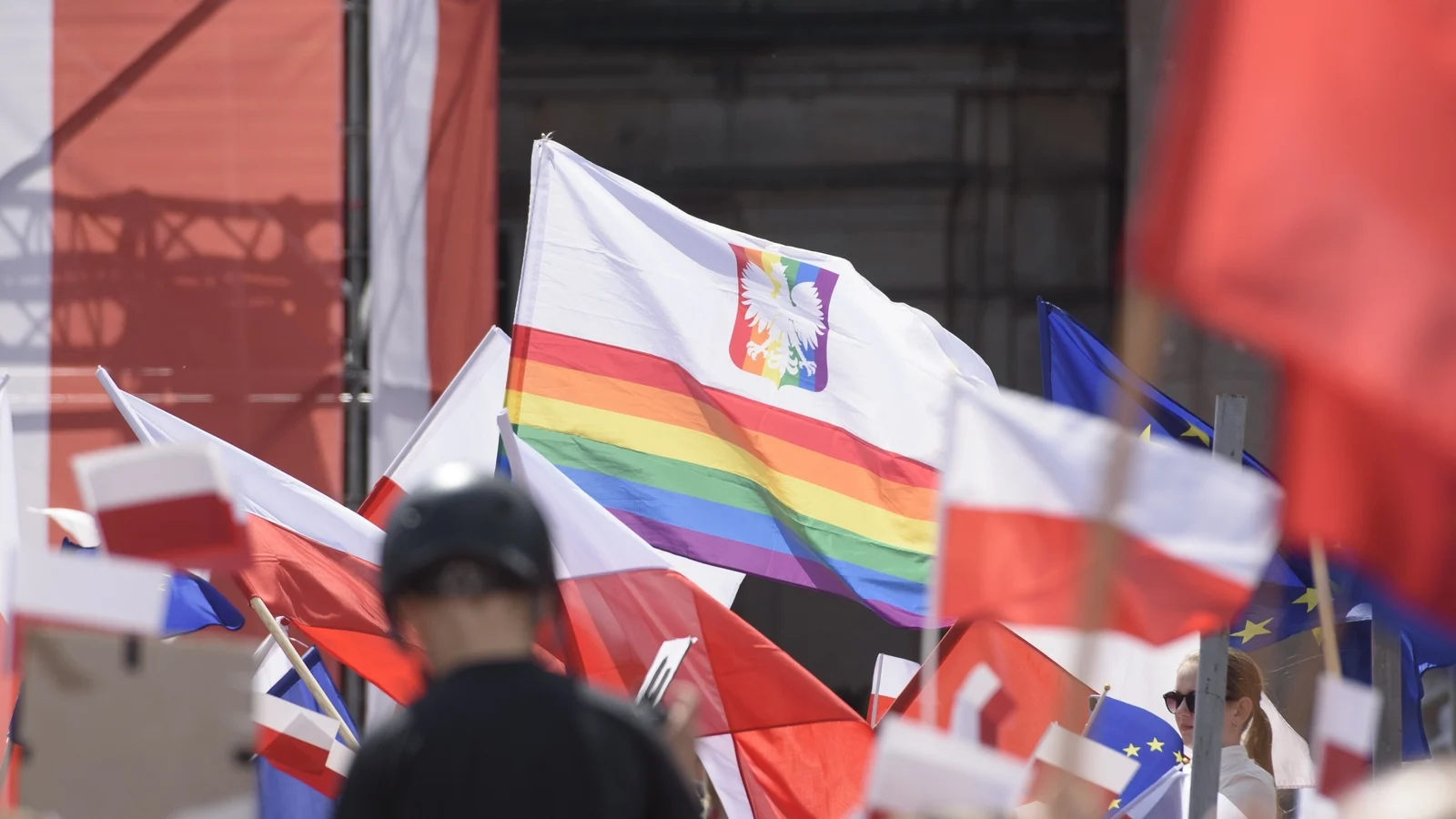
When a Marriage Certificate Becomes a Battleground: How One Polish Couple Took Europe to Court
They married in Berlin on a bright day in 2018, hand in hand beneath a sky full of cranes and tram wires—a small ceremony, a handful of friends, the clinking of glasses in a café fragrant with coffee and cardamom. Jakub Cupriak-Trojan and Mateusz Trojan returned to Poland a year later carrying more than just a photo album; they carried a legal status that, in their view, should have followed them home.
At Warsaw’s civil registry office they were told something that felt like an anachronism: Poland does not recognise their marriage because, the clerk explained politely but firmly, Polish law defines marriage as a union between a man and a woman. They left with a letter and a sense of disbelief. “We felt like visitors in our own lives,” Jakub later said. “Two people who had said ‘I do’ in one part of Europe and then, at the border, were suddenly simplified into something else entirely.”
From Warsaw to Luxembourg: A Case That Pulled at the Threads of EU Law
The Trojans did what many of us would do when faced with a stone wall: they started to knock. Their challenges climbed through regional courts and eventually reached Poland’s Supreme Administrative Court, which did something unexpected and consequential—it referred the question to the Court of Justice of the European Union (CJEU) in Luxembourg.
Last Tuesday that court delivered a ruling that will echo across the continent: when couples have validly married in one EU country and then return to live in another, that second country must recognise their marital status when it comes to safeguarding respect for private and family life under EU law. The CJEU framed its language broadly—a deliberate judicial choice that sends a message not just to Poland, but to any member state that once shrugged at such unions.
What the Ruling Actually Means
The court did not tell every EU nation to rewrite its marriage laws. Instead, it created a legal obligation in a narrower but potent way: member states must not leave same-sex couples in “legal limbo.” The judgment emphasised that if two people have built or strengthened a family life elsewhere in the EU, they must be able to continue that life when they move—especially for core needs such as recognition and protection.
The CJEU also tried to block the spectre of “marriage tourism” by clarifying that this protection applies to couples who have actually created or consolidated a life as a married couple in the first country, not to people who cross a border only to pick up a document.
Voices from the Ground: Lawyering, Activism, Everyday People
“This is not about ideology; it’s about coherence,” said Artur Kula, one of the Trojans’ lawyers. “If you have the freedom to move across the EU, that freedom has to include the ability to live as a family.”
Maja Heban from the Polish NGO Love Does Not Exclude called the decision “a symbolic victory.” “For some people, it’s as simple and powerful as holding a Polish document that says you are married. For others it’s the practical protection for hospital visits, tax filings and inheritance.”
On a rainy afternoon in the Praga district of Warsaw, I spoke with Ewa, a 58-year-old retiree who volunteers at a community centre. Her face was lined with decades of political change. “I don’t fully understand all the law talk,” she admitted, “but I do understand people’s dignity. If two people love each other and they are citizens, why should the state decide whose love counts?”
Not everyone greeted Luxembourg with open arms. The office of Poland’s conservative president voiced concern, and some nationalist politicians warned of a clash with traditional family values. The political landscape in Poland is messy: promises from the centre-right to introduce some form of civil partnership have been watered down amid coalition tensions, and the president has threatened to use a veto on anything that smacks of a “quasi-marriage.”
Practical Gains—and the Long List of Unfinished Business
Legal recognition is the key that opens many doors, but it is not a master key. Even after Luxembourg’s ruling, couples like the Trojans may still face a patchwork of administrative obstacles.
- Taxation: joint filing eligibility isn’t automatic
- Inheritance: domestic rules may still privilege traditional spouses
- Property rights: joint ownership claims can be contested
- Pensions and social security: entitlements can vary and require separate appeals
“Recognition is a necessary first step,” legal scholar Jakub Jaraczewski told me. “But there will be a sequence of administrative and legal hurdles before the equality that many take for granted becomes real.”
Where Poland—and Europe—Stand
It’s worth stepping back. Over the past two decades, most Western European countries have adopted laws permitting same-sex marriage or granting robust partnership rights. In the eastern part of the EU the map looks different: only two eastern member states—Estonia and Slovenia—are on record as having full marriage equality, while countries like Czechia, Hungary, Latvia and Lithuania offer civil partnerships of varying legal force.
Opinion in Poland is shifting. Polls suggest that support for civil partnerships hovers just below 60 percent, while an Ipsos survey last year found about 39 percent of Poles endorsing same-sex marriage. These numbers point to a dissonance: many voters are more progressive than some of their elected officials.
Could This Prompt Return Migration?
One intriguing consequence of the ruling is its potential to encourage people who married abroad to come home. Activists estimate the number of same-sex couples who married abroad and then returned to Poland remains in the hundreds rather than thousands—but that could change. The possibility of official recognition might pull people back to their families and jobs, recalibrating local communities and legal systems alike.
More Than Legal Text: The Human Story
Wave your hand across Europe and you will find a mosaic of churches, cafés, municipal halls, and living rooms where the meaning of marriage is debated, celebrated, or contested. In Warsaw, the bells of a Catholic church chimed while activists gathered outside a government building to read the CJEU ruling aloud. A grandmother nearby murmured the Lord’s Prayer; a young activist read the verdict in stern Polish and then started to cry.
Lawyers will parse paragraphs and politicians will posture, but at its heart, this is about how we decide who counts as family. Who gets to visit a dying partner without paperwork? Whose children are legally recognised? Who can inherit a home without years of litigation? These are not theoretical questions—they are the small, brutal logistics of love.
So I ask you, reader: when laws and love cross swords, which should lead? Should courts nudge societies forward, or should popular sentiment shape the law? Maybe the answer is that both have to pull in the same direction—and when they don’t, ordinary people bear the cost.
Looking Ahead
Luxembourg’s decision is not the end of the story. It’s a hinge moment—a judicial nudge that opens doors for recognition but leaves the finer plates spinning. For couples like Jakub and Mateusz, a future in Poland may now include a Polish marriage certificate, the ceremonial proof that a state once denied. For activists and lawyers, it is a tool—a precedent to press for fuller, everyday equality.
Change often arrives in fragments: one court case, one statute, one marriage certificate. But fragments can accumulate. Over coffee in a Warsaw café, Mateusz said simply, “We didn’t start this because we wanted a piece of paper. We started because we wanted to be seen.” The CJEU has now said that the paper matters. The rest—taxes, pensions, inheritances, acceptance—will take more time. They are the measures by which law becomes life.