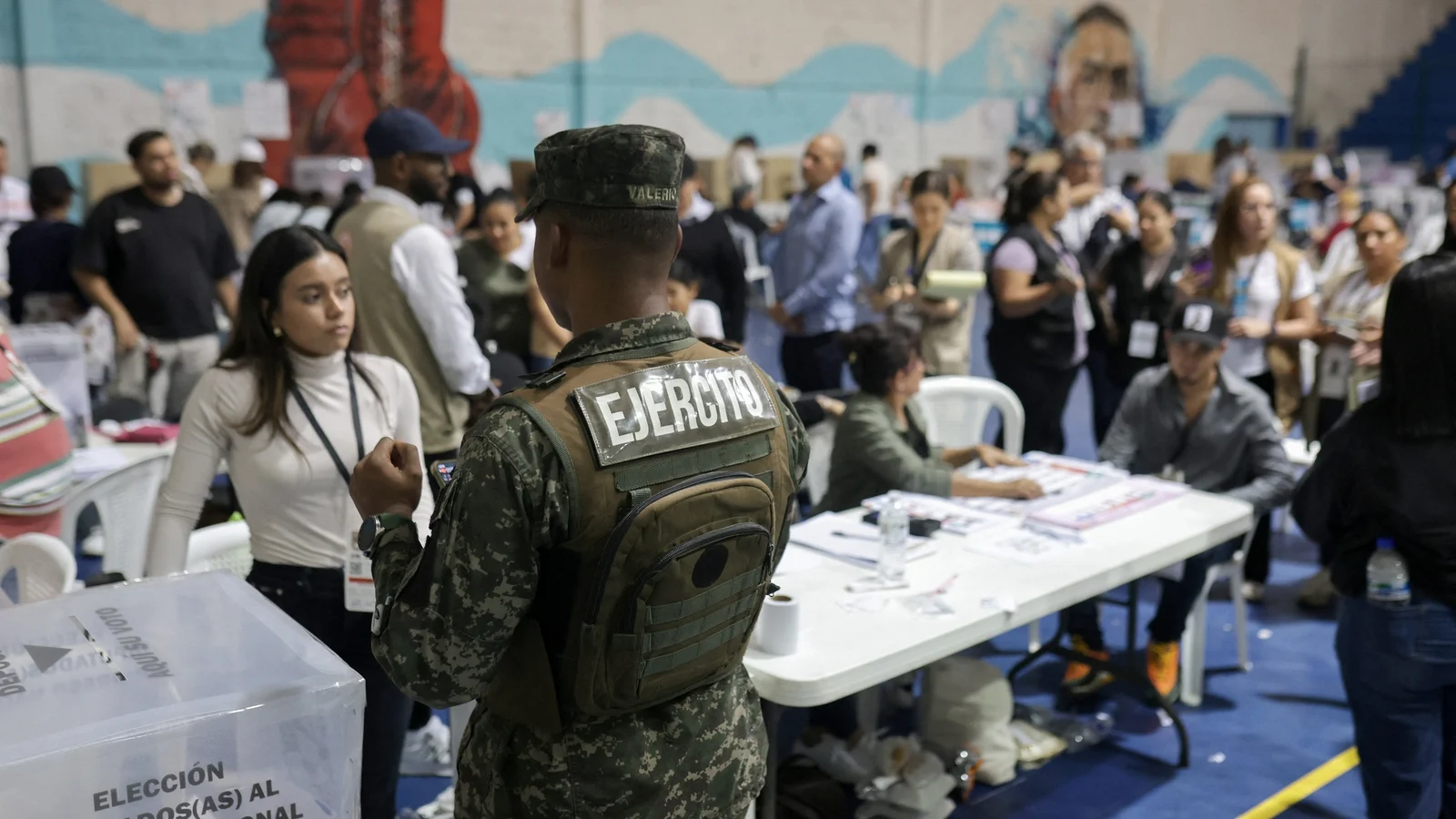
A Nation Holding Its Breath: Honduras Votes Under the Weight of Threats, Pardons and Longing
On a humid Sunday in Tegucigalpa, the air tasted of frying plantains and exhaust, and long lines snaked through the open plazas outside shuttered church doors. Voters fanned themselves with dusty newspapers while children chased one another around the bases of statue pedestals. It was a scene at once ordinary and tense: ordinary because Hondurans have always queued—at markets, at clinics, at migration offices—and tense because today’s queue could tilt the future of an entire country.
When the polling stations finally bolted their doors, the question in every face was the same: who will steer Honduras out of the violence, poverty and emigration that have become the daily arithmetic of this nation of roughly 11 million people?
The Players on a Very Public Stage
The contest was razor-close. On one side stood Nasry “Tito” Asfura, 67, former construction magnate and two-term mayor of the capital, carrying the banner of the conservative National Party. Across the center-left aisle was Rixi Moncada, 60, a lawyer and veteran minister aligned with the ruling Libre movement. And there was Salvador Nasralla, 72, the once-iconic television host who has shifted alliances and swaggered across party lines.
These candidates personify a broader tug-of-war: between old money and grassroots hopes, between an embattled political class and a citizenry that migrates, resents, survives. Hundreds of mayors and local officials were also on the ballot, making the election a mosaic of local disputes layered atop a national drama.
When a Superpower Looms Over a Ballot Box
What confers extra drama on this election is not just the domestic stakes, but the vocal involvement of the United States. In the final days of the campaign, former US President Donald Trump publicly backed Asfura, warning that aid could be curtailed if the conservative candidate didn’t prevail. He even announced intentions to pardon former Honduran president Juan Orlando Hernández, currently serving a 45-year sentence in the United States on drug trafficking-related charges—an announcement that rippled through neighborhoods from the capital to coastal hamlets.
“We’ve never seen external pressure like this in our lives,” said Lucía Aparicio, 42, a teacher from Comayagüela, who queued to vote beneath a corrugated awning. “Some of my neighbors say, ‘If Trump helps us, maybe our sons can go and work.’ Others say it’s colonial bullying.”
The stakes are raw and immediate: remittances—money sent home by migrants—accounted for roughly 27% of Honduras’s GDP last year, and nearly 30,000 Hondurans were deported from the US after Mr Trump returned to office in January. In towns where a single cousin’s paycheck keeps a family afloat, foreign policy is not an abstraction; it is survival.
Voices on the Street
“I vote for whomever I please,” said Esmeralda Rodríguez, 56, perched on a crate of oranges outside a market stall. “I live off my work, not off politicians. But yes, I pray for doors to open for my children.”
Maria Velásquez, 58, wiped sweat from her forehead and pushed her ballot into the box with a trembling hand. “I just want to escape poverty,” she said. “If the new government talks to the right people, maybe my niece can get a job abroad. That’s the hope.”
Fear of Fraud and the Ghost of 2009
Beyond migration and money, another current ran through the election: distrust. Preemptive accusations of fraud—from both the ruling party and opposition figures—filled late-night radio shows and social media threads, stoking fears of post-election unrest. The memory of 2009—when a military-backed ouster of President Manuel Zelaya still lingers in families’ stories—made many voters jittery. Rixi Moncada framed her challenge as a struggle against “an oligarchy that once plotted a coup,” reminding audiences of the fissures that have never entirely healed.
Ana Paola Hall, president of the National Electoral Council, stood in front of cameras on election morning and urged restraint. “We must not inflame confrontation or violence,” she said, her calm voice a small dam against the rising tide of suspicion.
“People don’t trust quick counts,” said Jorge Castillo, a professor of political science at the Autonomous University. “When both sides pre-announce fraud, it undermines confidence in institutions. That’s dangerous in a country already frayed by crime and inequality.”
Talk of Pardon, and a Country’s Uneasy Scorecard
For many Hondurans, the pardon talk is not abstract lawfare. Juan Orlando Hernández’s conviction and sentence resonate like a headline that never quite fades—proof, some say, that the system is corrupt; evidence to others that political enemies are being punished. Asfura denied that any planned pardon would benefit him, calling the rumors campaign noise. “This issue has been circulating for months,” he said after voting, “and it has nothing to do with the elections.”
Yet the tandem of a foreign leader’s intervention and talk of pardons is a potent cocktail. “Foreign endorsements can help steer outcomes, but they also delegitimize,” said María Salazar, a Central American governance researcher. “When aid is dangled as a carrot or a stick, citizens rightly question whether the vote is theirs to cast.”
Why This Election Matters Beyond Honduras
A victory for Asfura would mark another rightward shift in Latin America, following recent electoral swings in countries like Argentina and Bolivia. But these are not mere ideological flips. They reflect deeper global currents: the politics of migration, the influence of social media-driven populism, and the pressure points of international aid tied to domestic reforms.
The Honduran vote is also a test for democracy in fragile states. Will contested elections deepen polarization into violence? Or will institutions and civic actors—churches, local leaders, and international observers—help navigate a peaceful handoff? The answers will matter not only for Central America but for how the world approaches fragile democracies in an era of resurgent authoritarianism and increasingly transactional diplomacy.
What Happens Next?
In the short term, Hondurans brace for a nail-biting wait. Campaign rhetoric suggested that preliminary counts might be contested, and both sides have promised to defend their versions of the outcome. International observers and the press will be watching, and local leaders hope calm will prevail.
In everyday terms, the winner inherits urgent problems: curtailing gang violence that routinely terrorizes suburbs and barrios, tackling trafficking routes that funnel drugs northward, and restarting an economy where the lion’s share of many families’ livelihoods depends on cash transfers from abroad.
“Whoever wins must offer a real job plan,” said Roberto Medina, a bus driver in San Pedro Sula. “Not promises, not pacts with outsiders. Children need schools; mothers need clinics. That’s what keeps people from leaving.”
Questions to Carry With You
As you close this piece and return to your own patch of the world, ask yourself: what responsibility do wealthier nations have when their policies ripple across poorer countries? How should international partners balance pressure with respect for domestic sovereignty? And finally, how do we, as a global community, support citizens whose ballots are cast under the weight of hunger and fear?
The polling stations are quiet now, the ballots sealed and carried away. But the country remains loud with hope, worry and the everyday courage of those who showed up to vote. In Honduras, as elsewhere, democracy is not an event—it’s an ongoing, messy, stubborn attempt to choose a future despite the odds. Tonight, families in Tegucigalpa and beyond will wait, listen and imagine what might be different come morning.